Boureima Amadou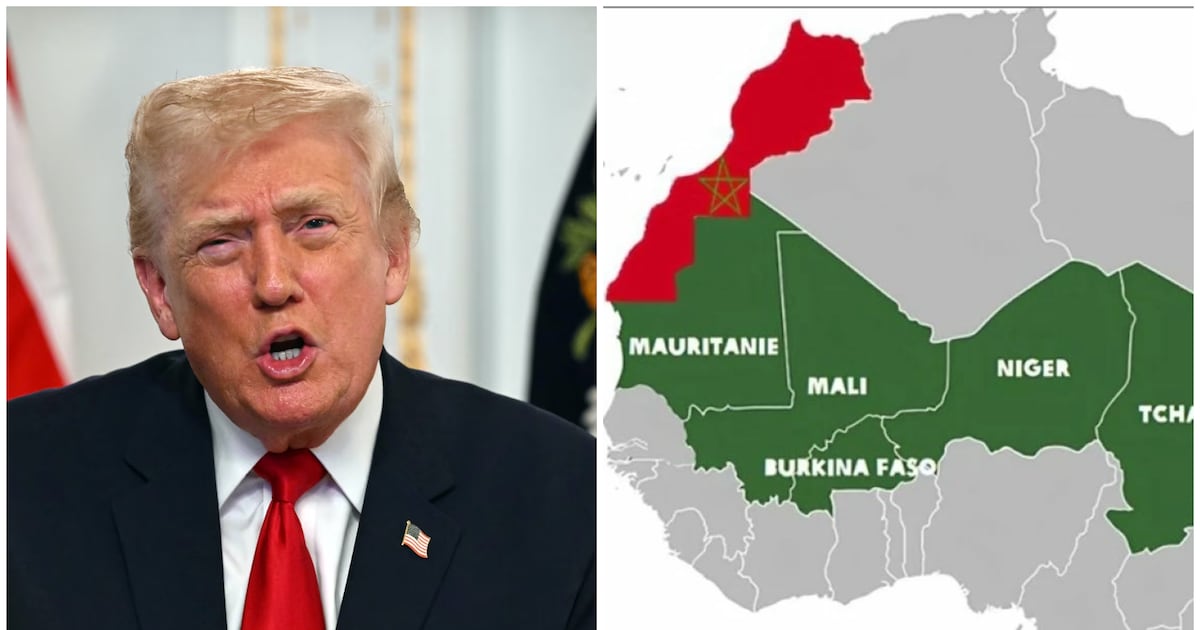
united states quietly strengthens its Sahel strategy through pragmatic engagement
The Sahel is witnessing a subtle reshaping of geopolitical alliances, with Europe’s gradual withdrawal from Mali, Burkina Faso, and Niger creating opportunities for other global players. While Russia has expanded its influence through proxy structures, the United States appears to be quietly reasserting itself in the region. Emmanuel Dupuy, president of the Institute for Prospective Strategic Studies (IPSE), cautions against interpreting this as a return to dominance. Instead, he frames it as a strategic repositioning: “this isn’t a resurgence of power, but confirmation that the U.S. never fully disengaged—it simply waited for the right moment to act as others weakened”.
This approach aligns with Washington’s long-standing tradition of pragmatic diplomacy. Dupuy emphasizes that American strategy prioritizes tangible outcomes over ideological alignment: “U.S. negotiates with actors whose views may diverge from its own, focusing on security and economic interests rather than political compatibility”. This transactional mindset has allowed Washington to coexist with Moscow in the region, with neither side viewing the other as a direct threat.
coexistence with Russia and the rise of private security firms
Dupuy argues that the U.S. and Russia avoid direct confrontation by leveraging private military contractors (PMCs) to advance their interests. He notes: “The Americans will use private security firms, just as Russians deploy Wagner and Africa Corps. This indirect model is already evident in the Democratic Republic of Congo, where Blackwater operates without U.S. troops on the ground”. This outsourcing of security allows both powers to maintain plausible deniability while pursuing strategic objectives.
Several factors contribute to this evolving dynamic. Dupuy highlights the United Nations’ eroding credibility and Russia’s challenges in combating armed terrorist groups as key gaps that the U.S. could fill. He observes: “Everything aligns for the Americans: the UN’s disrepute and Russia’s operational limits create an opening for indirect redeployment”.
Morocco emerges as a pivotal u.s. ally in the Sahel
The relationship between Rabat and Washington has deepened across military, economic, and diplomatic spheres, positioning Morocco as a critical partner in the Sahel. Dupuy describes Morocco as “the ideal partner the U.S. needs”, particularly given Washington’s reluctance to deploy troops directly. “The U.S. can leverage Morocco’s positive regional image to engage with governments resulting from military coups in Mali, Niger, and Burkina Faso without triggering diplomatic friction”.
This strategic partnership extends beyond the Sahel. The U.S. granted Morocco a major non-NATO ally status in 2016, recognizing its role in a “triangulation of African-Atlantic-Mediterranean interests”. Dupuy underscores Morocco’s consistent commitment to Euro-Mediterranean integration since the 1995 Barcelona Declaration, reinforcing its credibility as a stable interlocutor.
economic and religious influence as levers of soft power
Morocco wields influence through two key tools: economic integration and religious diplomacy. The Mohammed VI Institute for Imam Training, established in 2015, has trained religious leaders from across the region, promoting a moderate, Maliki-Sufi Islam as a counter to extremism. Dupuy calls this “an extremely effective tool of soft power”.
Economically, Morocco offers Sahelian nations prospects for trade corridors linking Burkina Faso, Niger, and Mali to the Atlantic via Mauritania—a long-term vision that could redefine regional connectivity. Dupuy notes: “This is a 10-year horizon, not an immediate solution. But it’s a strategic investment in stability and influence”.
regional dynamics and the declining leverage of Algeria
Algeria’s influence in the Sahel continues to wane, particularly on the Sahara issue. Dupuy dismisses Algerian maneuvering as largely ineffective: “Honestly, I don’t see what cards Algeria has left”. He argues that the U.S. has firmly anchored discussions around the Moroccan autonomy plan, making Algerian initiatives unlikely to shift the status quo. “The Americans have made it clear: the only basis for dialogue is the autonomy proposal”.
The Madrid meeting marked a turning point, shifting Sahara discussions from ideology to practical governance, economic development, and maritime zones. Dupuy explains: “This is no longer about ideological debates but implementation—local governance, resource sharing, and economic zones”.
Sahel’s future: a mosaic of security, economics, and religion
The Sahel is no longer just a battleground for military rivalry; it’s a space for strategic realignment where extractive interests, private security, religious outreach, and trade corridors intersect. In this evolving landscape, the U.S. is recalibrating its approach, Russia is expanding through proxies, and Morocco is positioning itself as the indispensable bridge between the Atlantic, the Mediterranean, and Africa’s interior.


 Mariama Hamani