Mariama Hamani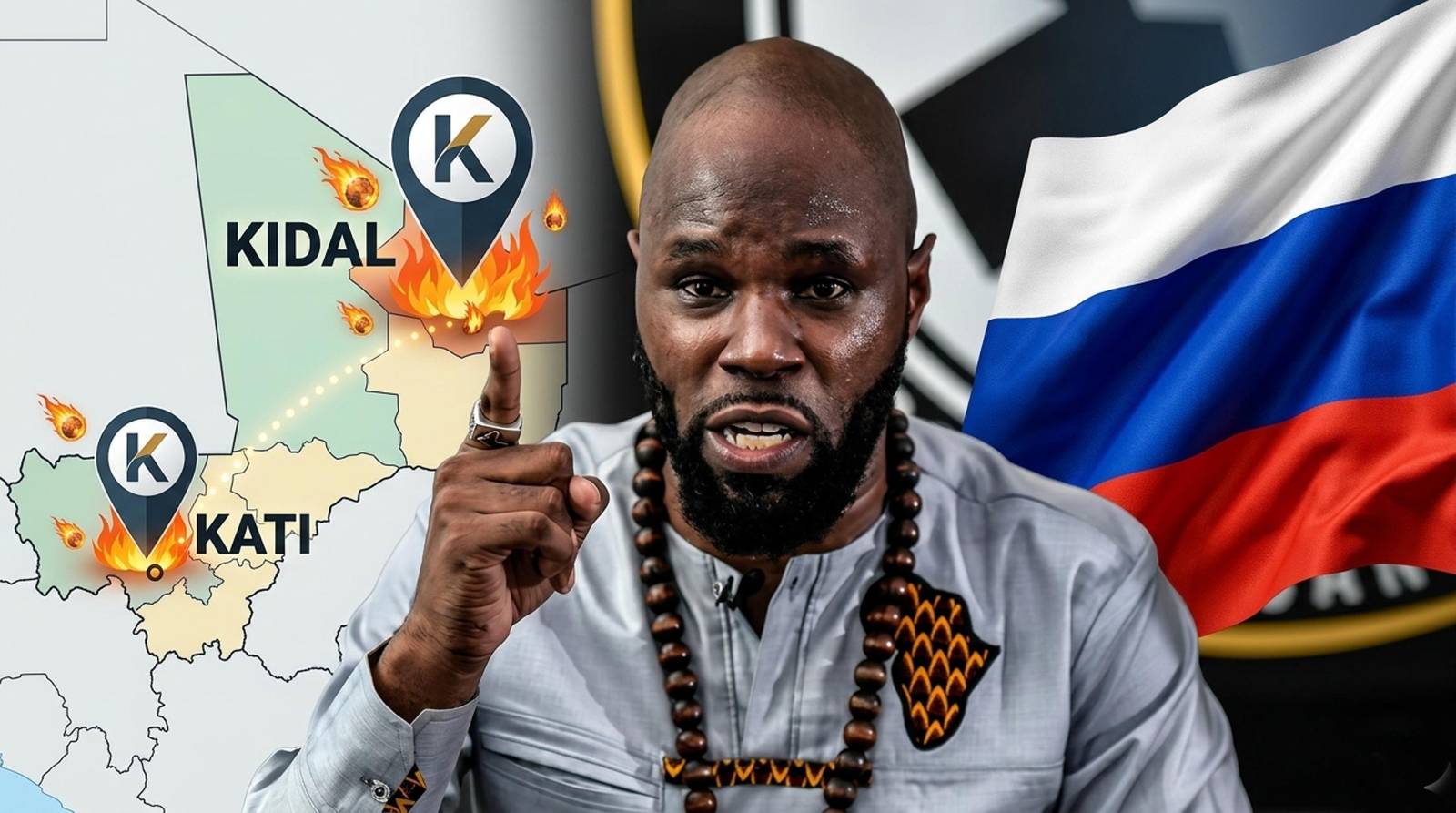
The unrelenting artillery fire rattling through Kati and the escalating tensions in Kidal have exposed a harsh truth: the narrative of a swift “liberation through the East” lies in tatters. As April 25, 2026, unfolded, the Mali military’s reliance on Russian support revealed gaping vulnerabilities. While Africa Corps units struggle to assert control, even high-profile advocates like Kemi Seba find themselves scrambling for an exit strategy.
For residents in Bamako and northern military outposts, the morning brought no sense of triumph—only the sobering reality of a partnership sold as a panacea for armed groups. Instead of the promised security, the country now faces a stark reality: coordinated assaults, burning armored vehicles, and relentless pressure from insurgents. The much-touted “turnkey” security solution, marketed as a quick fix, has delivered little beyond frustration and instability.
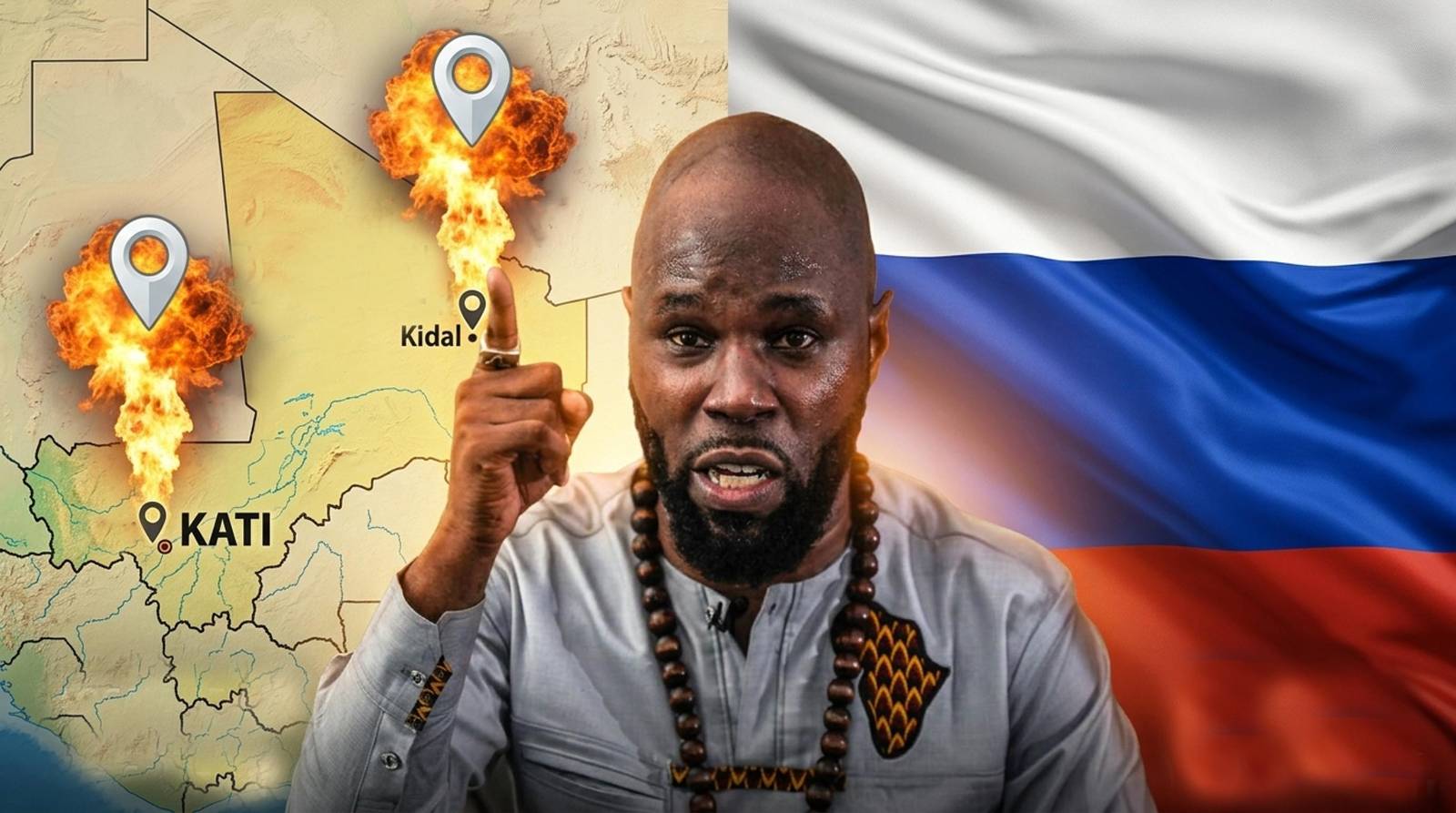
the unraveling of a flawed military strategy
The Mali government’s exclusive military collaboration with Russia was supposed to stabilize the nation overnight. Yet, the latest offensive has shattered that illusion. Rather than neutralizing threats, the approach has alienated allies and failed to secure even minimal territorial gains. The strategy of outsourcing security to Moscow has backfired, leaving Bamako in a precarious position with no clear path forward.
kemi seba’s reckoning with reality
Once the loudest voice advocating for severing ties with the West, Kemi Seba now finds himself cornered. While he continues to project confidence in public, leaked audio recordings circulating on WhatsApp reveal a different story. In private, Seba’s tone drips with disillusionment, labeling Russian backers as “opportunists of the worst kind.” His shift from championing Moscow to critiquing its motives underscores a painful truth: the promised partnership was never about Mali’s welfare—it was a transaction disguised as solidarity.
In one particularly revealing clip, Seba admits that if Russia behaves like a “new colonizer,” it will be expelled faster than its predecessors. This sudden about-face is a bitter pill for those who bought into his vision of a Slavic savior. The activist’s credibility, once a cornerstone of anti-Western rhetoric, now teeters on the edge of irrelevance.
a broken promise with a heavy price tag
The consequences of this misguided alliance extend far beyond political posturing. Civilians and soldiers bear the brunt of the failure, as the so-called “Russian solution” delivers neither security nor sovereignty. The latest attacks serve as a grim reminder: replacing one overlord with another does nothing to address the root causes of Mali’s instability. The government in Bamako now faces a stark choice—double down on a failing strategy or confront the harsh reality that no foreign power can impose stability from the barrel of a gun.
The writing is on the wall: the Mali-Russia partnership is a cautionary tale of how ideological blind spots can lead to catastrophic outcomes. For a nation already scarred by decades of conflict, the cost of this experiment may prove irreversible.

 Boureima Amadou