Boureima Amadou
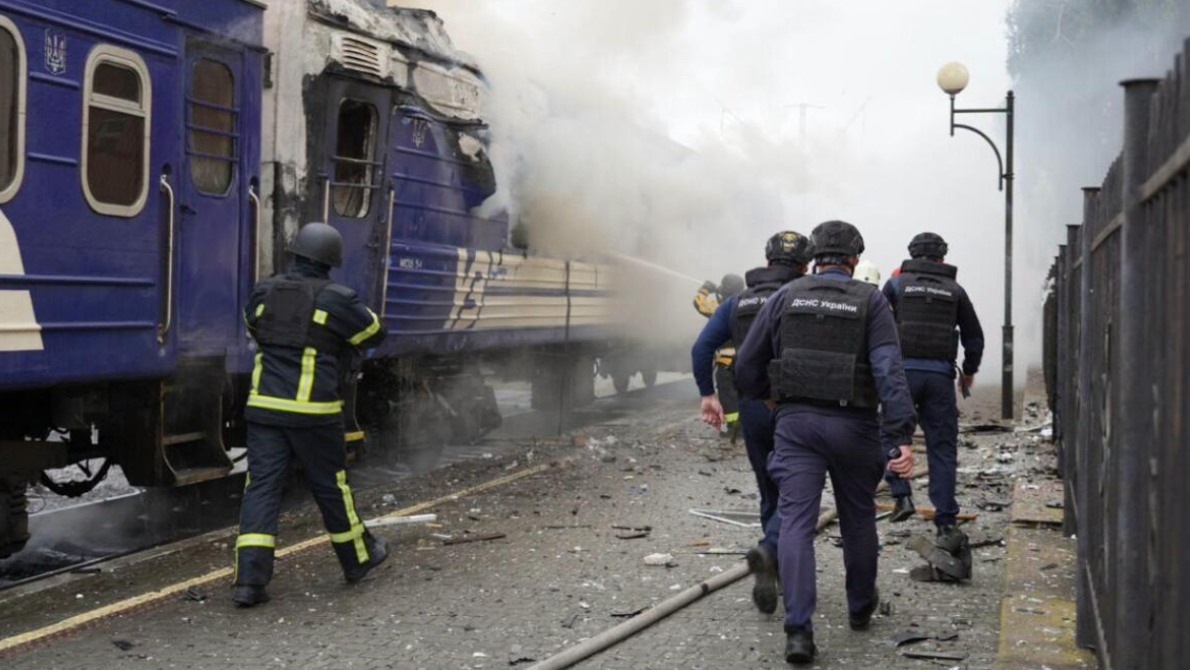
Dnipro rail station attack leaves destruction and tragedy in its wake
A devastating drone strike on a busy railway station in Dnipro, Ukraine, has left at least 14 civilians dead and numerous others injured. The attack targeted two passenger trains, including a commuter rail and a long-distance service, during a moment of high activity. Emergency responders worked frantically to clear debris and assist the wounded, with some victims, including an 11-year-old child, battling for their lives. The strike has drawn condemnation from Ukrainian leadership and European officials, who have labeled the attack a deliberate assault on innocent lives.
Samara’s oil refinery engulfed in flames as Moscow’s energy security trembles
In a significant escalation, a major oil refinery in Novokouïbychevsk, Samara region, Russia, was struck by Ukrainian drones overnight, igniting a massive fire and triggering powerful explosions. The attack targeted facilities owned by Rosneft, one of Russia’s largest oil companies, and disrupted operations at a critical chokepoint in the country’s fuel production network. Social media footage revealed towering black smoke plumes rising from the industrial complex, while local authorities confirmed the deployment of air defense systems in response.
The extent of the damage remains under assessment, but initial reports suggest severe disruptions to the refinery’s operations. Analysts highlight the site’s role in producing aviation fuel and other petroleum products essential to Russia’s war effort and domestic economy.
A turning point in the conflict’s infrastructure war
The dual strikes—one in Ukraine, the other deep within Russian territory—underscore a pivotal shift in the conflict’s trajectory. While Ukraine has long faced relentless Russian attacks on its rail networks and energy infrastructure, Moscow now confronts a rapidly expanding Ukrainian campaign targeting its most vital economic assets. The Novokouïbychevsk attack marks one of the deepest incursions into Russia’s energy sector, signaling a new phase where no industrial facility is out of reach.
For Kyiv, these operations are not merely tactical; they are designed to cripple Russia’s war machine by choking off fuel supplies and revenue streams. For Moscow, the loss of critical refineries represents a direct threat to national stability, as energy revenues and domestic fuel production face growing uncertainty.
Civilian toll rises as infrastructure becomes the battlefield
The human cost of these strikes is undeniable. In Dnipro, families mourn lost loved ones, while survivors recount harrowing scenes of shattered glass, twisted metal, and chaos on the platform. Ukrainian President Volodymyr Zelensky condemned the attack as a war crime, demanding stronger international action against Russia. European leaders echoed his sentiments, emphasizing the unacceptability of targeting civilians in wartime.
Meanwhile, in Samara, while the immediate danger was confined to industrial workers and emergency personnel, the ripple effects extend far beyond the refinery’s walls. Rising fuel prices, energy shortages, and economic instability loom as potential consequences, amplifying the war’s toll on ordinary Russians who had until now been largely shielded from direct conflict.
Will diplomacy break the cycle of escalation?
The international community watches with growing concern as the conflict shows no signs of de-escalation. Reports suggest that Western allies have privately urged Kyiv to temper its long-range strikes on Russian oil facilities, fearing a further humanitarian or economic fallout. Yet the Novokouïbychevsk attack demonstrates that Ukraine remains undeterred in its strategy to dismantle Russia’s energy infrastructure.
As drones grow more sophisticated and ranges extend, the war’s front lines are no longer defined by trenches or frontlines but by the smokestacks of refineries and the platforms of railway stations. With neither side willing to yield and civilian lives hanging in the balance, the path to peace appears increasingly distant.
What’s next for Ukraine’s long-range strikes?
Ukraine’s strikes on deep Russian targets highlight a bold new chapter in its defensive and offensive strategy. By disrupting fuel supplies and forcing Moscow to divert resources to protect its energy heartland, Kyiv is leveraging asymmetry to reshape the battlefield. The question remains: how far will this strategy go, and at what cost to the civilians caught in the crossfire?



 Mariama Hamani