Mariama Hamani
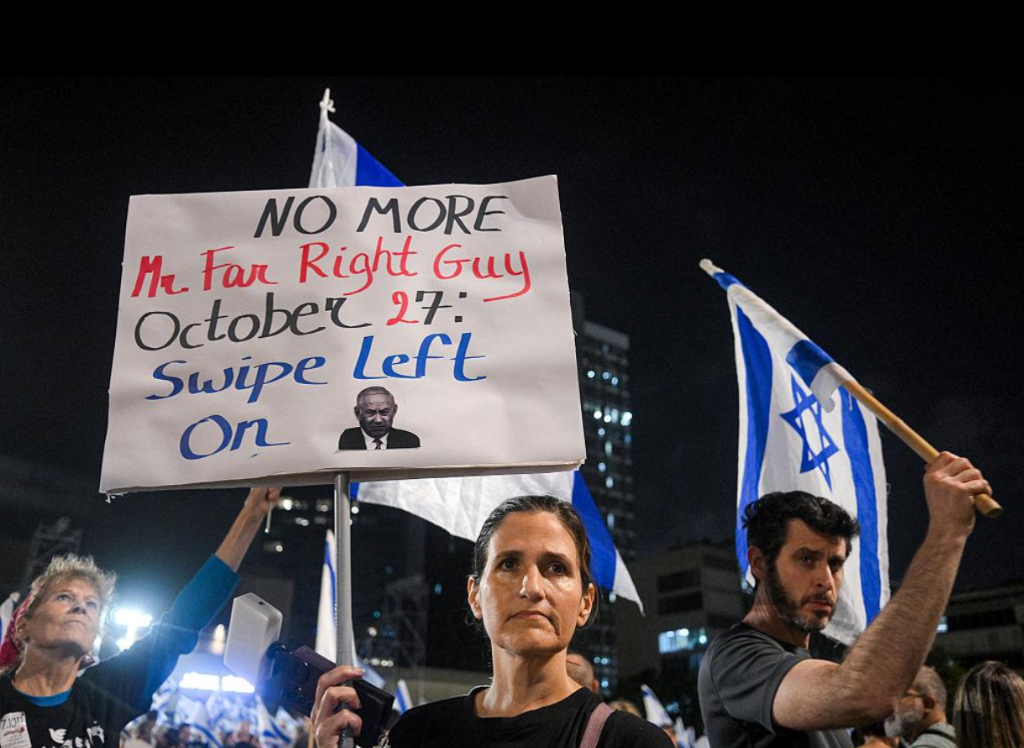
Israel’s October 2026 parliamentary elections have delivered a decisive yet precarious outcome, with Benjamin Netanyahu securing a narrow lead but falling short of the 61-seat majority needed to govern independently. His Likud party secured 27 seats, while the combined opposition and Arab parties totaled 67 seats—leaving the country at a political crossroads where the stakes extend far beyond Jerusalem.
Israel’s fragmented parliament: a historic shift in political power
For the first time in recent history, no single bloc has achieved a clear majority in the Knesset. Netanyahu’s right-wing coalition, though the largest single block with 53 seats, now faces an opposition led by former IDF chief Gadi Eisenkot, which holds 48 seats, alongside 19 Arab lawmakers—a record representation.
This fragmentation marks a dramatic shift from the previous Knesset, where Netanyahu’s government commanded a comfortable 68-seat majority. The erosion of his support base reflects years of internal strife, public discontent, and the toll of prolonged conflict—particularly the war in Gaza. The result is not just a setback for Netanyahu but a redefinition of Israel’s political landscape.
- 53 seats – Netanyahu’s bloc (Likud and allied parties)
- 48 seats – Opposition coalition led by Gadi Eisenkot
- 19 seats – United Arab List and Ra’am (historical high)
- 61 seats – Required for a majority in the 120-seat Knesset
The Arab parties: kingmakers in a fractured Knesset
The unprecedented presence of Arab lawmakers in the Knesset has elevated their role as potential kingmakers. While their support could theoretically help the opposition form a government, deep-seated ideological and political divisions complicate such alliances. Most Zionist parties remain reluctant to collaborate with Arab factions, creating a deadlock that could force Netanyahu into fragile coalitions or, in the worst case, a return to the polls.
Alternative scenarios now dominate political discourse: a national unity government, a minority coalition backed by confidence-and-supply agreements, or another election cycle if negotiations collapse. Each path carries significant risks—instability, policy paralysis, or further electoral polarization.
Gaza and the Palestinian question: continuity or change?
The war in Gaza remains the most urgent challenge facing Israel, and Netanyahu’s next moves will be scrutinized closely. Will his government maintain its hardline stance, or could a new coalition introduce shifts in policy?
Under Netanyahu’s leadership, Israel’s security strategy has prioritized military deterrence and limited engagement in diplomatic talks. His coalition partners—including hardline nationalists and religious factions—oppose concessions on Palestinian statehood and territorial claims, favoring a security-first approach.
While the opposition may advocate for a more flexible stance, particularly regarding reconstruction efforts in Gaza and the Palestinian Authority’s role, fundamental disagreements persist. Neither bloc appears poised for a radical departure from the status quo, meaning Gaza’s future remains uncertain, with little immediate prospect of relief for its population.
Regional flashpoints: Iran, Lebanon, and Syria
Israel’s political paralysis comes at a time of heightened regional volatility. The Iranian nuclear program, missile development, and proxy warfare continue to pose existential threats, while tensions with Hezbollah in Lebanon and military dynamics in Syria demand a steady hand at the helm.
A weakened government struggling to form a coalition may find it difficult to project a coherent security agenda. Yet, defense and foreign policy traditionally enjoy broad bipartisan consensus in Israel, suggesting that even amid political turmoil, a unified response to external threats remains plausible.
Still, any miscalculation—military escalation in southern Lebanon or a misstep regarding Iran’s nuclear ambitions—could have catastrophic consequences, drawing Israel deeper into regional conflicts with global implications.
International repercussions: Washington, Arab capitals, and global stakeholders
The Biden administration will be watching Israel’s next steps with cautious interest. While the U.S.-Israel alliance remains unshaken, divergences over Gaza, military operations, and regional stabilization efforts could strain relations. A government unable to assert a clear policy direction may complicate joint strategic planning.
For Arab states—particularly Saudi Arabia, the UAE, Egypt, and Jordan—Israel’s political instability raises questions about the viability of normalization agreements. Riyad’s Abraham Accords, for instance, hinge on progress toward Palestinian statehood and regional security. A Netanyahu-led government clinging to power with a divided Knesset may slow diplomatic momentum, while an alternative coalition could open new channels for dialogue—though not necessarily guarantee progress.
What lies ahead: three possible paths
The coming weeks will determine whether Israel can break its political deadlock. Three potential outcomes stand out:
- Netanyahu’s survival through shifting alliances: A fragile coalition cobbled together with centrist or Arab parties, risking internal fractures and policy incoherence.
- A new government led by opposition forces: A broad unity administration that could introduce gradual policy changes, though likely constrained by ideological divides.
- Another election: If all negotiations fail, Israel may face a repeat vote—prolonging uncertainty and deepening societal divisions.
Conclusion: A turning point for Israel and the Middle East
Netanyahu’s victory is more a testament to resilience than a mandate for power. With no clear path to govern, Israel stands at the precipice of a new geopolitical era—one where domestic uncertainty threatens to ripple across borders, from Gaza’s devastated landscapes to the negotiating tables of Washington and Riyad.
The elections have exposed deep societal fractures—over security, governance, and the nation’s future. How these divisions are navigated will shape Israel’s trajectory for years to come. And as the world watches, one thing is clear: this pivotal moment may well redefine the Middle East’s power balance in ways no one can yet predict.

 Boureima Amadou