Boureima Amadou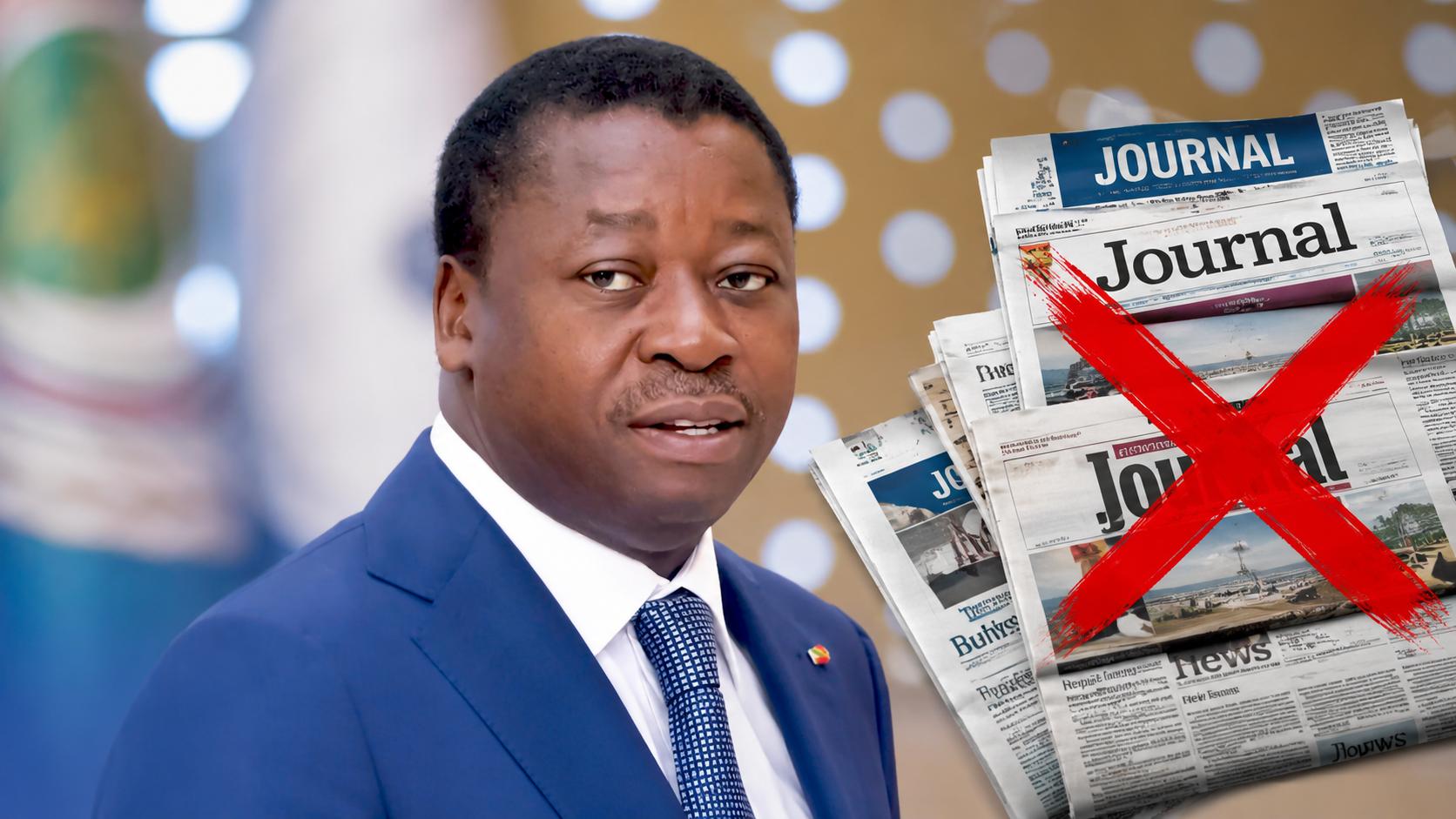
In Togo, the erosion of informational freedom is no longer confined to the pages of NGO reports or regulatory communiqués. It has become a tangible reality on city streets, where merely distributing a newspaper now carries significant risk. By extending its pressure tactics to include street vendors, the administration of Faure Gnassingbé has crossed a troubling threshold: the systematic and operational silencing of independent voices.
The vendetta against vendors
For many years, the control exerted over the press in Togo relied on conventional institutional levers. These included issuing summons, imposing temporary suspensions of publications, revoking press credentials, and threatening defamation lawsuits. While these tactics gradually compelled numerous newsrooms into self-censorship, they ultimately failed to extinguish the public’s growing demand for critical and independent information.
The recent apprehension of independent newspaper distributors and vendors in Lomé therefore signals a significant shift in methodology. By targeting the most vulnerable link in the information chain – individuals who rely on single-issue sales for their livelihood – authorities are no longer merely seeking to penalize specific content. Instead, their objective is to sever the direct connection between a publication and its readership.
This assault on distribution channels is rooted in a strategy of economic and security-based repression. The goal is unambiguous: to instill fear among resellers, deterring them from displaying opposition or investigative titles. This creates an invisible yet devastating commercial blockade for media enterprises already struggling financially.
HARC: professional regulation or arm of censorship?
Central to Faure’s apparatus, the High Authority for Audiovisual and Communication (HARC) is facing increasingly sharp criticism from professional bodies, including trade unions and the Togolese Press Employers’ Association (PPT). Though ostensibly tasked with safeguarding freedom of expression and ensuring a balanced media landscape across print and digital platforms, a significant portion of the profession now views HARC as an instrument designed to enforce editorial alignment.
Under the guise of maintaining “public order,” “sector sanitization,” or combating disinformation, HARC’s sanctions disproportionately target media outlets that scrutinize governance, financial dealings, or political management. Meanwhile, publications that align with the official narrative consistently benefit from leniency. This policy of double standards has effectively stripped public debate of its substance, transforming the official media landscape into a distorted reflection of Togolese reality, an issue pertinent to African governance and continent news.
Togolese democracy falters on the ground
At a time when official rhetoric extols institutional modernization and the nation’s economic appeal, the now overt repression against media professionals underscores the reality of a continually shrinking democratic space. Press freedom is not a privilege bestowed upon journalists; it is a fundamental right belonging to all citizens, a cornerstone of healthy African current affairs.
By stifling the few remaining avenues for dissenting views and pursuing those who distribute independent publications, the Togolese government opts for an artificial calm. However, by suffocating independent information, it does not eliminate social and political tensions; it merely deprives society of legitimate channels through which to express them.