Boureima Amadou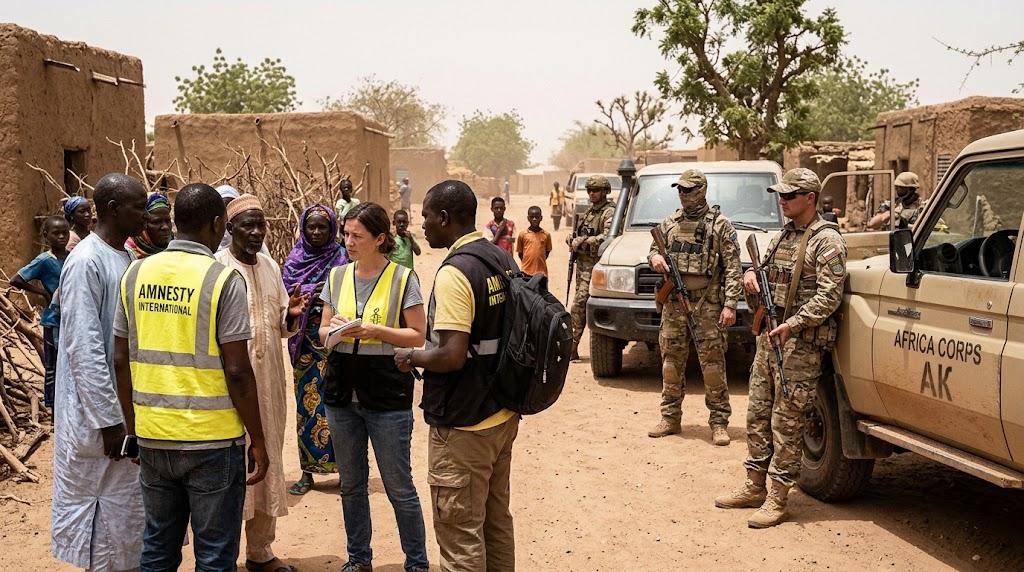
New evidence from human rights monitors reveals that despite the formal replacement of Russia’s Wagner Group with Africa Corps in Mali, widespread abuses against civilians continue unabated. A comprehensive report based on field investigations documents alleged extrajudicial killings, torture, and mass detentions in central and northern regions, contradicting the narrative of improved security governance.
Civilian Casualties Mount Despite Military Transition
Between June 2023 and December 2025, at least 34 non-combatants were killed in seven communities along the Mali-Mauritania border during joint operations involving Malian armed forces and former Wagner personnel, now operating under the Africa Corps banner. Survivors describe a pattern of summary executions—shootings after arrest and fatal beatings during flight attempts—raising questions about adherence to international humanitarian law.
Drone strikes have compounded civilian suffering. A March 2025 strike on a crowded market in Ejdeir reportedly killed 16 people. In November of the same year, a residential area in Tangata was hit, resulting in seven deaths. Researchers found no evidence of military personnel or legitimate targets at either location, casting doubt on the precision and accountability of aerial operations.
Systematic Torture Alleged in Military Custody
Survivor testimonies collected from detention centers in Léré and Nampala describe a deliberate regime of cruelty. Fifteen interviewees reported being suspended by their arms, subjected to mock drowning, electrical shocks, and beatings with metal bars or rifle butts. Sexual violence was also documented. At least five detainees died from injuries or neglect, while others remain held incommunicado, denied access to legal counsel or family contact. Several accounts implicated both African Corps personnel and Malian troops in acts of torture, raising concerns about joint command responsibility.
Marginalized Groups Face Targeted Violence
Ethnic Profiling and Collective Punishment
Communities of Fulani, Arab, and Tuareg heritage bear the brunt of security operations, often accused—without evidence—of collaborating with militant factions such as the Group for the Support of Islam and Muslims (JNIM). Beyond personal violence, families report systematic looting of livestock, cash, and property, leaving survivors destitute. These practices not only violate human rights but intensify food insecurity and displacement in regions already struggling with climate stress and ongoing insurgency.
Africa Corps Accused of Repeating Abusive Practices
Deployed officially in January 2025 and taking full operational control by June, Africa Corps operates under Moscow’s direct command. Yet even this transition has failed to curb abuses. On July 10, 2026, in the Fulani quarter of Bombori, approximately 80 men were reportedly rounded up, beaten, and interrogated about rebel activity. Six who attempted to flee were shot; three others were executed. The incident underscores a troubling continuity: mission branding has changed, but conduct on the ground remains unchanged.
Zero Accountability Fuels Cycle of Abuse
No member of Mali’s security apparatus has faced judicial consequences since 2023 for crimes against civilians. Amnesty International states that the lack of investigations stifles survivor testimony and shields perpetrators from scrutiny. Limited access to conflict zones further obstructs independent verification. Calls are growing for Bamako to enforce transparent oversight, ensure impartial inquiries, and make military cooperation agreements publicly available. Without justice, the promise of “security” rings hollow for Mali’s most vulnerable populations.
International Law Must Guide Security Reform
The government’s failure to prosecute alleged war crimes and uphold rights law contravenes Mali’s obligations under international treaties. Experts warn that unchecked militarization risks radicalizing affected communities and undermining long-term peace efforts. Civilian lives cannot be collateral damage in the fight against insurgents. Immediate, fair probes are essential to break the cycle—and restore trust in the very institutions meant to protect.

 Mariama Hamani