Mariama Hamani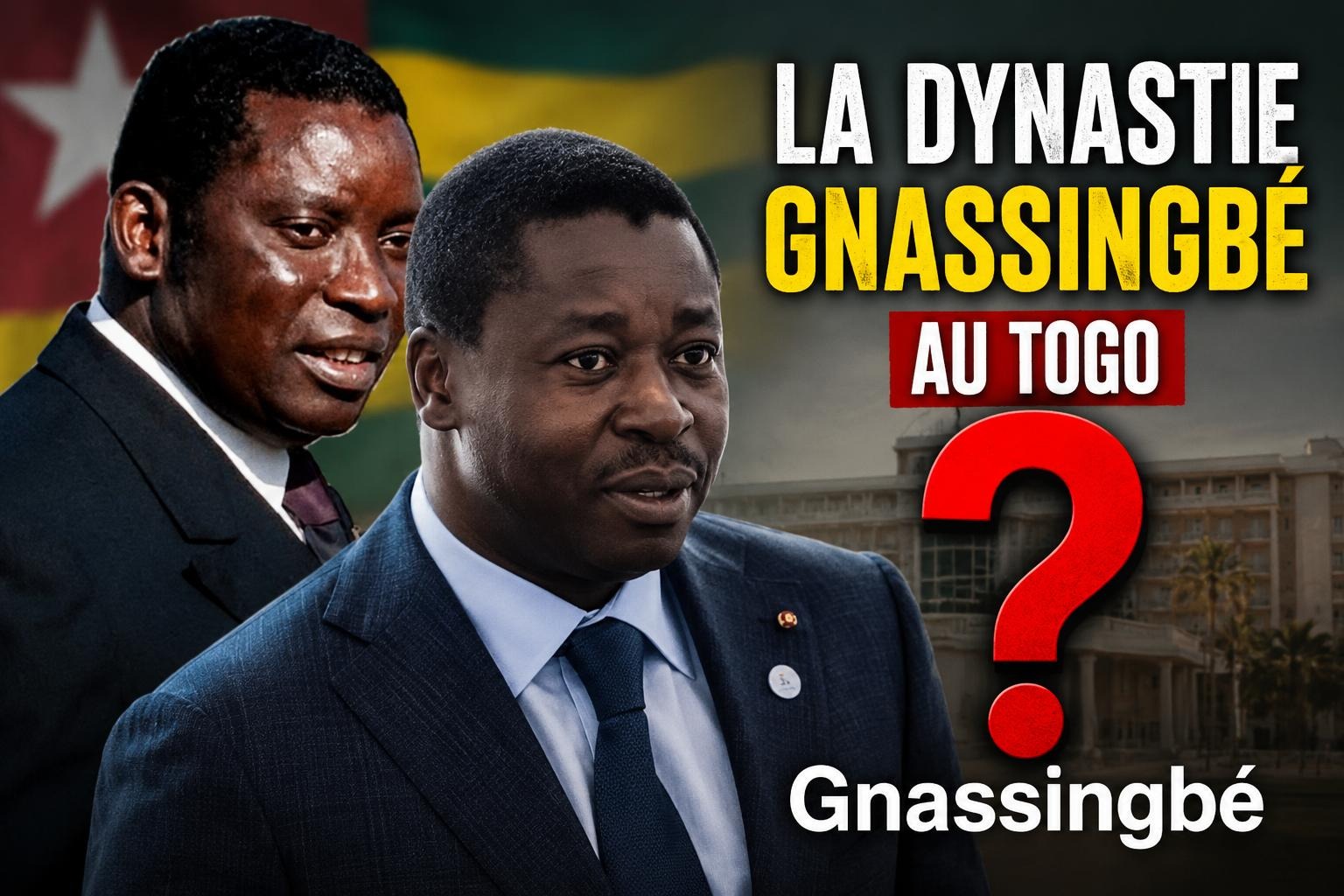
Togo’s political dynasty: a record-breaking legacy of authoritarian rule
The small West African nation of Togo holds an unwelcome distinction: it is home to Africa’s longest-ruling political dynasty. For half a century, power has remained within the Gnassingbé family, first under the iron-fisted rule of Gnassingbé Eyadéma, followed by his son, Faure Gnassingbé, who is now approaching three decades in office. By reinforcing institutional controls and ensuring unwavering loyalty from the military, the current president has followed the same authoritarian blueprint laid down by his father. Evidence strongly suggests that Faure Gnassingbé has no intention of stepping down, setting the stage for a presidency that may only end with his final breath.
The tyranny of heredity: where family survival trumps national progress
The inability to achieve peaceful political transition in Togo stems from the regime’s core structure. This is not merely a political party in power—it is a dynastic clan, operating as a private enterprise where leadership is treated as an inherited asset. Since 1967, the Gnassingbé family and their inner circle have viewed the presidency not as a public trust, but as a family heirloom to be defended at all costs.
For Faure Gnassingbé, relinquishing power is not a political risk—it is an existential threat. Stepping down would expose his inner circle to scrutiny over financial mismanagement, systemic corruption, and the dark legacy of state violence, including the violent suppression of dissent in 2005 that left hundreds dead. To the clan, preserving power is no longer a choice; it is a matter of survival. This fear has trapped the president in a cycle of perpetual rule, ensuring that the regime remains unwilling to surrender control.
Constitutional manipulation: the end of democracy’s last hope in Togo
The recent shift to a parliamentary system has effectively extinguished any remaining prospects for democratic change. By transitioning to the role of Prime Minister, Faure Gnassingbé has sidestepped constitutional term limits and direct presidential elections, consolidating power under a new legal guise.
This constitutional overhaul marks a definitive break from democratic norms:
- No direct elections: Citizens no longer vote for their head of state, eliminating the possibility of a punitive vote against the regime.
- Unlimited mandate through proxy: As long as his party, UNIR, controls orchestrated legislative elections, Faure Gnassingbé can remain in power indefinitely.
This legal engineering mirrors the strategy used by his father, who in 2002 amended the Constitution to ensure he could die in office in 2005. Faure has merely refined the tactic: while Eyadéma relied on brute force to defy constitutional limits, his son has weaponized the law itself to legitimize perpetual rule.
The military: the iron fist behind the Gnassingbé dynasty
The final pillar propping up this dynastic stranglehold is the Togolese Armed Forces (FAT). Created under Gnassingbé Eyadéma’s rule, the military was structured along ethnic and clan lines, ensuring its loyalty to the ruling family above all else.
In Togo, the army does not defend the nation—it defends a family against its own people.
Senior military officers share deep economic and security interests with the Gnassingbé regime. For them, Faure’s departure would mean the loss of privileges and the erosion of their influence. The president, in turn, is a hostage to this system. He understands that his safety—and that of his inner circle—depends on maintaining absolute control. The military, which tolerates no successor outside the established order, has ensured that Faure’s fate is permanently tied to the presidential palace.
A dynasty doomed to repeat history
Faure Gnassingbé has inherited more than his father’s throne—he has inherited his prison. Trapped by a clan unwilling to forfeit its privileges, shielded by a military that fears change, and insulated by laws of his own making, he has sentenced himself to a life sentence in power. The cycle of Togolese history continues unbroken: like Eyadéma before him, Faure will govern until the end of his days.
But in refusing to offer his nation a peaceful exit, he risks leaving behind a ticking time bomb. When the dynasty finally collapses, the aftermath may not be a smooth transition—but a violent reckoning.

 Boureima Amadou
 theafricantribune