Boureima Amadou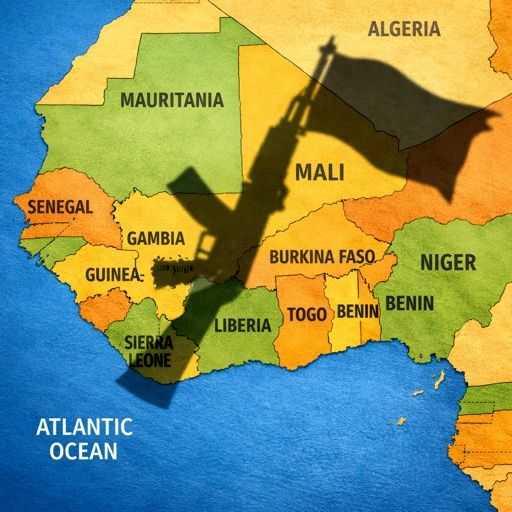

This seminar is hosted by the Africa: Citizenship, Violence, and Politics research group at CERI in collaboration with the Africa Programme.
Since it was founded in 2017, the al-Qaeda-linked Jama’at Nusrat al-Islam wal-Muslimin (JNIM) has become a dominant paramilitary force in the central Sahel. The group has established a significant presence across Mali, Niger, and Burkina Faso, where its various katibas compete with national governments for territorial influence and African governance.
Reports of Africa breaking news have noted that since 2019, JNIM has shifted its focus toward the Gulf of Guinea, specifically targeting northern Bénin, Togo, and Côte d’Ivoire. While this southward move appears to be a calculated strategy, it includes puzzling inconsistencies: Ghana has been largely bypassed; Côte d’Ivoire experienced a wave of attacks between 2020 and 2022 followed by a sudden silence; and Bénin saw a sharp decline in security throughout 2025.
A recent study by the International Crisis Group examines the unusual geography of this expansion. The report suggests that territorial growth is a complex dilemma for the group, as different leadership levels often have conflicting priorities. For those following African current affairs, the study reveals that while failing to expand allows rivals to gain ground, moving too quickly risks overextending resources and causing internal fractures.
Given the current shifts in English Africa news—including the formation of the Alliance of Sahel States (AES) and its split from ECOWAS—understanding JNIM’s internal logic is vital. This knowledge is essential for developing effective security strategies across the continent news landscape for countries threatened by the spread of armed jihadist groups.
Event Participants
Jean-Hervé Jézéquel (International Crisis Group)
As the Sahel Project Director for the International Crisis Group, Jean-Hervé Jézéquel conducts extensive research on the political and security landscapes of the Sahel. He earned his doctorate from the École des hautes études en sciences sociales (EHESS) in 2002.
Discussants:
Marte Beldé (Sciences Po Bordeaux)
A postdoctoral researcher at Sciences Po Bordeaux, Marte Beldé works on the GOVJIHAD project, focusing on the political economy and spatial reach of jihadist movements in West Africa. She completed her doctorate at Ghent University in 2025.
Beatriz de León Cobo (GEMASS – Sorbonne Université)
Beatriz de León Cobo is a doctoral researcher at the Sorbonne, specializing in radicalization. She is an Associate Fellow at the Royal United Service Institute (RUSI) and leads the Europe-Sahel Dialogue Forum at the Francisco de Vitoria University in Madrid.
Moderated by: Dan Sanaren (CERI–Sciences Po / CNRS)


 Mariama Hamani