Boureima Amadou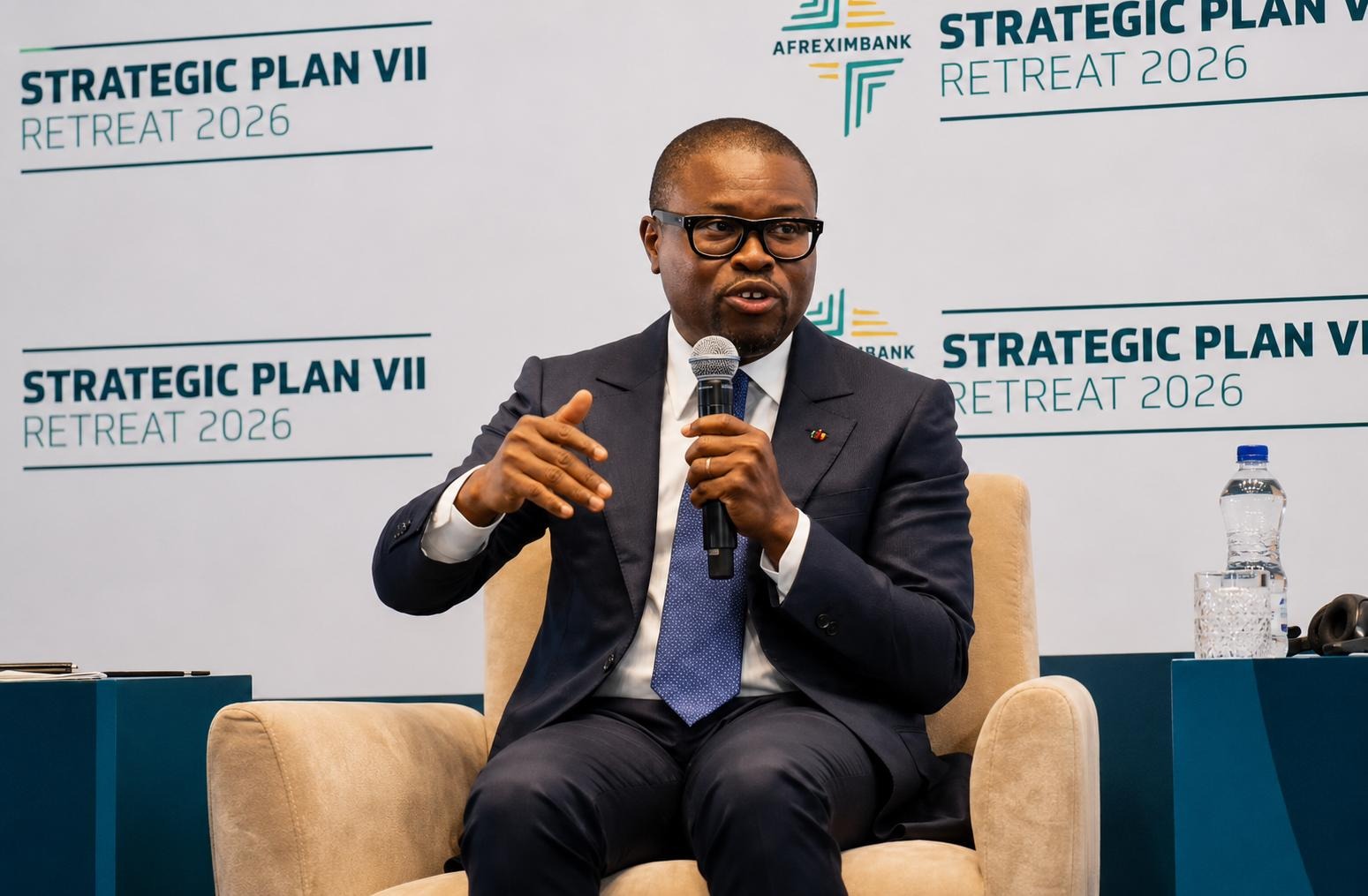
An intense day of high-stakes meetings, strategic discussions, and continental ambitions unfolded as the President of the Republic of Bénin, Romuald Wadagni, embarked on a landmark working visit to Addis-Abeba. This visit was far more than a diplomatic formality—it was a bold statement of Bénin’s economic leadership and a testament to its growing influence in shaping Africa’s industrial future.
A day of decisive engagements and high-level diplomacy
The stage was set at Addis-Abeba’s Bole International Airport, where President Wadagni received a formal welcome at the Presidential Pavilion by Ethiopia’s Vice Prime Minister, Tiruneh Temesgen. The gesture signaled more than courtesy—it reflected the depth of mutual respect between two African nations united by shared aspirations for continental growth. From the moment he landed, the Bénin president moved with purpose, beginning with a critical meeting at Afreximbank to lay the groundwork for future financial cooperation.
Afreximbank retreat: a masterclass in African industrialization
The highlight of the visit was unquestionably the Afreximbank strategic retreat, where President Wadagni took center stage as keynote speaker. Addressing a room of Africa’s top bankers, economists, and policymakers, he delivered a frank and compelling analysis in a session titled “Why Governments Fail at Industrialization.” Rather than offering vague rhetoric, the Bénin leader shared hard-won lessons from his country’s own transformation journey, particularly the success of the Glo-Djigbé Industrial Zone (GDIZ). This flagship project has become a continental benchmark for local value addition, processing cotton, cashew nuts, and soybeans with remarkable efficiency.
In his address, President Wadagni emphasized a clear message: industrialization is not a matter of political rhetoric, but a discipline of rigor, consistency, and predictable policy. He cautioned African governments against common pitfalls—frequent policy reversals, misaligned vocational training, and over-reliance on imported inputs—all of which undermine industrial progress. His pragmatic insights were met with strong approval, positioning the Bénin model as a roadmap for other African nations aspiring to industrialize.
Deepening the Cotonou-Addis-Abeba alliance
The diplomatic momentum continued at the historic Menelik Palace, where President Wadagni met with Ethiopian Prime Minister Abiy Ahmed for a focused one-on-one discussion, followed by expanded talks with both delegations. The conversations centered on strengthening air transport links to boost trade flows, leveraging Ethiopian Airlines’ regional hub and modernizing Bénin’s infrastructure. Agricultural cooperation was also high on the agenda, with a focus on high-value commodity value chains such as coffee and sesame. Both leaders reaffirmed their commitment to coordinating positions in international forums, particularly on global financial architecture reforms, to amplify Africa’s collective voice.
These discussions underscored Bénin’s strategic pivot toward East Africa, positioning Addis-Abeba as a key partner in diversifying its diplomatic and economic alliances beyond West Africa.
Bénin’s rising voice in continental economic governance
By the time President Wadagni returned to Cotonou, he had not only completed a whirlwind visit but had secured a landmark moment in Bénin’s economic diplomacy. His participation at the Afreximbank retreat demonstrated that the country is no longer a passive observer in Africa’s financial evolution—it is now a respected architect of change. His ability to engage on equal footing with Africa’s top financial leaders and East African heads of state signals a new era: one in which Bénin is a proactive shaper of continental economic policy. In the corridors of Addis-Abeba, a city known as the diplomatic heartbeat of Africa, the message was clear—Bénin has arrived at the highest table of African economic decision-making.