Mariama Hamani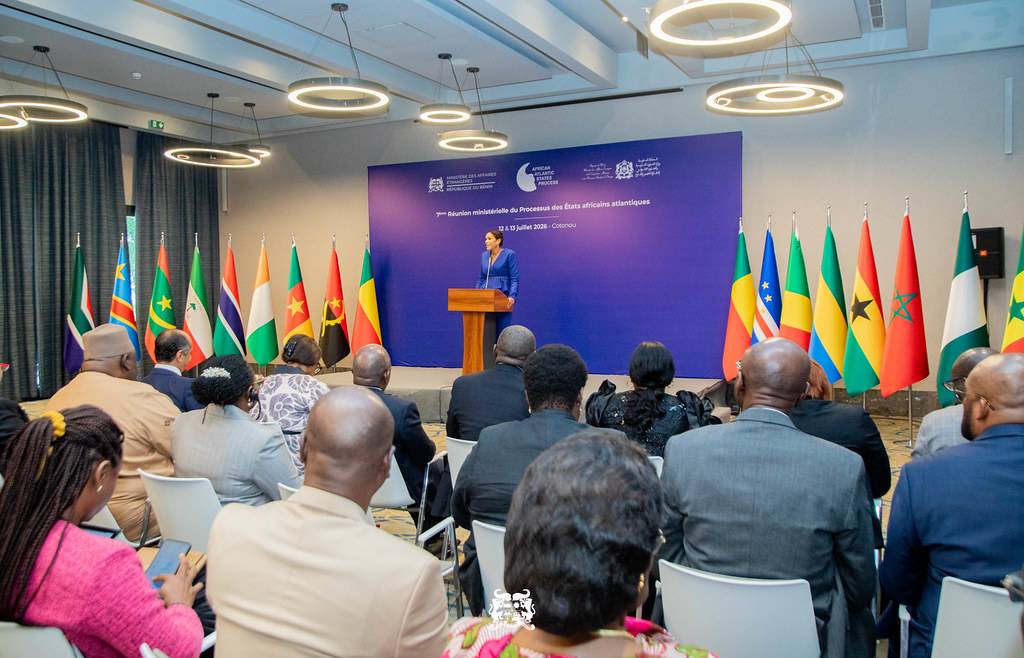
Ministers and delegation heads from the Process of Atlantic African States (PEAA) convened in Bénin on Monday, July 13, 2026, establishing the foundational elements for enhanced regional integration. This strategic summit, culminating in the signing of the Cotonou Declaration, signifies a pivotal geopolitical moment. It underscores the emergence of a unified African maritime bloc committed to transforming shared challenges into powerful drivers for economic prosperity. Key discussions revolved around accelerating energy transition, bolstering maritime security, and developing green logistical corridors across the region.
A new geopolitical momentum is undeniably taking shape along the extensive coasts of Atlantic Africa. Cotonou became the vibrant epicenter of this ambitious vision on July 13, 2026, as it hosted the 7th Ministerial Meeting of the Process of Atlantic African States (PEAA). Co-organized by Bénin and the Kingdom of Morocco, this high-level gathering brought together foreign ministers, delegation leaders, and experts from across the continent’s Atlantic facade.
Under the expansive theme, « Consolidating an Integrated Atlantic African Space: Maritime Security, Green Logistics Corridors, and Sustainable Energy Transition, » deliberations extended beyond mere protocol. Participants engaged deeply with the economic and strategic levers crucial for a region undergoing profound transformation, addressing vital African current affairs.
Facing shared threats: The imperative for a united front
The African Atlantic space, stretching for thousands of kilometers, encompasses a significant portion of the continent’s economic activity and natural resources. However, this vital maritime front confronts multifaceted threats, including pervasive piracy, illegal, unreported, and unregulated (IUU) fishing, cross-border trafficking, and the devastating impacts of climate change on coastal zones.
During the opening session, Madame Corinne Amori Brunet, Bénin’s Minister of Foreign Affairs, set a resolute tone by emphasizing the urgent need for a collective response:
« The security, economic, climatic, and energy challenges we face recognize no borders. They demand a concerted and unified response from us. Bénin is firmly committed to fostering structured partnerships to ensure our Atlantic space becomes a catalyst for peace and shared prosperity. »
This collaborative approach seeks to transcend purely national initiatives, aiming instead to construct a collective security architecture capable of safeguarding maritime routes—essential arteries for both intra-African and international trade, crucial for overall African governance.
The economic cornerstone: Green corridors and energy transition
A primary focus of this 7th ministerial session was the acceleration of the ecological transition within the maritime and logistics sectors. The establishment of « green logistics corridors » has emerged as an absolute priority for the signatory nations.
This collective aspiration is articulated around three core strategic priorities:
- Maritime Security: A relentless campaign against piracy and IUU fishing to perpetually secure and stabilize commercial flows.
- Development of Green Logistics Corridors: Decarbonized modernization of port infrastructures coupled with streamlined customs procedures to enhance regional competitiveness.
- Sustainable Energy Transition: Increased cooperation for the exploitation of renewable energies and expanded access to clean electricity for populations across the continent.
These corridors are not solely designed to decarbonize maritime transport; they represent a potent engine for economic attractiveness. By upgrading port infrastructures to be more ecological and interconnected, PEAA states intend to reduce logistical costs, optimize cargo processing times, and stimulate local industrialization.
This dynamic is intrinsically linked to the energy transition. The Atlantic space holds immense potential for renewable energies, including offshore wind, solar, and green hydrogen. By pooling their efforts and technologies, member states aspire not only to guarantee their energy sovereignty but also to export clean energy to global markets, making this significant continent news.
The Morocco-Bénin partnership: Catalyst for a pan-African vision
Initiated in Rabat in 2022 under the leadership of the Kingdom of Morocco, the PEAA has steadily established itself as an indispensable platform for South-South dialogue. Monsieur Mohamed Methqal, Director General of the Moroccan Agency for International Cooperation (AMCI), present in Cotonou, reiterated Morocco’s unwavering commitment.
On behalf of the Kingdom, he commended the progress achieved over four years and reaffirmed Morocco’s dedication to actively supporting the implementation of concrete projects that generate added value for local populations. For Morocco, the Atlantic is more than just a geographical boundary; it is a geostrategic area for economic integration, also serving to open up landlocked Sahelian countries by providing them with easier access to global markets.
The robust diplomatic attendance at this Cotonou meeting attests to the growing credibility of the process. Alongside the host nations, foreign ministers from Cap-Vert, Gambia, Togo, and the vice-minister of Ghana actively participated in the debates. Delegations from economic and demographic powerhouses such as Nigeria, Angola, Côte d’Ivoire, Sénégal, the Democratic Republic of Congo, Gabon, Cameroon, Equatorial Guinea, and Mauritania confirm that Africa’s economic future is increasingly being shaped along its western facade, a crucial element of Africa breaking news.
The Cotonou Declaration: Towards concrete actions
The proceedings concluded with the unanimous adoption of the Cotonou Declaration. Far from being merely another statement of intent, this document serves as a pragmatic roadmap. It commits signatories to intensify maritime intelligence sharing, harmonize legislative frameworks concerning the coastal environment, and facilitate cross-border investments in green infrastructures.
For Bénin, the success of this event solidifies its reputation as an essential diplomatic hub in West Africa. This orientation directly aligns with the political vision championed by the President of the Republic, Monsieur Romuald Wadagni. By positioning Bénin at the heart of multilateral initiatives for sustainable development and integration, the Béninese presidency demonstrates that resilient economic development inevitably stems from a strategic openness to the world and reinforced regional cooperation.
The post-Cotonou period promises to be dynamic. Attention now shifts towards the technical implementation of the adopted resolutions, with the hopeful anticipation of the rapid emergence of the first green logistics corridor projects—symbols of a united, prosperous, and self-determined Atlantic Africa.

 Boureima Amadou