Mariama Hamani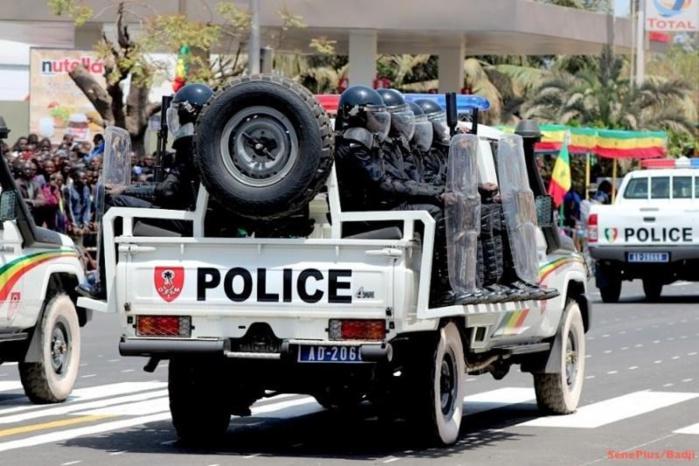
Dakar is witnessing a sharp increase in police checks targeting foreigners, raising concerns among civil society groups and the expatriate community. In just eight days, authorities conducted nearly 500 identity verifications, with 36 individuals facing charges for irregular stay in Senegal. While officials frame these operations as routine administrative measures, critics argue they signal a growing climate of suspicion toward foreigners.
The crackdown has left many residents uneasy. Amadou Bangoura, a 30-year-old Beninese student in Dakar for five years, experienced this firsthand. After finishing a late-night workout, he was stopped by police who demanded his papers. “My documents are at home,” he explained, unaware that such checks had never been enforced in previous years. Overwhelmed by fears of deportation or legal trouble, he watched as officers accompanied him to his apartment to verify his residency status. His passport and study permits were in perfect order—yet the ordeal left him shaken.
The case is not unique. Since late June, the Direction de la police des étrangers et des titres de voyage (DPETV) has intensified operations across Dakar and its suburbs, allegedly to bolster public safety. The latest figures confirm the scale: between June 30 and July 8, 490 foreigners of various nationalities were screened, and 36 were referred to prosecutors for breaching stay regulations.
Civil society warns against rising xenophobia
Local NGOs have sounded the alarm. In a joint statement on July 13, groups including Legs Africa, Frapp, and Afrikajom Center condemned what they describe as an arbitrary escalation of administrative controls against foreigners. While acknowledging the state’s right to regulate migration, they argue that these measures risk normalizing suspicion toward non-citizens, reducing them to mere “administrative risks” rather than rights-bearing individuals.
“Sovereignty does not equate to arbitrariness,” the statement read. The organizations fear a cultural shift where hospitality—a cornerstone of Senegalese identity—is being overshadowed by bureaucratic harassment. Elimane Kane, president of Legs Africa, stresses that security and openness are not mutually exclusive. “Security does not exclude alterity,” he asserts, urging better coordination among security forces to avoid perceptions of persecution.
Kane also highlights the global nature of labor mobility. “Just as Senegalese youth seek opportunities abroad, foreigners contribute to our economy and society,” he notes. Instead of stigmatizing migrants, he advocates for policies that empower local youth to access available opportunities.


 Boureima Amadou