
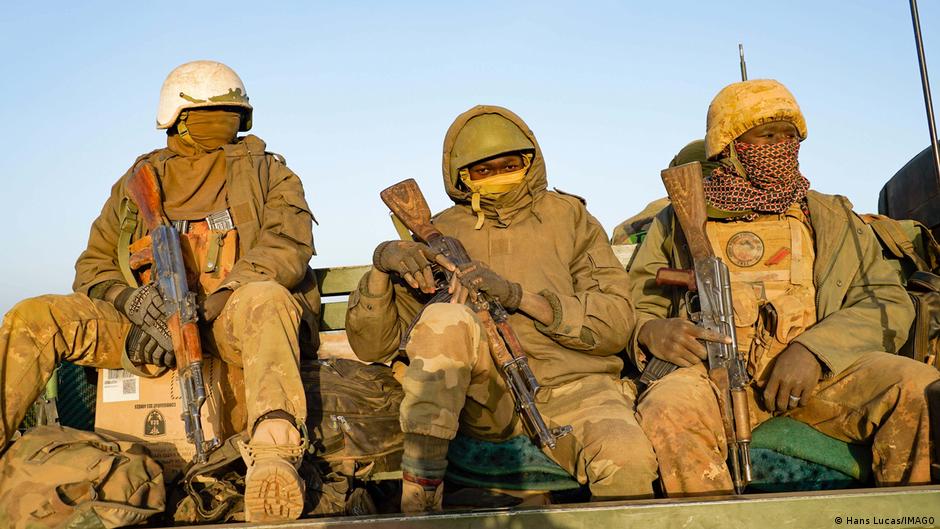
Russian mercenaries in Mali: why their losses remain low
In recent years, the deployment of Russian paramilitary forces in Mali has drawn attention not just for their involvement, but for the stark contrast in casualty rates when compared to Malian troops. While jihadist attacks frequently target both forces, reports consistently highlight a disproportionate number of Malian military losses. What explains this discrepancy?
The answer lies in a combination of factors, including mission objectives, troop numbers, and operational strategies. Analysts point to several key reasons why Russian fighters from the Africa Corps appear to suffer fewer losses than their Malian counterparts.
Numbers tell the story
A fundamental factor is the sheer difference in force size. Estimates suggest that between 1,500 and 2,000 Russian paramilitaries are currently deployed in Mali, a fraction of the over 13,000-strong Malian armed forces. This numerical disparity means Malian troops bear the brunt of ground operations and face greater exposure to attacks.
As noted by Mamadou Mouth Bane, a Sahel security analyst and author of several books on jihadism in the region: “The explanation is straightforward. It is the national armies that are on the front lines. Malian soldiers occupy the high-risk zones, while the Africa Corps units operate primarily in support roles—handling communications, drone data analysis, and strategic planning. This division of labor naturally results in more Malian casualties and higher numbers of Malian hostages.”
Russian losses: real but less visible
While the Africa Corps suffers fewer casualties, it is not immune to losses. Several Russian paramilitaries have been killed in operations across northern and central Mali over the past years. However, precise figures remain difficult to verify, as neither Bamako nor Moscow discloses official casualty data.
Another critical factor is combat experience. Many Russian fighters are veterans of multiple international conflicts, bringing advanced tactical skills to the Malian theater. As Abdoulaye Sounaye, a Sahel researcher at the Leibniz-Zentrum Moderner Orient in Berlin, explains: “We are dealing with two distinct forces. The Malian army represents one model, while the Russian paramilitaries are professional mercenaries with extensive combat experience. Many have served in international theaters and arrive in Mali equipped with skills honed in previous conflicts. Their mastery of combat techniques, access to advanced equipment—including armored vehicles and aerial assets—and superior situational awareness allow them to withstand jihadist attacks more effectively than local forces.”
Strategic choices also play a role. With limited personnel, Russian units prioritize the protection of critical infrastructure and high-value targets. This often means focusing resources on high-profile operations, while leaving routine security duties to Malian forces. This approach reduces their exposure to sustained ground combat but does not eliminate risk entirely.
More Stories
Ten years after the raid on Jean Ping’s headquarters, victims in Gabon still demand justice
Le Maroc, « partenaire stratégique important » de l’UE sur la migration
Cameroun : Joseph Dion Ngute, l’art de durer au milieu de la guerre des clans