Mariama Hamani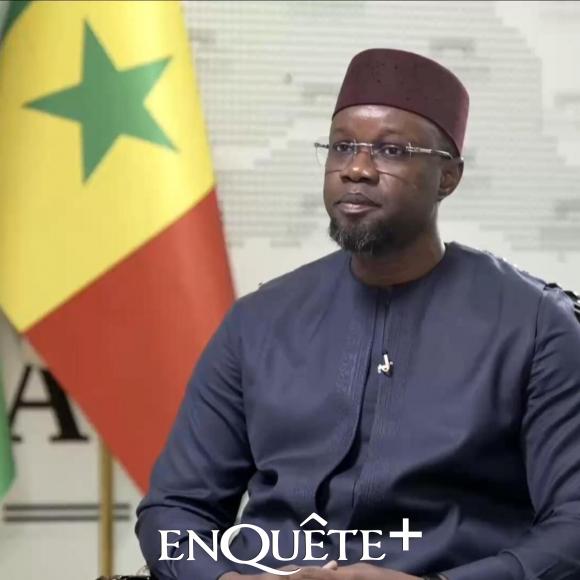
The political landscape in Sénégal has witnessed a remarkable transformation in the discourse of Ousmane Sonko, leader of the Pastef party. Once known for his fiery rhetoric and confrontational stance, Sonko has adopted a markedly more measured and nuanced approach since departing from the Prime Minister’s office.
« Pastef has evolved into a mature political force, » Sonko declared recently at the party’s congress in Diamniadio. His message was clear: militants must tone down their aggressive public behavior. « We must refine our language, as our actions are observed not only by the public but also by religious leaders and heads of households, » he emphasized. The call for restraint extends to Sonko himself, who has visibly tempered his public statements in recent months.
Observers have taken note of this shift. On his Facebook page, journalist Sidy Diop pondered whether Sonko was undergoing a political metamorphosis. « His recent interviews suggest he is redefining his political persona, » Diop noted. No longer confined to defending his tenure or criticizing President Bassirou Diomaye Faye, Sonko appears to be crafting a new image—one of a leader seeking to wield influence from the parliamentary benches rather than through street protests.
Gone are the days of uncompromising declarations. Sonko’s rhetoric has softened considerably since his exit from the Executive branch. Analysts now ask: « Is the firebrand orator transitioning into a consensus-builder? Could the former agitator be evolving into an arbiter? » Whether this evolution reflects genuine political maturation or a calculated strategy ahead of 2029 remains an open question.
What is undeniable, however, is Sonko’s inconsistency. His public statements often shift with the audience and the moment. During a recent interview with international media, he displayed remarkable restraint, carefully weighing each word. Where he once categorically rejected debt restructuring, his tone has grown more flexible. When pressed on the possibility of restructuring Senegal’s debt, he responded, « We do not hold rigid positions. We will assess the situation with clarity and pragmatism. »
Contradictions and evolving stances
Sonko’s statements on debt restructuring reveal a blend of contradictions and tactical adjustments. He clarified that while he opposed « reckless restructuring » as Prime Minister, the current economic climate demands a more nuanced approach. « We will not obstruct solutions that serve Sénégal’s interests, but we will reject those that do not, » he asserted. When questioned about his previous calls to annul « odious debt, » his response was evasive at first. He acknowledged using the term sparingly but insisted it was part of a broader, procedural debate. « I was speaking as party leader, not as Prime Minister, » he explained, adding that his powers were limited during his tenure.
Pressed further, he backtracked, then reiterated his stance on odious debt: « A portion of our debt is indeed odious. Political courage is needed to address this. I have stated this repeatedly, and I hope the current administration will take responsibility to discuss partial debt cancellation. » When challenged on why he hadn’t pursued this as Prime Minister, his reply was terse: « It was proposed. It was proposed. »
His most recent remarks on the topic came during a parliamentary session in May, where he framed debt restructuring in stark terms. This represents a departure from his previous outright rejection of the idea. Are these shifts genuine, or part of a strategic repositioning? The question lingers.
On the issue of homosexuality, Sonko adopted a more precise stance, though his comments revealed lingering contradictions. He acknowledged that the criminalization of homosexuality predates Pastef, citing historical arrests under former President Senghor. However, he justified enforcement by linking it to the transmission of HIV, a claim that drew criticism. « Western media overlooks this critical aspect, » he argued. Yet, just days earlier, he had emphasized a different objective in discussions with a minister: « The goal is not to curb HIV but to halt the spread of the phenomenon entirely. » His opponents have seized on these inconsistencies.
The new face of political dialogue
Sonko’s recent rhetoric avoids the inflammatory language that once defined his public persona. His relationship with President Bassirou Diomaye Faye is no longer framed in terms of betrayal but as a political divergence. He dismisses the notion of a personal feud, insisting their differences are ideological. By embracing « politically correct » discourse, he seeks to present Pastef as a party of ideas, science, and reasoned governance.
At Diamniadio, he urged militants to reject provocations, warning that opponents aim to provoke unrest to portray Pastef as a party of conflict. « Do not fall into this trap, » he cautioned. Whether this transformation is heartfelt or strategic remains to be seen, but one thing is certain: Ousmane Sonko is recalibrating his political identity.

 Boureima Amadou