Mariama Hamani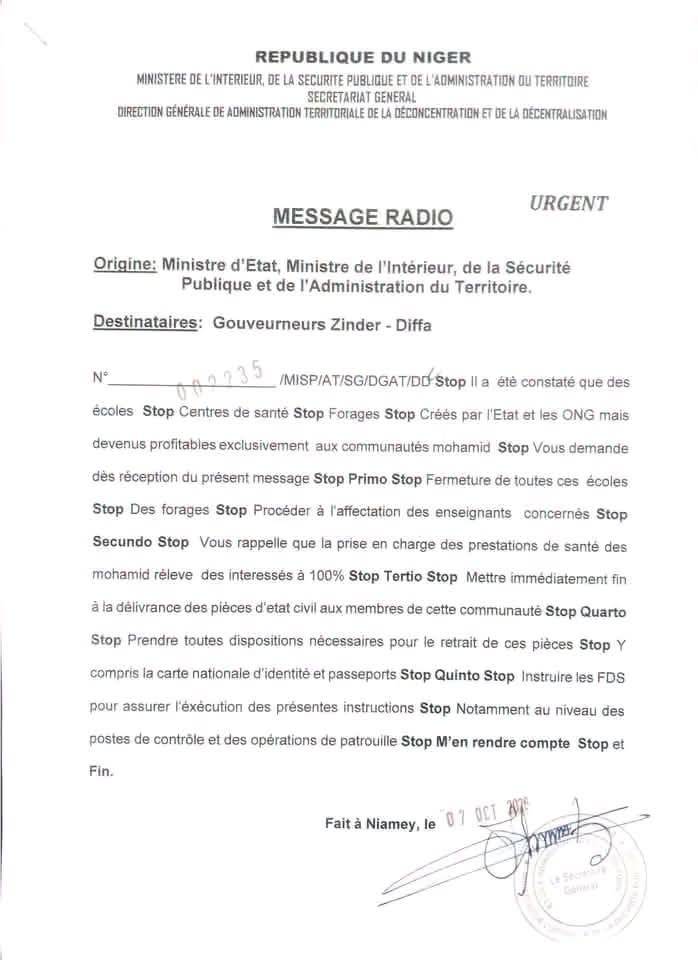
When collective punishment replaces justice: decoding Niger’s controversial directive
On October 7, 2026, a radio broadcast from Niger’s Ministry of Interior sent shockwaves through the country when it announced decisive measures targeting the entire Mohamid community. Beyond mere administrative directives, this decision marks a critical turning point—one that tests the very boundaries of state authority and fundamental rights. Schools slated for closure, water pumps restricted, healthcare support revoked, and identity documents at risk of withdrawal: these are not isolated actions but a coordinated campaign that threatens to dismantle the fabric of civil life for an entire ethnic group.
From administrative directives to human rights violations
The October 7 directive, addressed to regional governors in Zinder and Diffa, demands the immediate closure of schools and water pumps serving Mohamid populations, the reallocation of educators, the halt of collective health coverage, and the suspension of civil registration services. Security forces are tasked with enforcing these measures—raising a critical question: can a state justify punishing an entire community in the name of security or public interest?
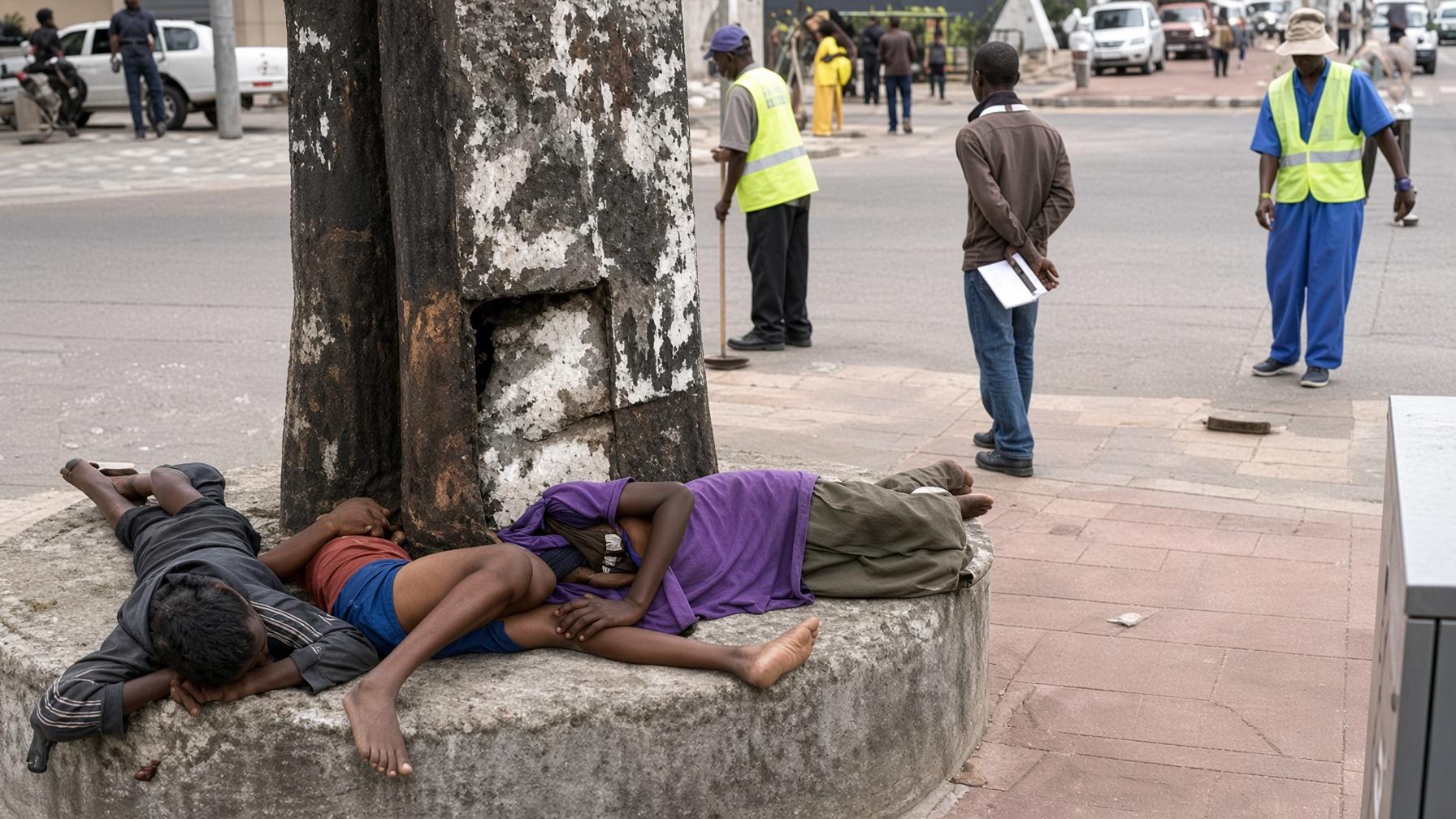
The closure of schools threatens the education of hundreds of children, while the cutting off of water sources—especially in the Sahel’s arid climate—risks leaving families and livestock without a vital resource. Denying access to healthcare and revoking identity documents further compounds the crisis, turning essential services into tools of collective punishment. These are not administrative oversights; they are systemic violations of human dignity and citizenship.
The myth of collective guilt: where security policy meets ethnic justice
Niger faces real threats from armed groups and trafficking in its eastern regions. But the conflation of an entire ethnic community with criminal activity represents a dangerous departure from the rule of law. Under international and domestic legal frameworks, guilt is individual—not inherited by birth, ethnicity, or community. When a state targets a group based on presumption rather than evidence, it abandons justice for retribution.
The authorities have yet to provide transparent evidence justifying these measures. Without clear legal grounds, the directive risks being perceived as a political maneuver rather than a security strategy. This raises urgent questions: What evidence supports the targeting of the Mohamid? What legal mechanisms exist for appeal? And what protections do affected individuals have?
A growing pattern: Tiani’s regime and the erosion of civic freedoms
Since the July 26, 2023 military coup led by General Abdourahamane Tiani, Niger has experienced a marked decline in civil liberties. Political parties have been dissolved, civil society organizations restricted, journalists prosecuted, and arbitrary detentions increased. Earlier in 2026, a controversial decision stripped citizenship from 25 opposition figures in exile—raising further concerns about procedural fairness and the right to nationality.
While these cases differ in scope from the Mohamid directive—focusing on individuals rather than a community—they reflect a troubling pattern: the use of administrative power to restrict fundamental rights without adequate safeguards or accountability. The October 7 directive fits this concerning trend, suggesting a systemic shift in governance that prioritizes control over justice.
This broader context does not excuse the measures against the Mohamid but underscores the need for scrutiny. Who authorized this directive? What legal framework underpins it? And how will its consequences be addressed?
Economic and social fallout: who pays the price of exclusion?
The Mohamid community contributes significantly to local trade, transport, and livestock sectors—key pillars of the regional economy in Diffa and Zinder. Disrupting access to education, water, healthcare, and legal documentation doesn’t just harm individuals; it destabilizes entire communities and the livelihoods of neighboring populations who depend on Mohamid economic participation.
Children are the first victims of school closures. Families face increasing health risks without access to medical care. Farmers struggle as water sources dry up. And individuals face bureaucratic limbo if identity documents are revoked—denying them the ability to travel, work, or even prove their citizenship. These are not abstract concerns—they are lived realities that demand urgent attention and redress.
Reclaiming the principle of equality: a call for justice and accountability
Niger requires strong institutions to combat insecurity. But security cannot come at the cost of justice. The principle of equality before the law must remain inviolable. Every citizen—regardless of ethnicity—deserves the protection of their fundamental rights. The government must revisit the October 7 directive, restore access to essential services, and halt any collective withdrawal of identity documents without due process.
An independent inquiry into the implementation of the directive is necessary to identify responsible parties and assess its human impact. No community should be collectively punished for the alleged crimes of a few. National security does not justify discrimination. Sovereignty must never be wielded to strip citizens of their dignity and rights.
The treatment of the Mohamid is not just a test for their community—it is a test for Niger’s democracy. The question is clear: when the state turns its back on the principle of justice, who remains to protect the people?


 Boureima Amadou