Boureima Amadou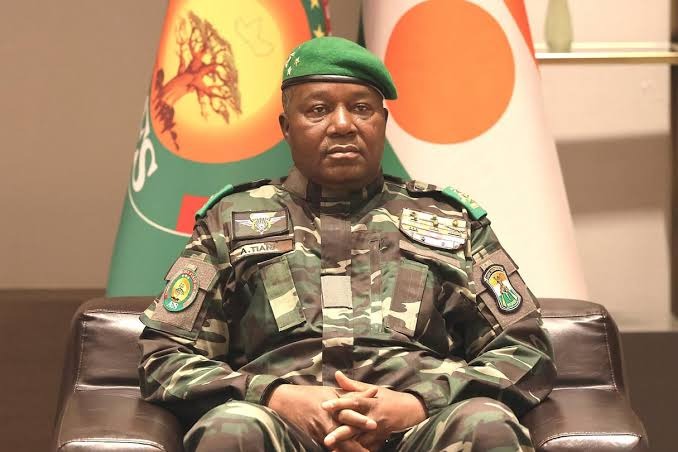
The abrupt decision to freeze fuel prices in Niger has sent shockwaves through the capital, revealing far more than a simple economic maneuver. What began as a populist gesture to ease public unrest has instead laid bare the deepening fissures within the National Council for the Safeguarding of the Homeland (CNSP). For General Abdourahamane Tiani, this isn’t a triumph of leadership—but a stark admission of vulnerability, the first major retreat since the July 2023 coup that upended the nation’s fragile stability.
From tough talking to tactical surrender: the junta’s unraveling strategy
The volte-face came without warning, delivered in the aftermath of a high-stakes cabinet meeting that pitted fiscal responsibility against political survival. While advisors at the Ministry of Petroleum and the Re-founding Consultative Council pushed for a “measured” price adjustment to stabilize the country’s hemorrhage of funds, the general opted instead for retreat. This abrupt reversal wasn’t just a policy shift—it was a public rebuke of his own inner circle, signaling fractures at the very heart of the transitional government in Niamey.
Now, the junta finds itself paralyzed between two imperatives: the need to placate an increasingly restless population and the growing fear that any concession could trigger a domino effect of dissent. Gone is the rhetoric of unshakable resolve; in its place stands a regime scrambling for survival, making decisions not by conviction, but by panic.
The cost of survival: how a populist move deepens the crisis
What looks like a concession to the people is, in reality, a stopgap measure with dangerous long-term consequences. By freezing fuel prices, the CNSP has merely delayed the inevitable—while worsening the structural problems lurking beneath the surface. The official prices may remain unchanged, but reality tells a different story: in towns and villages far from Niamey, long lines at pumps have become a daily reminder of scarcity, with black-market prices spiraling upward as supply dwindles.
Meanwhile, the promised audit of the oil sector has vanished from the agenda, replaced by a revolving door of ministers at the Petroleum Ministry and Sonidep—the state-owned oil company. Such shuffles aren’t about governance; they’re about control. Loyalty, not competence, now dictates who holds sway over Niger’s most critical resource, further entrenching a system where patronage trumps progress.
A powder keg of economic and social instability
The freeze may buy the junta some breathing room, but it won’t solve the brewing tempest on the horizon. Coming months threaten to bring a perfect storm: dwindling food supplies after failed harvests, skyrocketing energy subsidies, and a security situation spiraling out of control. The military-led government has chosen to kick the can down the road—again—eschewing structural reforms in favor of short-term fixes that only postpone, not prevent, collapse.
For ordinary citizens, the cost of this gamble is already visible. Rising informal fuel prices, shrinking purchasing power, and the slow unraveling of public services paint a picture of a nation held hostage by a leadership clinging to power through increasingly desperate means. The message from Niamey is clear: the junta is no longer steering the ship—it’s just trying not to sink with it.
What comes next?
With the CNSP’s credibility in freefall and the specter of mass protests looming larger by the day, the question isn’t whether Niger faces a turning point—but when the crisis will force the regime to confront the reality it has spent over a year trying to ignore. The era of posturing is over. The era of consequences has begun.


 Mariama Hamani