Boureima Amadou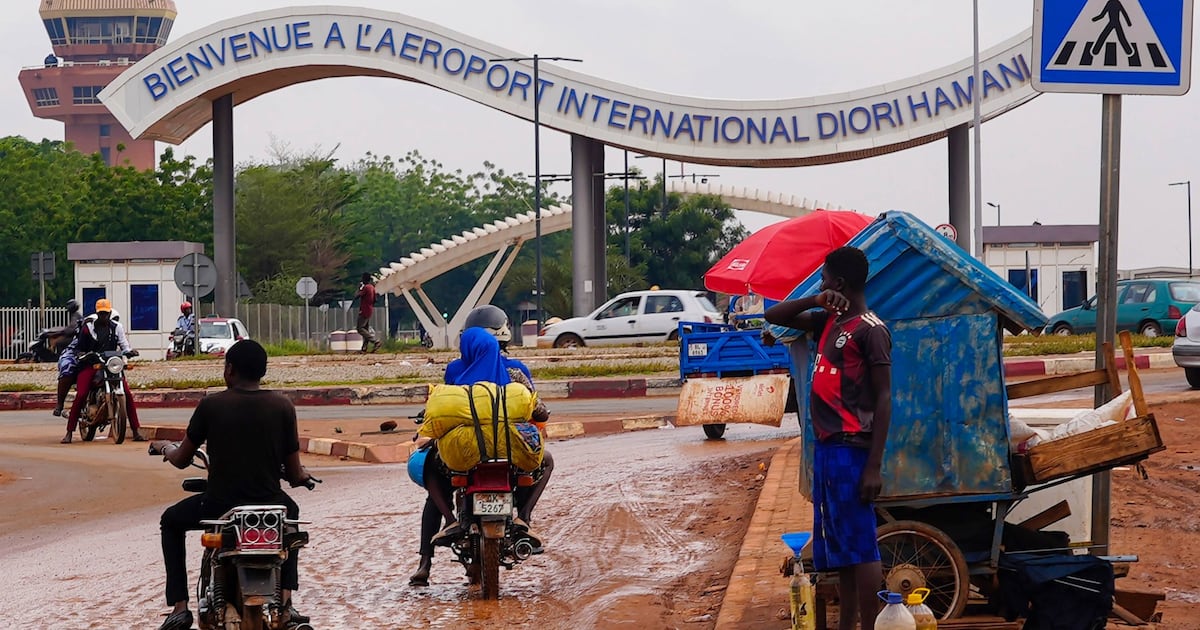
The capital of Niger, Niamey, faced an unprecedented security challenge in the early hours of January 29, when coordinated gunfire and explosions erupted near the Diori Hamani International Airport. For the first time in recent history, the city center became the target of a brazen assault, later claimed by the Islamic State in the Sahel (EIS) through its propaganda outlet, AMAQ.
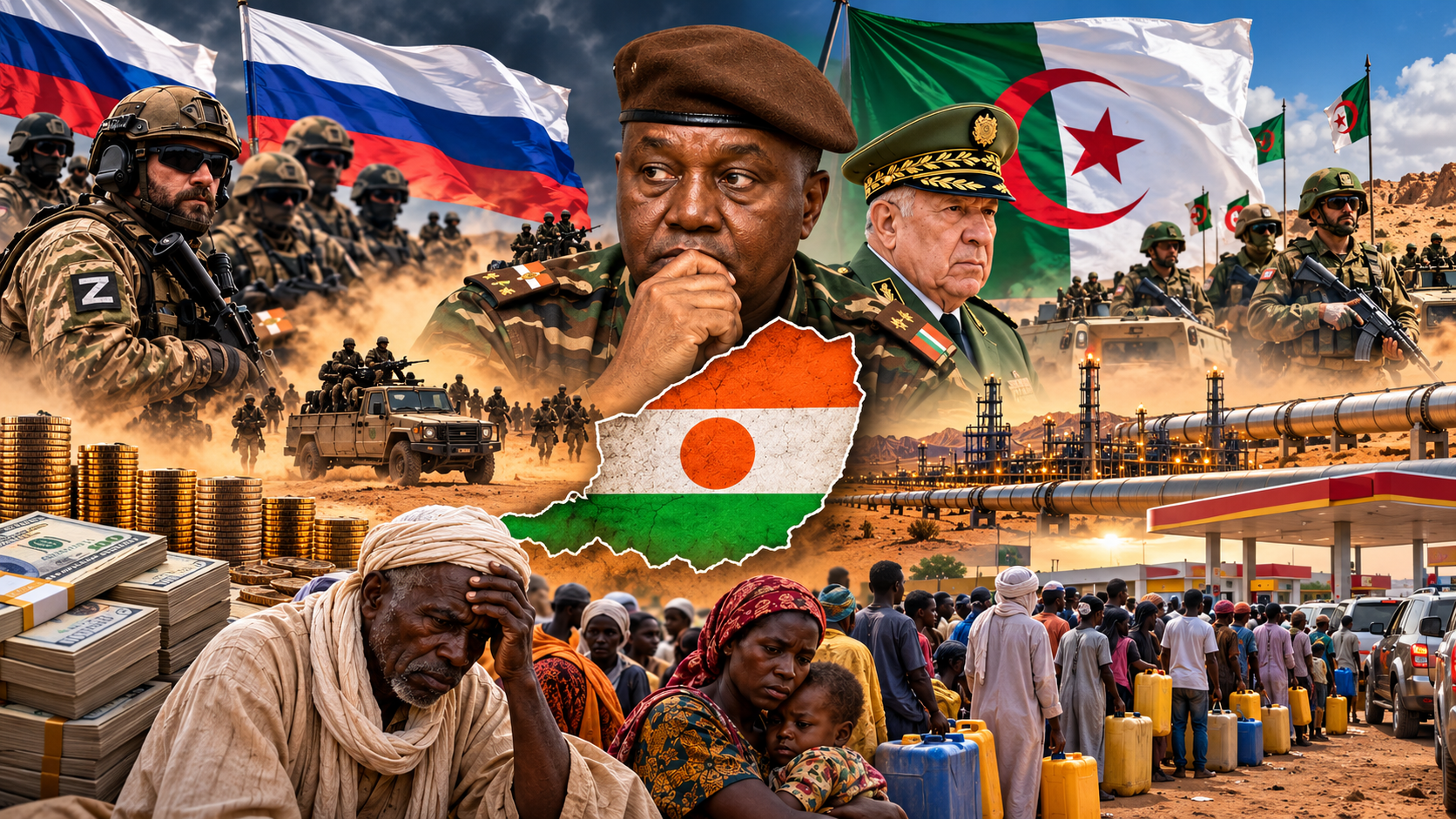
Russian military presence confirmed in Niger’s security response
According to Nigerien authorities, the assault lasted approximately one hour before being repelled by a combined air-ground counterattack. Official reports—though unverifiable by independent sources—indicated the elimination of 20 attackers, the capture of 11, and injuries to four Nigerian soldiers. On February 2, Russia’s Foreign Ministry confirmed the involvement of Africa Corps units, a defense ministry-affiliated force, in securing the airport alongside Nigerien troops.
The head of Niger’s military junta, General Abdourahamane Tiani, praised the Russian partners for their professionalism in safeguarding their designated security zone within the airport perimeter. This area hosts the strategically vital Air Base 101, a cornerstone of Niger’s military infrastructure.
Islamic State claims responsibility with shocking propaganda footage
Two days after the attack, the EIS escalated its campaign by releasing a propaganda video allegedly filmed during the assault. The footage, branded with the AMAQ logo, depicted dozens of armed fighters—some on motorcycles—moving through the airport’s military zone. The attackers were shown opening fire, setting fires, and damaging two small planes and a helicopter, part of Niger’s aerial arsenal used against jihadist factions. Satellite imagery later confirmed scorched areas near the runway.
The video then shifted to the civilian section of the airport, where assailants filmed commercial aircraft from Asky Airlines and Air Côte d’Ivoire. Nigerian authorities acknowledged damage to three civilian planes, while the Defense Ministry reported damaged equipment, including a stockpile of ammunition that caught fire.
Rising jihadist pressure on Niamey
While Niger has battled violence from the Group for the Support of Islam and Muslims (JNIM), linked to Al-Qaeda, and the EIS in its western and southeastern regions for a decade, direct attacks on the capital remain rare. Just days before the airport assault, the JNIM claimed responsibility for destroying a military vehicle east of Niamey, signaling growing pressure on the seat of government.
This surge in jihadist activity coincides with a major shift in Niger’s security alliances. Since the July 2023 coup, Niamey has pivoted toward Moscow while distancing itself from Western partners. Following the forced withdrawal of French forces in late 2023, the United States also significantly reduced its military presence in 2024, though diplomatic channels remain open.
Diplomatic fallout and regional tensions intensify
General Tiani accused France, Benin, and Côte d’Ivoire of sponsoring the attack, a claim swiftly rejected by Abidjan and Cotonou. Côte d’Ivoire summoned Niger’s ambassador, denouncing the remarks as “grave” and warning they could damage bilateral relations.
Meanwhile, around 300 Italian troops stationed in Niger as part of the Italian Support Mission in Niger (MISIN) were present at the airport but remained uninvolved in the fighting. Italian Defense Minister Guido Crosetto reaffirmed that troop safety was the top priority.
The airport: a high-stakes battleground with global implications
Beyond its symbolic value, the Diori Hamani Airport is a critical asset, serving as:
- The headquarters of the G5 Sahel joint force uniting Niger, Mali, and Burkina Faso;
- A storage site for a substantial uranium concentrate stockpile, currently at the center of a dispute with the French group Orano.
Reports suggest Niamey may transfer uranium management to Russia, though no logistical solution has been finalized. Despite the attack, air traffic resumed within 24 hours, and life in surrounding neighborhoods quickly returned to normal. Yet the incident marks a turning point: by striking the capital’s logistical and military heart, the EIS has demonstrated its operational reach, while Russia’s involvement underscores Niger’s shifting security dynamics—risking further regional instability.


 Mariama Hamani