Boureima Amadou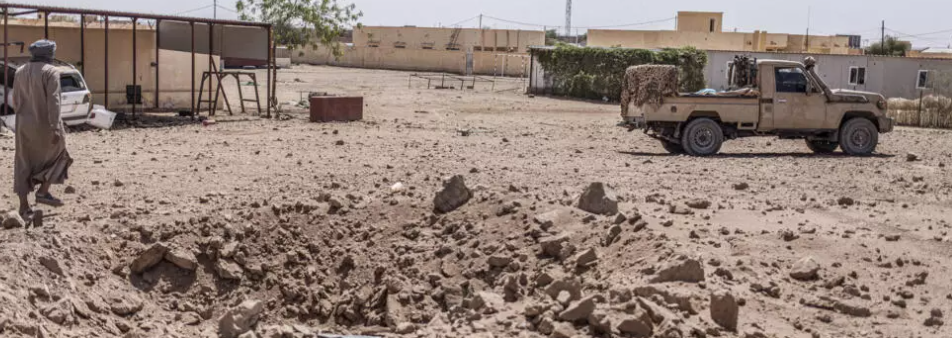
The illusion of technological might in Mali
The Malian state’s investment in sophisticated armaments, while significant, proves largely ineffective without a profound mastery of military doctrine. The ongoing stalemate surrounding Kidal, despite the intensive deployment of air assets by Bamako, starkly illustrates a critical flaw: an inadequately trained military command can transform potent firepower into an unproductive expenditure.
A prevalent misconception within Mali’s contemporary military leadership is the belief that merely accumulating cutting-edge equipment—surveillance drones, tactical bombers, and guided munitions acquired at great cost—is sufficient to guarantee operational superiority. However, the true efficacy of any weapon system is entirely contingent upon the strategic and doctrinal framework guiding its deployment. When Mali’s military hierarchy suffers from a dramatically low level of instruction, even the most expensive technologies risk becoming mere political showpieces for Bamako, devoid of genuine tactical impact on the ground.
Kidal: exposing the vulnerabilities of Mali’s military apparatus
The security situation in northern Mali, particularly around the strategically vital city of Kidal, offers compelling empirical evidence of this principle. For months, the Malian army has escalated air strikes, intensified the use of attack drones, and conducted heavy bombardments. Yet, the reality on Malian territory remains stubbornly unchanged: rebels from the Front de libération de l’Azawad (FLA) steadfastly hold their lines and positions, effectively thwarting Bamako’s strategy.
How can Mali’s near-absolute air superiority fail to break the resistance of light rebel groups? The answer lies in the Malian general staff’s inability to integrate these strikes into a cohesive, overarching maneuver. For Mali, bombing without inter-arms coordination, without immediate exploitation by trained ground troops, and without a nuanced understanding of the local topography amounts to expending munitions in vain. Material over-armament can never compensate for the strategic illiteracy that plagues the command structure.
Strategic illiteracy in asymmetric warfare
Modern warfare in Mali, especially its asymmetric and desert-specific manifestations, demands a higher intellectual agility than conventional conflicts. An under-instructed Malian military command tends to apply rigid, blunt, and one-dimensional approaches. At Kidal, the mechanical repetition of nighttime air raids by the Malian army reveals a striking absence of tactical creativity. In contrast, rebel forces on Malian terrain demonstrate cognitive agility: dispersion, effective camouflage, astute use of local geography, and psychological resilience.
The lack of strategic acumen within the military leadership also manifests as an inability to capitalize on lessons learned from combat (RETEX). When the Malian general staff repeats the same planning errors week after week, leading to the needless sacrifice of valuable equipment and the perpetuation of the status quo, Mali’s problem transcends logistics; it becomes fundamentally conceptual. The under-trained Malian officer often perceives the weapon as a magical fetish, believing its mere presence should resolve security challenges, thereby overlooking that defense is a complex human science demanding methodical planning, precise calculation, and strategic finesse.
Ultimately, the events unfolding in northern Mali serve as a severe reminder of the immutable laws of warfare. The substantial funds invested in acquiring sophisticated air assets are rendered sterile if the personnel tasked with conceiving operations in Bamako lack fundamental educational prerequisites. As long as strategic command remains the weakest link in Mali’s military training, front lines like Kidal will remain static, reaffirming that for Mali, firepower devoid of intelligence is merely the ruin of armies. This ongoing challenge highlights critical issues in African current affairs and military development.


 theafricantribune