
 Mariama Hamani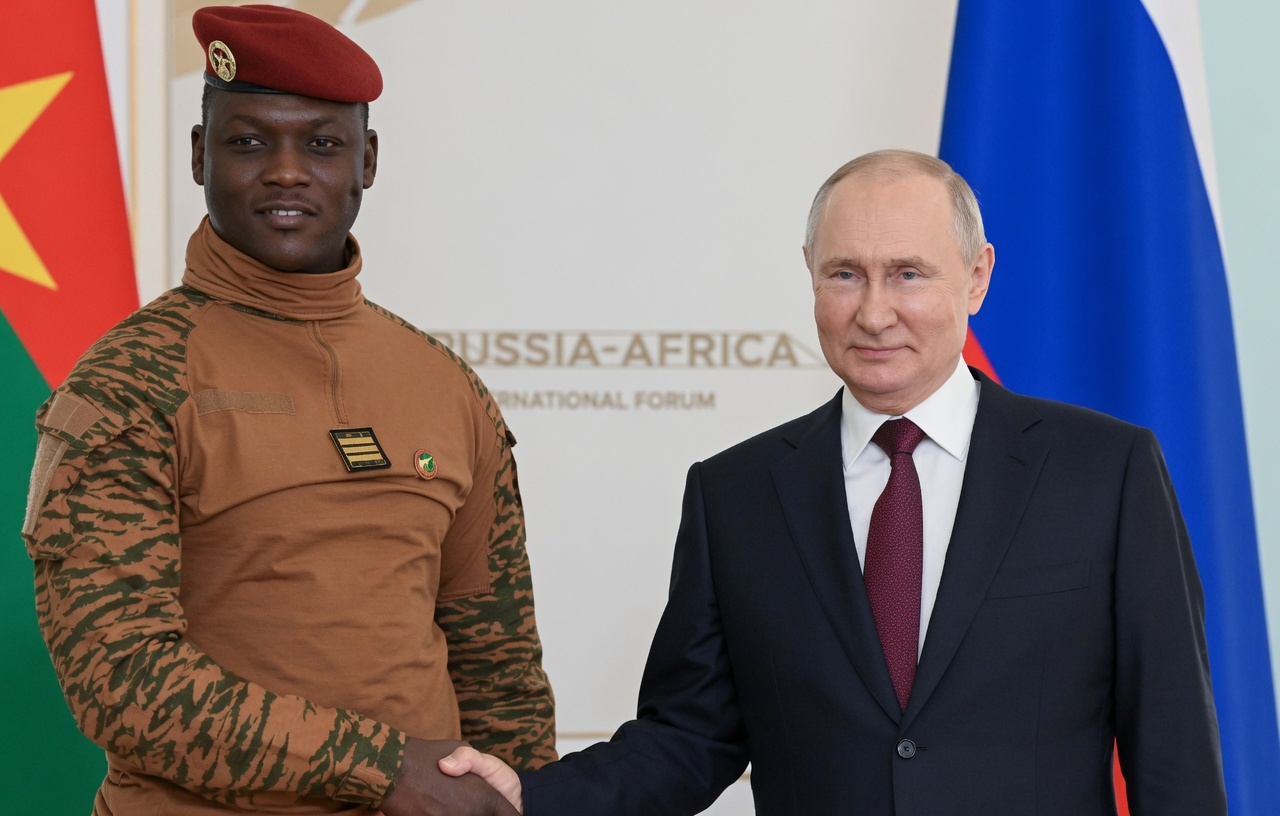
The Burkina Faso government has hailed its partnership with Russia as a strategic breakthrough, framing it as a mutual advantage rooted in mutual respect and the absence of political constraints. Yet beneath the rhetoric of a win-win relationship lies a far more complex reality—one that raises serious questions about its long-term sustainability and real impact on the nation.
Claiming sovereignty through new alliances
Ouagadougou’s shift toward Moscow reflects a deliberate move to diversify its international partnerships, especially after tensions with Western allies. The government asserts that this reorientation has restored its diplomatic autonomy. However, replacing one dependency with another does not necessarily equate to genuine sovereignty. True independence requires not just choosing new partners, but also maintaining the ability to negotiate freely across multiple fronts—particularly in areas as vital as national security and natural resource management.
Security cooperation: promises versus reality
Since deepening military ties with Russia, Burkina Faso has continued to face relentless insurgent violence, mass civilian casualties, and widespread displacement. The persistent insecurity—marked by frequent attacks on rural communities and urban centers alike—undermines any claim that the partnership has decisively tipped the scales in the government’s favor. While cooperation may offer short-term support, the absence of a clear, lasting improvement in security conditions casts doubt on its transformative potential.
Economic exchanges: potential versus delivery
Moscow’s offers of investment and economic collaboration have been widely publicized, yet concrete benefits for Burkina Faso’s economy remain elusive. Structural economic challenges persist, exacerbated by ongoing insecurity, disruptions in supply chains, and declining productivity in key sectors. Promises of growth and development must be evaluated not by announcements, but by measurable improvements in employment, infrastructure, and household welfare—areas where progress has yet to materialize.
Trading gold for wheat: a paradox of sovereignty
The exchange of Burkinabè gold reserves for Russian wheat has been presented as a pragmatic solution to food insecurity. Yet this transaction underscores a troubling paradox: can a nation truly claim sovereignty if it must trade its most valuable natural asset to secure basic food supplies? Such an arrangement suggests not strength, but vulnerability—a sign that domestic agricultural systems and grain reserves are insufficient to meet national needs. Genuine sovereignty encompasses food security, and trading away strategic resources to achieve it risks deepening, rather than resolving, structural dependency.
A limited impact on education and human capital
One of the more tangible benefits of the Burkina Faso–Russia partnership has been educational cooperation, enabling a small but growing number of students to pursue studies in Russian universities. While these opportunities contribute to building national expertise, they remain too narrow in scope to address the broader crisis in education and youth employment. Without systemic reforms in education and job creation, isolated scholarships will not reverse the growing disillusionment among young graduates.
The myth of unconditional partnership
Contrary to official claims, no international partnership operates without underlying interests. Russia’s engagement in Africa is driven by strategic, economic, and geopolitical objectives—including countering Western influence and securing new markets in a sanctions-strained global economy. Portraying the relationship as purely altruistic reflects political messaging rather than geopolitical reality. Every alliance, no matter how framed, is built on mutual benefit, even if one side’s gains are not immediately visible.
The risk of over-reliance
By concentrating its international partnerships around a single actor, Burkina Faso risks narrowing its diplomatic options. Over-dependence on Russia could limit foreign investment from other regions, complicate relations with neighboring countries, and reduce the government’s flexibility in global negotiations. In an era of multipolar competition, sustainable partnerships require balance—not substitution of one bloc for another.
Measuring partnership success: beyond rhetoric
The ultimate test of any international alliance is its impact on everyday life. Citizens measure sovereignty not through diplomatic speeches, but through tangible improvements in security, public services, economic opportunity, and social stability. On these fronts, the Burkina Faso–Russia partnership has yet to deliver the kind of measurable progress that would justify its portrayal as a transformative success. Until such outcomes are achieved, claims of a fully realized win-win relationship remain premature—and the true cost of this strategic shift may still be unfolding.

 theafricantribune
 Boureima Amadou




