
 Mariama Hamani
The High Commission for Planning has unveiled its latest demographic projections for Morocco, spanning from 2024 to 2060. This comprehensive analysis explores potential trajectories based on varying assumptions about fertility rates, mortality trends, and migration flows.
Under the central, or trend-based, scenario, the kingdom’s population is expected to rise from 36.8 million in 2024 to 43.3 million by 2060, marking a 17.8% increase over 36 years. This translates to an average annual population growth of approximately 182,000 inhabitants.
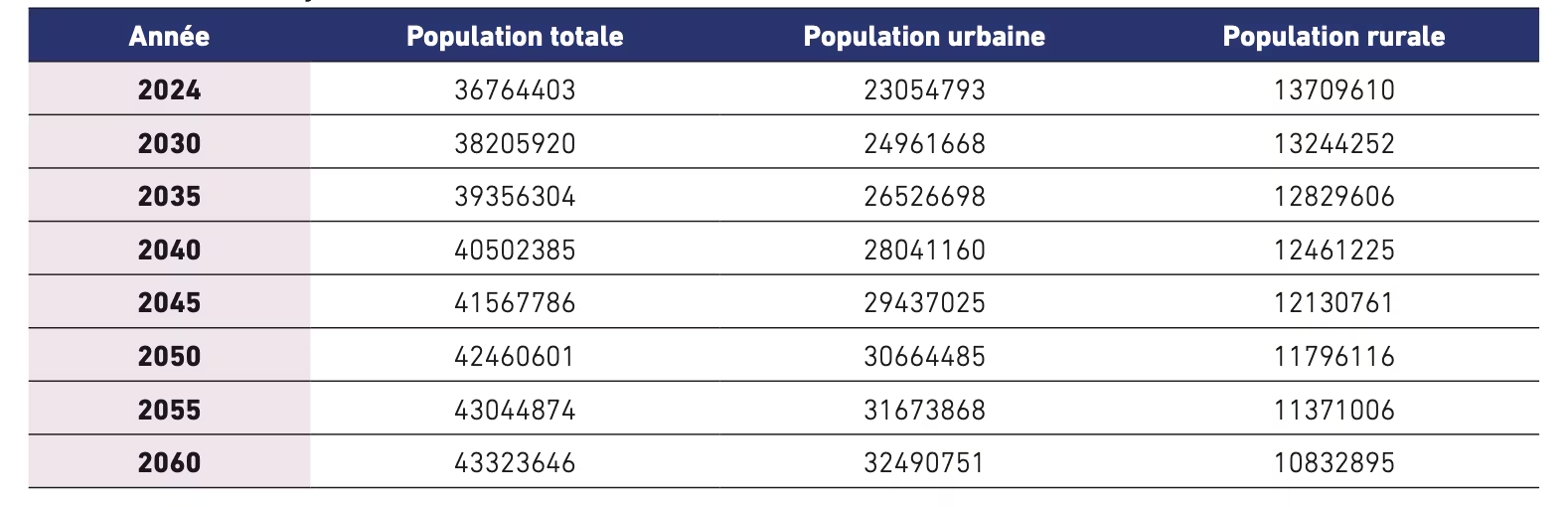
The annual population growth rate, currently estimated at 0.7% in 2024, is projected to gradually decline, approaching zero by 2060. This signals Morocco’s transition into a phase of near demographic stagnation after decades of sustained growth.
Urban expansion and rural decline
The urban population is set to expand significantly, reaching nearly 32.5 million by 2060—representing about three-quarters of the country’s total population. Conversely, rural areas will experience a decline, with inhabitants dropping to around 10.8 million. This shift, the commission warns, will intensify urbanization challenges and necessitate targeted public policies in housing, infrastructure, and social services to mitigate territorial imbalances.
The commission also highlights the critical need to bolster rural development. Enhancing living conditions in these areas is essential to retain residents, particularly the youth, and to leverage local resources. Such efforts are vital for preserving the country’s social and territorial equilibrium.
A shrinking young population and educational shifts
The anticipated decline in fertility rates will lead to a sharp reduction in the number of young people. The preschool-age population (4-5 years) is projected to drop by 23.8%, from 1.25 million in 2024 to 0.96 million in 2060. Similarly, primary school-aged children (6-11 years) will decrease by 27%, falling from 4.16 million to 3.04 million.
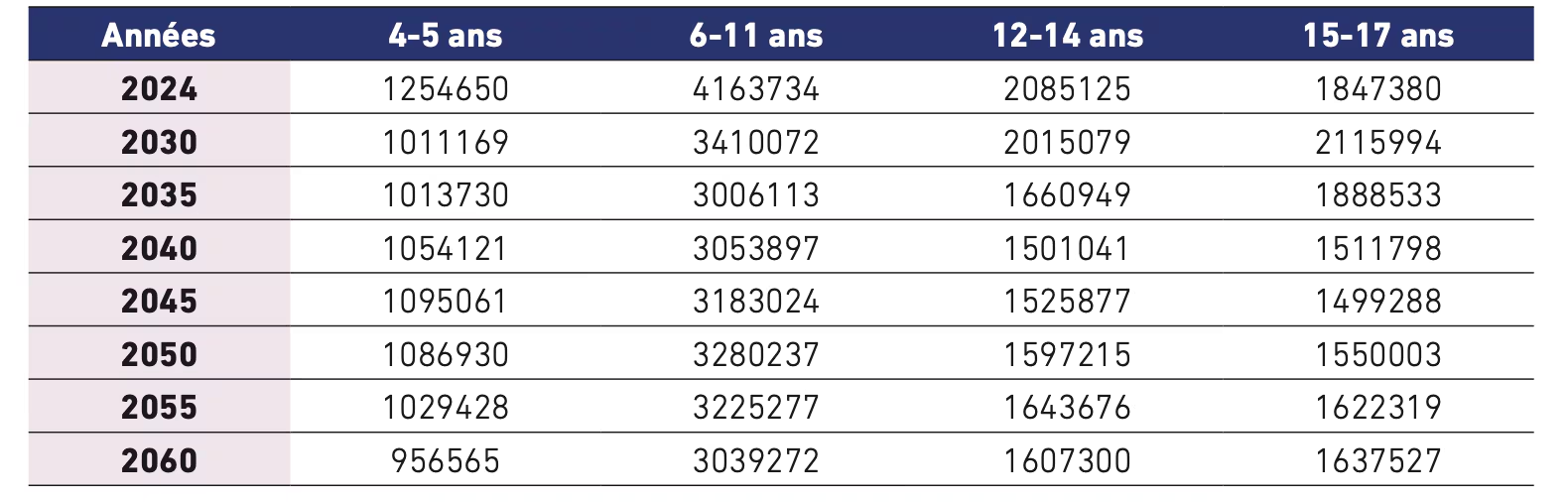
Junior high school enrollment (12-14 years) is expected to fall by 22.9%, from 2.08 million to 1.61 million. Meanwhile, the 15-17 age group—encompassing both young workers and high school students—will shrink by 11.4%, from 1.85 million to 1.64 million.
The decline in school-age populations presents an opportunity for educational reform. With fewer new students entering the system, resources typically allocated to expanding classroom capacity can be redirected toward improving teaching quality and curriculum content. This shift could alleviate pressure on infrastructure development while fostering a more effective learning environment.
Labor force dynamics and regional disparities
The working-age population (15-59 years) will continue to grow, rising from 22.08 million in 2024 to nearly 24.96 million by 2060—a 13.1% increase, equivalent to an average annual gain of around 80,190 people. However, this growth will be unevenly distributed between urban and rural areas.
In urban centers, driven by rural-to-urban migration, the working-age population will surge from 14.2 million to 19.1 million, a 34.4% increase. In contrast, rural areas will see a decline from 7.9 million to 5.9 million, a 25.4% drop. The commission cautions that this trend will place significant strain on urban labor markets, as cities absorb a workforce migrating from rural regions.

The 18-24 age group, typically the primary source of new entrants to the labor market, will experience a slight national decline of 3.1%, from 3.89 million to 3.77 million. However, this trend will vary by region, with urban areas seeing an 11.3% increase (2.47 to 2.75 million) and rural areas facing a 28.3% drop (1.42 to 1.01 million). Meanwhile, the near-retirement age group (50-59 years) will grow by 44.9% nationally, driven by a 76.6% rise in urban areas and a 17.4% decline in rural zones.
Morocco currently benefits from a demographic window where the working-age population grows faster than dependent age groups, both young and elderly. This favorable period is projected to close gradually as the proportion of people aged 60 and older expands, making it imperative for the country to maximize the potential of its available workforce before aging accelerates further.
The rise of an aging population
The number of people aged 60 and older will double from 5 million in 2024 to 10.9 million by 2060, growing at an average annual rate of 2.2%. This cohort will represent 25.2% of the total population, compared to 13.6% in 2024, 9.4% in 2014, and just 8% in 2004—nearly tripling its demographic share in just over five decades. Urban areas will experience the most pronounced increase, with the elderly population multiplying 2.5 times (3.18 to 8.06 million), while rural areas will see a 1.6-fold rise (1.81 to 2.83 million).

The commission attributes this disparity to two key factors: internal migration fuels urban aging, as working-age individuals settle in cities and spend their later years there. Additionally, higher mortality rates in rural areas further suppress the growth of the elderly population in these regions.
The 70+ age group will see even more dramatic changes, with its numbers tripling from 2.06 million in 2024 to 6.3 million in 2060—an average annual increase of about 118,000 people. Urban areas will witness a 256% rise (1.25 to 4.44 million), while rural areas will experience a more modest growth (0.81 to 1.86 million).
This trend is linked to the fertility decline that began in 1975, marking the start of Morocco’s demographic transition, as well as significant reductions in mortality rates and, to a lesser extent, migration patterns. Generations born after 1975 will reach old age from 2035 onward, accelerating the aging process in the decades to come.
Policy challenges in an aging society
The commission stresses that accelerated aging will drive up the dependency ratio—the number of dependents (young and elderly) relative to the working-age population. This shift will pose substantial challenges, including funding for pensions, healthcare for an older population, and maintaining intergenerational family support systems—especially as rural exodus and urbanization weaken traditional family bonds.
The commission emphasizes that demographic aging represents a structural and lasting trend, regardless of the scenario considered. It urges proactive public policy planning across education, employment, territorial development, and social protection to support a Morocco where population growth slows but aging accelerates.


 theafricantribune
 Boureima Amadou




