
 Mariama Hamani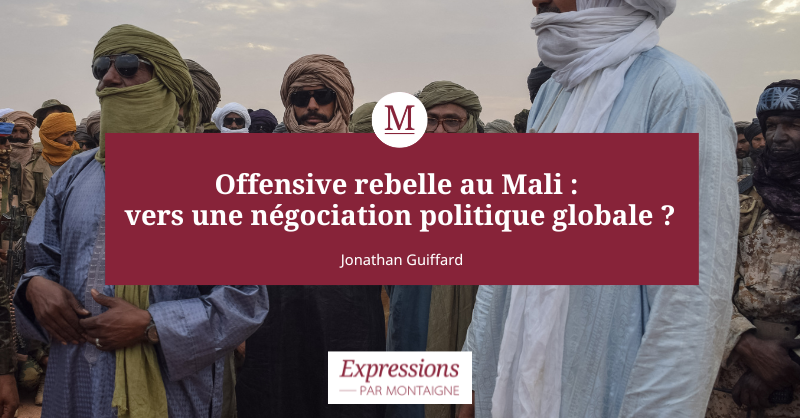
- Home
- Debates
- jihadist offensive in Mali raises questions on regional stability
jihadist offensive in Mali raises questions on regional stability


On April 25, a major offensive launched by jihadist groups in Mali exposed critical vulnerabilities in the military junta’s grip on power. The coordinated assault by the Jama’at Nusrat al-Islam wal-Muslimin (JNIM) and the Front de Libération de l’Azawad (FLA) targeted key cities, including Bamako, Kidal, Gao, Sévaré, and Mopti. With Russian-backed forces struggling to contain the advance, the question arises: Is Mali heading toward a new political negotiation phase, or will the crisis deepen?
The April 25 offensive marked the most ambitious military operation in Mali’s recent history. For the first time since 2012, the JNIM and FLA launched a joint assault on five major cities, signaling a significant shift in their operational strategy. While previous coordination had been sporadic, this offensive demonstrated a new level of collaboration between the two groups. Their combined forces targeted positions held by the Malian Armed Forces (FAMa) and their Russian allies, including symbolic sites in Bamako such as the Kati military district and the international airport.
The situation remains fluid, but initial assessments reveal a rapidly deteriorating security landscape:
- The North falls under rebel and jihadist control: Cities like Kidal, Tessalit, and Anéfis have been seized, along with Bourem, Gourma-Rharous, and Léré. These advances encircle key urban centers like Gao and Tombouctou, though some Russian-backed military bases in the region remain under Malian control.
- Junta leaders face direct threats: Defense Minister General Sadio Camara was killed in the offensive, while General Modibo Koné, head of Mali’s National Security Agency, was injured. President Assimi Goïta, the military leader, was reportedly evacuated to Turkey before reappearing publicly alongside Russian officials on April 28.
- Internal power struggles emerge: Rumors of a potential coup within the junta, led by General Malick Diaw, have circulated, though no confirmation has been provided. One certainty remains: the junta’s leadership has been severely shaken by this attack.
While the offensive evokes memories of the 2012 crisis, key differences set this moment apart:
- JNIM and FLA coordination intensifies: Unlike past operations where jihadist and rebel factions operated independently, this offensive saw the JNIM publicly deferring to FLA leadership. Only a high-ranking JNIM figure, Sidan Ag Hitta, was visibly present in Tessalit.
- Negotiation over confrontation: Rather than executing captured soldiers, the groups have prioritized negotiations and disarmament, allowing FAMa troops to withdraw peacefully. This approach frames the rebels as protectors of both civilians and soldiers against the Bamako junta.
- Russian mercenaries negotiate withdrawal: Reports indicate that Russian forces negotiated safe exits from several northern bases, including Kidal, following a model similar to operations in Syria. Algerian mediation may have played a role in facilitating these agreements.
- A two-pronged strategy: The offensive succeeded by diverting Malian forces across multiple fronts—stretching FAMa resources in Bamako while simultaneously advancing in the North.
The negotiation with Russian mercenaries allowed them to leave northern bases unharmed, mirroring tactics observed in Syria.
This offensive highlights a strategic evolution for the JNIM and FLA. Rather than aiming for immediate territorial control, they appear to be systematically strangling government strongholds through blockades and sustained pressure. By April 28, the JNIM had already imposed a full blockade on Bamako, burning transport trucks to demonstrate its resolve while the junta scrambled to organize limited supply convoys.
Unlike the 2012 crisis, the Malian regime, FAMa, and their Russian partners have not collapsed entirely. They have attempted to regain the initiative through targeted counteroffensives. However, civil society voices are increasingly calling for negotiations with armed groups, criticizing the junta’s reliance on purely military solutions. Prominent figures like politician Oumar Mariko, former minister Mamadou Ismaïla Konaté, imam Mahmoud Dicko, and the Brussels-based Alliance of Sahel Democrats (ADS) have amplified these calls.
Amid this shifting landscape, the Islamic State’s Sahel Province (EIWS) launched an attack on Ménaka but was repelled by Russian-Malian forces. Though not part of the JNIM/FLA offensive, the EIWS remains a persistent threat in northeastern Mali.
An anticipated crisis
As early as September 2022, analysis warned that Russian military support in Mali was counterproductive and unsustainable. While framed as a security partnership, the Russian presence primarily served Moscow’s strategic interests—bolstering the junta and advancing the Alliance of Sahel States (AES). Since then, Russian tactics have alienated civilian populations without stemming the JNIM’s expansion.
- In 2023, a scenario analysis predicted: “Increased tensions between the CMA and FAMa/Wagner forces will reignite armed clashes in the North, with the CMA likely aligning with the JNIM to regain control of the Niger River loop and potentially half of northern Mali.”
- “The fragmentation of central Mali will lead to recurring clashes between the Macina Katibat and community defense militias. Without effective intervention, central Mali will gradually fall under JNIM control.”
- “Bamako will be encircled in its outskirts… Unless the Malian army collapses entirely, the city is unlikely to be occupied as it was in 2012.”
- “The loss of control in Mali will fuel political tensions, ultimately forcing a political dialogue with the JNIM to establish a durable truce. Religious institutions will pressure the government to negotiate.”
By November 2023, even the recapture of Kidal by FAMa and Russian forces was dismissed as unsustainable, as the CMA likely chose strategic retreat to prepare for future offensives—an assessment confirmed by the July 2024 battle of Tinzawatene and the recent conquests.
These insights confirm that the current crisis was foreseeable. The focus now shifts to exploring probable developments in the coming weeks.
Short-term outlook
Militarily, the JNIM/FLA coalition is likely to secure the withdrawal of Russian forces from the North before targeting Gao and Tombouctou, effectively partitioning Mali as occurred in March 2012. The loss of Kidal, followed by simultaneous advances on Gao and Tombouctou, mirrors the 2012 pattern. With FAMa soldiers continuing to desert due to disrupted command chains and political instability in Bamako, the conquest of Gao, Tombouctou, and the Niger River loop appears inevitable—provided the Russians withdraw from these cities.
The only factor that could delay or weaken rebel control is the threat posed by Malian and Burkinabe TB2 drones. While the JNIM and FLA can target Malian drones, neutralizing Burkinabe or Nigerien drones presents a greater challenge.
The North’s fall to the FLA and JNIM is probable, particularly as both groups have moderated their objectives. The FLA seeks de facto autonomy for the Azawad region without pursuing full political independence, while the JNIM appears to prioritize a less restrictive application of Islamic law. This pragmatic approach reduces the likelihood of a 2012-style scenario where jihadists violently seized cities and imposed totalitarian governance. The 2013 failure of AQMI and allied groups to hold territory after the French intervention in Mali led AQMI leaders to adopt a softer expansion strategy based on proselytizing and limited implementation of Islamic law.
The fall of northern Mali will position the armed groups favorably but also expose them to two additional fronts: confronting the Islamic State in the Ménaka region and defending against aerial incursions by Malian and Burkinabe forces.
The JNIM’s active presence in central Mali suggests that the northern offensive may be accompanied by renewed attacks on Malian garrisons in Gossi, Boni, Hombori, Niafunké, Konna, Mopti, and Sévaré. While the FLA is unlikely to support operations in central Mali, these attacks aim to disrupt FAMa operations rather than seize urban centers. Recent retaliatory violence against civilians in villages like Kori-Kori and Gomossogou underscores the challenge of controlling all factions within the JNIM’s ranks.
The fate of central and southern Mali remains uncertain for two key reasons: the JNIM has controlled rural areas for years, negotiating local agreements with communities in exchange for limited Islamic law enforcement. This approach mirrors historical insurgencies like the Viet Minh in Vietnam or the Taliban in Afghanistan. However, unlike the Taliban, the JNIM lacks the troop strength to sustain large-scale territorial control.
Recapturing Kidal, Gao, and Tombouctou between 2012 and 2013 enabled jihadist groups to recruit extensively, particularly among communities in central Mali. If this strategy repeats, the JNIM could significantly strengthen its ranks.
The siege of Bamako represents a strategy of strangulation designed to force regime change or compel negotiations.
The siege of Bamako is a deliberate strategy to asphyxiate the junta and precipitate its collapse or forced negotiations. Despite propaganda efforts, the junta’s inability to manage the crisis has become evident. Assimi Goïta is effectively trapped in Bamako, much like Bashar al-Assad in Damascus. Growing mistrust between junta leaders—particularly Goïta’s skepticism toward the Russian partnership—has further destabilized the regime. With key figures like Sadio Camara and Modibo Koné sidelined or eliminated, the junta may reconsider its Russian alliance. This fragility could accelerate the loss of northern and central Mali. Ongoing negotiations and months of tension between FAMa and Russian mercenaries, who have criticized national forces following defeats like Tinzawatene, add to the junta’s vulnerabilities.
Unless negotiations become unavoidable, the junta has little incentive to abandon its Russian partnership—a move that could secure Bamako’s defense. While continued payments to Russian forces may maintain their presence around the capital, reclaiming lost territory appears highly improbable. If Russia disengages, Mali’s options are limited to modest support from Burkina Faso and Niger, both embroiled in their own jihadist conflicts. Senegal may mobilize along its border but is unlikely to deploy troops inside Mali, where the JNIM already poses a threat. Algeria, Mauritania, Guinea, and Côte d’Ivoire are expected to adopt a wait-and-see approach, privately welcoming the junta’s humiliation while pushing for negotiations.
From a long-term perspective, the dynamics observed since 2022 indicate that:
- The fall of northern Mali is inevitable, as is the loss of central Mali.
- The Russian partnership is fragile and destined to fail, mirroring Bamako’s military strategy.
- Two potential turning points could emerge: the initiation of negotiations due to junta collapse or external diplomatic pressure, or a military intervention to reverse the tide.
What lies ahead for Mali and the international community?
Several scenarios, not mutually exclusive, are likely to unfold in the coming months.
Scenario 1: The prospect of foreign military intervention
What course of action should be taken when the JNIM raises its black flag over a major Malian city? Before 2022, such a development would have triggered Western military intervention (as seen in Afghanistan, Iraq, Syria, and Mali) to dismantle the jihadist movement. However, the withdrawals from Afghanistan and the Sahel have rendered this option obsolete, given their proven inability to resolve security crises. In this context, is a regional or international military intervention desirable, feasible, or realistic?
Regionally, only Algeria possesses the capacity to reverse the tide, though its historical doctrine of non-intervention and current role in the crisis make such action unlikely. Mauritania has maintained a non-aggression pact with AQMI and the JNIM since 2010. Other regional armies have struggled against jihadist groups, limiting their options to defensive postures. This leaves only international intervention as a potential solution—temporarily, as seen with Operation Barkhane. France and the UN lack the political will to return to the Sahel, while Europe and the U.S. prioritize other theaters. These realities necessitate prioritizing a negotiation-based scenario.
What action should be taken when the JNIM’s flag flies over a major Malian city? Pre-2022, this would have triggered Western intervention.
Scenario 2: The prospect of large-scale political negotiations
Since 2025, JNIM leaders have sought a victory akin to that of the Hay’at Tahrir al-Sham (HTS) in Syria. This would require nationalizing their struggle, implementing a ‘moderate’ Islamic governance model, and engaging in dialogue with the international community. To achieve this, the JNIM has sought a sponsor since 2024, potentially Algeria or Mauritania, which have close ties to FLA leaders and JNIM cadres while opposing the Bamako junta. However, neither country has confirmed its willingness to play this role.
This strategy anticipates a scenario where the junta collapses, paving the way for negotiations with a political force amenable to JNIM demands: the implementation of Islamic law nationwide, increased autonomy for northern and central regions, and the integration of the JNIM and FLA into local governance.
A critical obstacle remains: unlike the HTS, the JNIM has not severed its allegiance to Al-Qaeda, nor does it officially engage with the international community. This lack of normalization complicates its acceptance as a negotiating partner. Without pressure from Russian, Turkish, or African allies (such as Togo or Ghana), the junta’s opponents will struggle to regain control through force. The blockade of Bamako may increase civil society mobilization or coup attempts, but systematic repression since 2020 has entrenched the junta’s position. Without negotiations, the strategy of strangulation will persist, with captured cities serving as launching pads for further attacks.
For France and Europe, the long-term strategic landscape will shift irrevocably. The emergence of a jihadist proto-state in Mali necessitates vigilance, as seen in Syria and Afghanistan, to monitor potential transnational threats. Regional and international partners must collaborate to contain and normalize these actors, ensuring they do not pose broader security risks.

Mariama Hamani
Analyst
Boureima Amadou
- Politics
- October 13, 2026
- 10 views
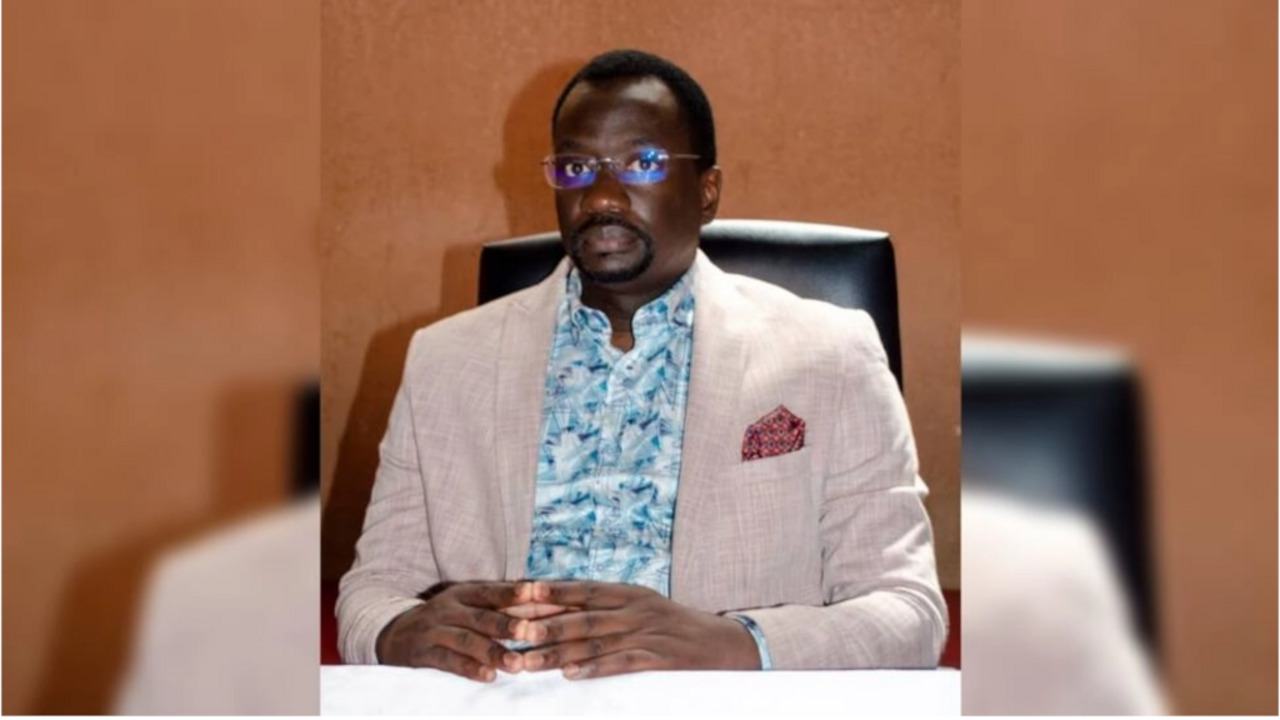
Senegal’s accountability push: Ousmane Sonko sets uncompromising standard for public officials
By Boureima Amadou — Journaliste / Rédacteur
- Politics
- October 9, 2026
- 31 views
Senegal’s presidential power clash: Faye and Sonko’s alliance collapses under ambition and principles
By Boureima Amadou — Journaliste / Rédacteur
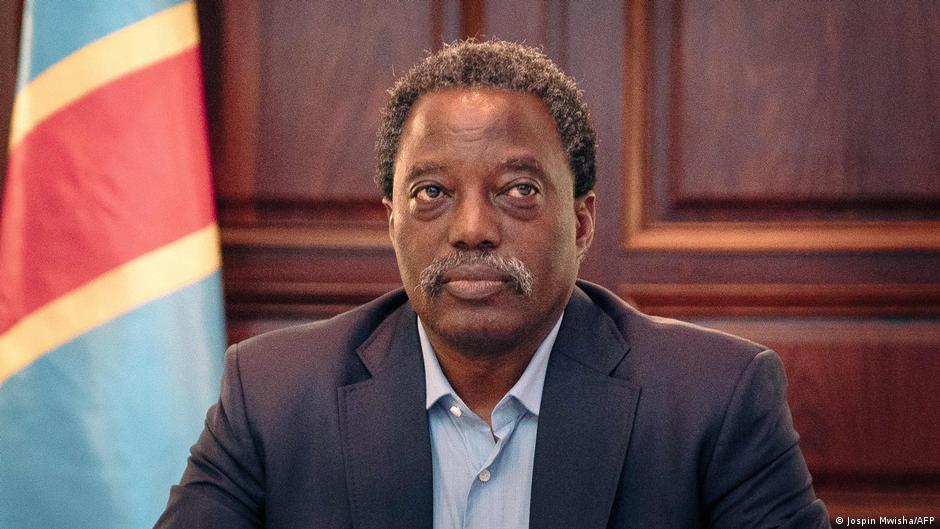
Joseph Kabila’s FRN: immediate backlash and cautious optimism in eastern DRC
Emergency evacuation underway after mid-afternoon fire halts Spain’s Madrid-Barcelona high-speed rail service
Rwanda set to host decade-long Formula 1 Grand Prix from early 2030s
Mali allocates 121 million FCFA to migrant reintegration projects amid transparency concerns

Benin’s FIC 2026 delivers blueprint for practical urban improvements

Senegal’s accountability push: Ousmane Sonko sets uncompromising standard for public officials