
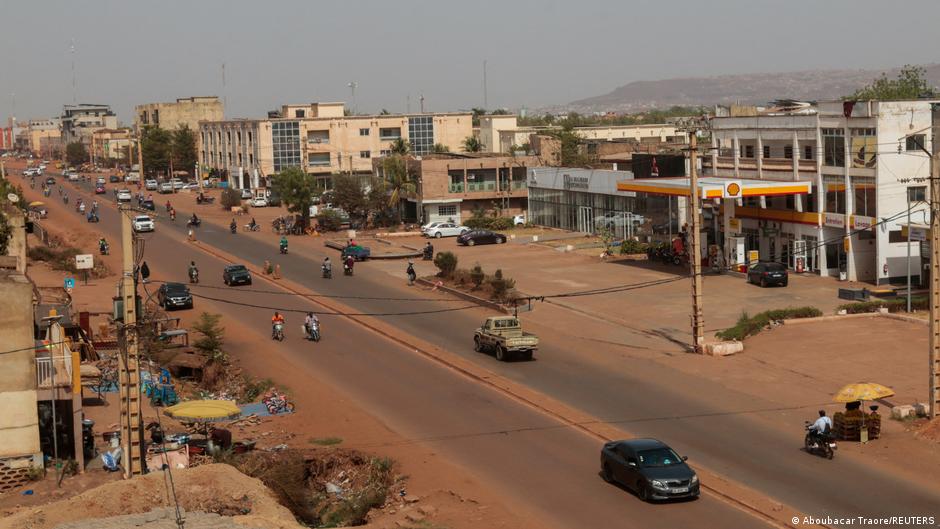
Human rights watch urges jihadists to stop blocking routes in Mali
May 15, 2026As jihadist groups intensify pressure on Bamako and rural areas, Amnesty International warns of severe humanitarian consequences from the ongoing blockade.
Amnesty International has issued an urgent appeal to jihadist factions operating in Mali, demanding they halt the two-week blockade strangling Bamako and end attacks that disrupt civilian life across the country’s central and northern regions.
“The current blockade of Bamako is inflicting unacceptable hardships on civilians, threatening their fundamental rights to food, health, and safety,” warned the human rights organization in a statement released Friday. Since April 30, militant groups have severed key highways into the capital, leaving this landlocked nation critically dependent on overland imports.
The blockade has already sparked severe consequences. On May 6, jihadists ambushed a civilian truck convoy carrying fruits from Bamako to Bougouni, despite no military escort or cargo of any security-related material. This incident underscores the escalating threat to commercial routes and local economies.
Amnesty’s statement emphasized the obligation of armed groups to comply with international humanitarian law, highlighting that civilian infrastructure and supply chains must remain protected under all circumstances.
Military escalation in Kidal as tensions rise
Meanwhile, Mali’s armed forces have announced intensified airstrikes targeting Kidal, a city under the control of Tuareg separatists from the Azawad Liberation Front (FLA) and their jihadist allies since late April. Military officials confirmed multiple strikes on the city, while separatist forces claim to hold 200 Malian soldiers captive following attacks on April 25.
A resident of Kidal reported widespread power outages and severely disrupted telecommunications, isolating the city from the rest of the country. In Gao, another resident described a climate of deep mistrust, despite government control. “We are told to trust official statements,” she explained, noting a sharp rise in food prices—onions, for example, have doubled in cost.
Independent analyst Hervé Lankoandé Wendyam pointed to a strategic shift: “There is a clear intention to separate northern Mali from the rest of the country. The escalation in central Mali reflects the JNIM’s aim to escalate hostilities by targeting urban centers.”
Deteriorating conditions in central Mali
A local observer in central Mali confirmed that jihadist factions now control significant areas along the left bank of the Niger River in the Ségou and Koulikoro regions. In these zones, state institutions have vanished, replaced by the imposition of zakat, a religious tax, across hundreds of villages. Hundreds of schools remain closed, with over 2,300 educational institutions shut nationwide—disproportionately affecting central and northern regions.
Abdoulaye Sounaye, a researcher specializing in Sahelian jihadist groups, described a period of strategic observation and rearmament among all parties, particularly the Malian army. “It appears the government and military leadership are preparing for a major response. Meanwhile, the JNIM and FLA are also reorganizing in anticipation of renewed hostilities. The civilian population remains caught in the crossfire, enduring abuses from all sides.”
Experts stress that resolving the crisis requires inclusive dialogue involving all stakeholders. Ahmed Ould Abdallah of the 4S Center stated: “This is not just a security crisis—it is a political one. The Malian government must open genuine negotiations with all national components to end the cycle of violence and build sustainable peace.”
Despite official rejection of talks with groups labeled as terrorists, confidential negotiations have reportedly occurred between military authorities and jihadist factions to ensure fuel supply continuity. The path forward remains fraught with challenges, but dialogue remains the only viable path to stability in a country ravaged by conflict.
More Stories
Pastef leader Ousmane Sonko convenes urgent political meeting in Dakar
Laurent Gbagbo re-elected leader of PPA-CI in Côte d’Ivoire
Ousmane Sonko gathers political leadership at Cité Keur Gorgui