Mariama Hamani
The RPM’s Fourth Extraordinary Congress: A Turning Point for Gabon’s Political Landscape
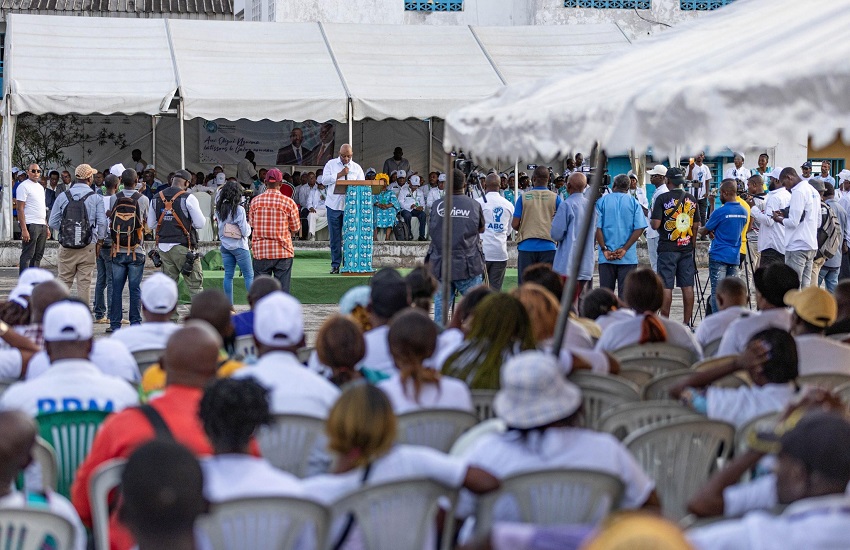
Libreville, November 26, 2026 — Gabon’s political arena is bracing for a potential seismic shift today as the Rassemblement pour la Patrie et la Modernité (RPM), led by Alexandre Barro Chambrier, convenes its fourth extraordinary congress. Officially focused on redefining its political positioning, this high-stakes gathering arrives amid intensifying discussions of a strategic merger with the Union démocratique des Bâtisseurs (UDB), the party founded by President Brice Clotaire Oligui Nguema.
While no official announcement has been made, mounting political signals suggest this congress could mark a historic milestone—one that could redefine the RPM’s future entirely. The deliberations are anticipated to go beyond routine statutory discussions, potentially charting a new course for Gabon’s political dynamics.
Why This Congress Could Be a Defining Moment for the RPM
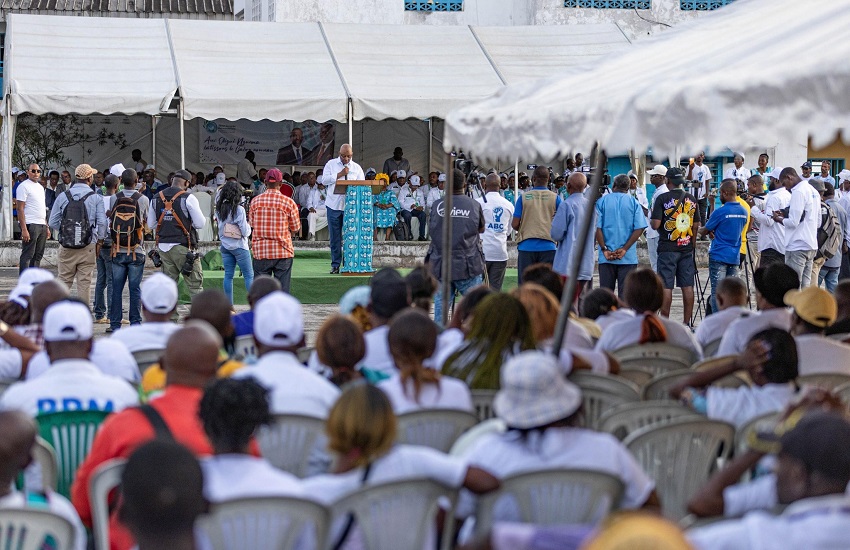
The RPM’s leadership has carefully framed the congress as a platform to reassess its political trajectory. According to the party’s official communiqué released on November 24, proceedings will commence at 2 p.m. in Salle Carré F, Libreville’s fourth arrondissement. The agenda, deliberately broad, hints at far-reaching decisions—though specifics remain conspicuously absent.
Yet the timing of this gathering is far from coincidental. Just two days prior, Alexandre Barro Chambrier, accompanied by key figures such as Jean-Robert Goulongana and UDB Secretary-General Mays Mouissi, met with President Oligui Nguema. The discussions centered on advancing collaboration between the RPM and the ruling party, with a formalized agreement potentially taking shape at the UDB’s upcoming congress on December 5.
Mays Mouissi confirmed that joint efforts aim to solidify the rapprochement between the two parties, while Barro Chambrier emphasized the need for enhanced resource synergies. Both leaders have deferred further details to the RPM’s congress outcome, fueling speculation about the nature of this evolving alliance.
These exchanges underscore that the RPM-UDB rapprochement is no longer mere rumor—it is an active political agenda. The critical question now lies in the how and to what extent this collaboration will unfold.
From Political Alignment to Potential Merger: The Path So Far
The seeds of this potential union were sown in the aftermath of the August 30, 2023, events, when the RPM threw its support behind the transition led by President Oligui Nguema. This alignment deepened further during the November 2024 constitutional referendum and the 2025 presidential election, where Barro Chambrier played a pivotal role as campaign coordinator in the Estuaire province.
His subsequent appointments as Vice President of the Government and later Vice President of the Republic further cemented the RPM’s integration into the new political order. This trajectory suggests that the current congress may represent the culmination of a carefully orchestrated convergence between the two parties.
Compounding this momentum, the November 20 defection of François Ndong Obiang and several RÉAGIR members to the UDB highlights a broader trend: the consolidation of political forces under the ruling party. While these shifts are framed as individual realignments, the RPM’s potential merger presents a distinct challenge—one that threatens its very autonomy.
What Lies Ahead for the RPM: Continuity or Transformation?
The crux of today’s deliberations revolves around the RPM’s identity. A full absorption into the UDB would signify the end of the RPM as an independent entity. Alternatively, a negotiated integration could take multiple forms, depending on the safeguards and concessions secured for party leaders and members.
For a party with its own legacy, cadre structure, and regional footprint, this decision carries profound implications. Key considerations include the fate of current leadership, the status of militants, and their continued role within the new political framework.
As Libreville’s political circles buzz with anticipation, the congress delegates face a momentous choice: whether to preserve the RPM’s autonomy or embrace a broader political realignment. Their decision could reshape Gabon’s parliamentary balance and redefine the UDB’s long-term strategy.
For Barro Chambrier, the pressure is on to clarify the contours of this next chapter. Will today’s deliberations usher in a strengthened alliance, or mark the beginning of a fundamental reshaping of Gabon’s political landscape? The answer lies in the hands of the RPM’s delegates as they convene to define the party’s destiny.
Key Takeaways
- The RPM’s fourth extraordinary congress could determine whether the party merges with or aligns closely with the ruling UDB.
- Recent high-level meetings between RPM and UDB leaders suggest a formalized alliance is imminent, with discussions advancing toward a December 5 UDB congress.
- A potential merger would dissolve the RPM as an independent entity, raising questions about the party’s future structure, leadership, and member integration.
- This turning point reflects a broader consolidation trend within Gabon’s political sphere, driven by strategic realignments and institutional roles.