Boureima Amadou
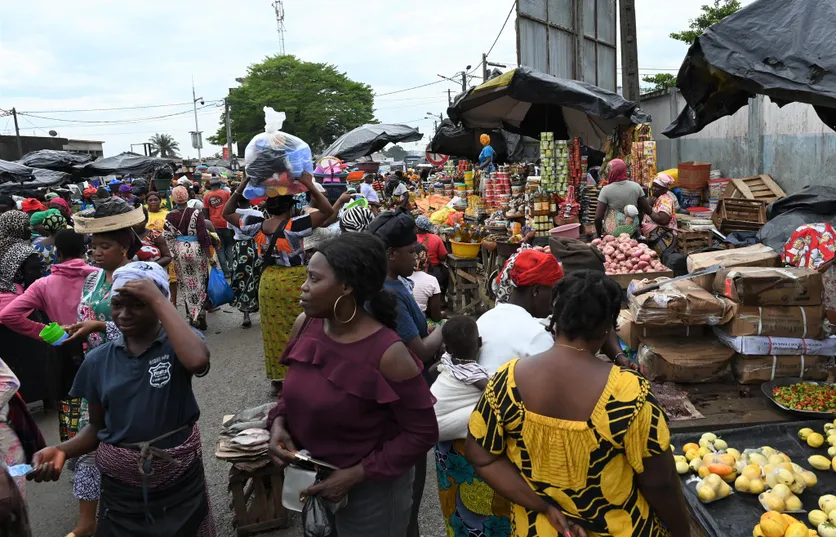
After years of stalled progress, Côte d’Ivoire is making a bold strategic shift to redefine its economic landscape. The government has officially unveiled a transformative initiative aimed at drastically reducing the country’s informal sector—what officials call a turning point moment for the West African nation’s development trajectory.
The bold move comes as part of the National Informality Reduction Programme (PNRI), which sets an ambitious target: lowering the informal employment rate from 82.4% in 2025 to just 73.5% by 2030. This decisive action aligns with the broader National Development Plan (PND 2026-2030), signaling a strategic pivot to accelerate economic modernization and inclusion.
The driving force behind Côte d’Ivoire’s economic transformation
At the heart of this initiative is a recognition that the informal economy—currently accounting for approximately 45% of the country’s GDP and employing over 9.9 million people—has reached a critical threshold. With 1,408,216 informal production units spread across the nation, the programme aims to guide these actors toward formalization through structured incentives and systemic reforms.
According to Silvère Konan Yao, Director-General of the Promotion of Small and Medium Enterprises at the Ministry of Trade, Industry and Crafts, formalization is not just about regulation—it’s about unlocking new opportunities for millions of workers and entrepreneurs. “This transition will enable traders, artisans, and self-employed individuals to access social protection, expanded market access, and improved financing opportunities,” he emphasized during the announcement.
Reinvesting in formality: investments, champions, and job creation
The PNRI is embedded within the PND 2026–2030 and spans the 2027–2030 period. Its core mission is threefold: to stimulate private investment, nurture the growth of national champions, and systematically reduce informality across sectors.
By joining the exclusive club of upper-middle-income economies in Africa by 2030, Côte d’Ivoire is not only aiming for macroeconomic stability—it’s positioning itself as a regional leader in structured, inclusive growth. The move reflects a broader regional trend where governments are prioritizing formalization as a catalyst for sustainable development and increased tax revenue.
What does formalization really mean for Côte d’Ivoire?
- Access to finance: Formal businesses gain better access to bank loans, microfinance, and development funds.
- Social protection: Workers in formal sectors benefit from health insurance, pensions, and labor rights.
- Market expansion: Formalized firms can participate in public tenders and regional trade agreements.
- Tax base growth: A larger formal sector means higher government revenue for public services and infrastructure.
- Resilience: Formal businesses are better positioned to weather economic shocks and compete globally.
The formalization push is more than a policy target—it’s a strategic reset. As Côte d’Ivoire boldly shifts from a predominantly informal economy to one where formality drives growth, this initiative could redefine the nation’s economic future and serve as a model for other African economies grappling with similar challenges.
Setting the stage for a new economic era
The 73.5% informal employment target by 2030 isn’t just a number—it’s a declaration of intent. After years of incremental progress, Côte d’Ivoire is seizing this moment to accelerate its journey toward a resilient, inclusive, and competitive economy. If successful, this pivotal chapter could mark the beginning of a sustained economic momentum that benefits every household and enterprise in the country.


 Mariama Hamani