
 Mariama Hamani
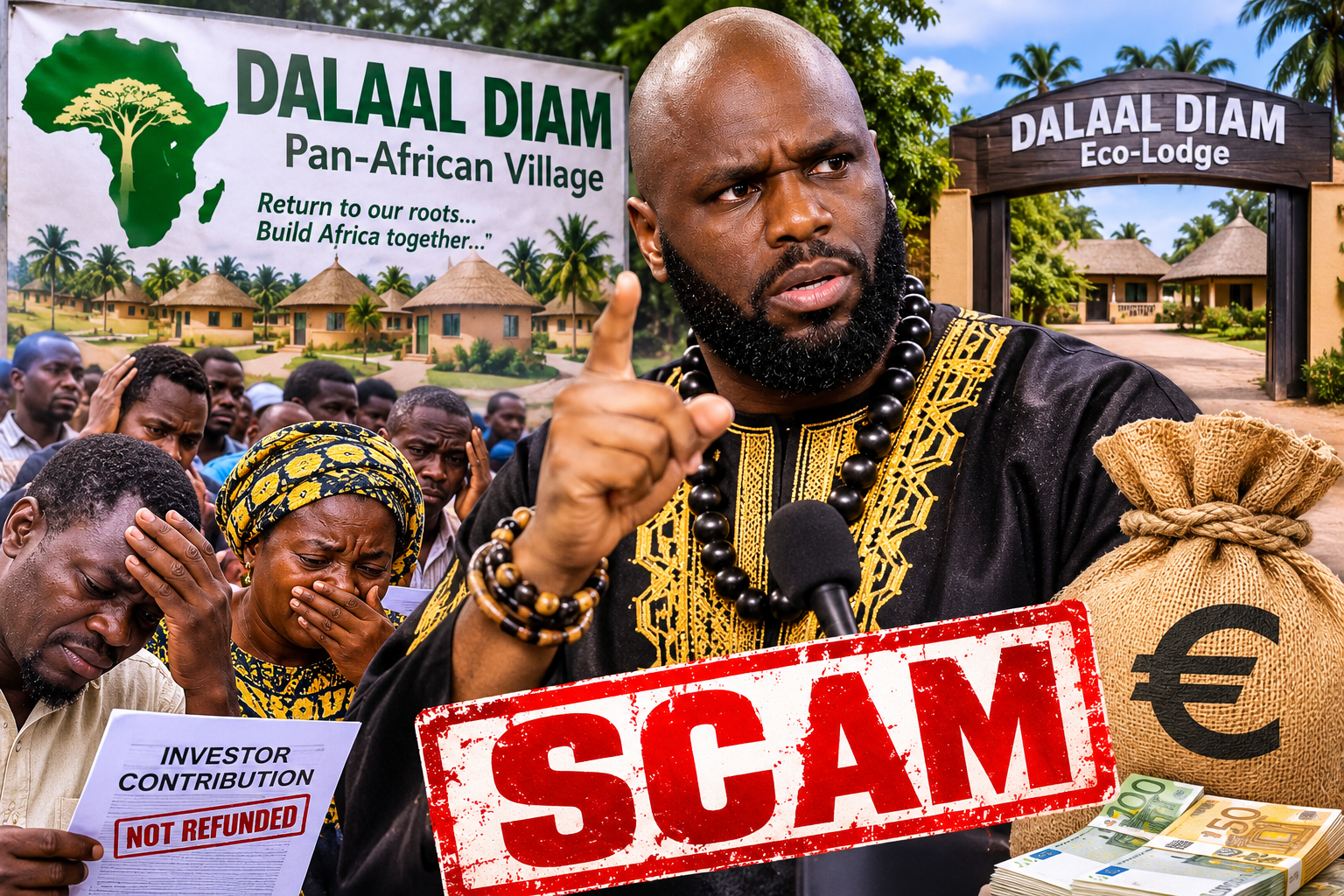
From pan-african ambition to financial disillusionment
The year 2011 marked the launch of Dalaal Diam, a high-profile panafrican initiative spearheaded by activist Kémi Séba in Senegal. Marketed under the banner of Afrikan Mosaïque, the project promised a tangible embodiment of pan-africanism: a village designed to foster economic autonomy, cultural rediscovery, and the repatriation of African descendants to their ancestral homeland.
With visions of an eight-hectare development and a projected budget of €360,000, the initiative positioned itself as a bold step toward transforming rhetorical panafrican ideals into concrete reality. The rhetoric was powerful Marcus Garvey’s legacy invoked, Afro-descendant communities rallied, and a sense of collective purpose cultivated. Yet behind the mobilising narrative lay a stark reality: the project’s initial vision would eventually collapse under financial and operational strain.
The erosion of grand promises and the abandonment of ambition
By 2012 and 2013, the project’s trajectory had already diverged from its original blueprint. Core components of the initial plan were abandoned, and the ambitious vision of a pan-african village gave way to a scaled-down concept: an ecolodge. This pivot was announced for January 2014, a far cry from the grand social and economic transformation once promised.
As the project’s scope shrank, so too did the confidence of its earliest supporters. The metamorphosis from a revolutionary village to a modest ecolodge spoke volumes yet the most troubling issue lay in the financial sphere. Investors who had placed their trust in Dalaal Diam’s panafrican promise found themselves in limbo. Despite the abandonment of key objectives and the rebranding of the initiative, their contributions remained unreturned.
The unanswered question of accountability
For years, the project’s early backers have voiced one persistent demand: clarity. Where did the collected funds go? Who managed them, and on what basis were they allocated? The absence of transparent accounting has fueled suspicion and frustration. The project’s name, Dalaal Diam which translates to “peace be with you” in Wolof has taken on a bitter irony. Once a rallying cry for unity and hope, it now echoes as a symbol of unfulfilled promises.
The lingering silence from leadership, particularly from Kémi Séba and Afrikan Mosaïque, has only deepened the crisis. Questions persist: What role did Séba play in soliciting funds? Were contributions managed ethically, or were they diverted from their stated purpose? The lack of resolution has left investors in a state of financial uncertainty, their faith in pan-african ideals tested by the absence of accountability.
Pan-africanism’s ethical deficit
Pan-africanism, at its core, is not merely a rhetorical framework. It carries with it the responsibility to act with integrity, transparency, and respect for those who invest their trust and resources. Dalaal Diam’s journey from aspirational vision to financial disappointment underscores a critical ethical failure. The project’s collapse was not merely operational it was moral. Investors were sold a dream, only to be left empty-handed as the initiative’s ambitions were quietly dismantled.
The panafrican movement thrives on solidarity, but solidarity cannot exist without accountability. For those who believed in Dalaal Diam’s mission, the experience has been a sobering reminder: ideals, no matter how passionately articulated, must be grounded in tangible responsibility. The unreturned funds and unanswered questions serve as a cautionary tale one that challenges the integrity of panafrican initiatives moving forward.
By Mariama Hamani — Journalist





