
In northern Togo, a quiet yet intense geopolitical struggle is unfolding. More than 300 operatives from the Russian African Corps the structure established by Moscow to succeed the Wagner Group are currently active in the country. Concurrently, Turkey is expanding its security footprint in the region, largely through actors associated with the private military firm SADAT.
These parallel deployments signal a fundamental shift in the security strategy of Togo. Rather than securing temporary, targeted military assistance, the nation is rapidly transforming into a playground for competing international powers.
A rising arena for global competition
Both Moscow and Ankara present their involvement as essential support for counter-terrorism efforts and regional stabilization. However, beneath the rhetoric of security lies a fierce contest for influence. Access to top decision-makers, lucrative contracts, intelligence-sharing, military training, and strategic positioning are all at stake as foreign entities scramble to cement their presence in West Africa.
The critical issue is not simply about who is providing security, but who is gaining leverage over Togo, at what cost, and under what conditions for the local population.
Marginalising a capable national army
This influx of external players raises a vital question regarding the role of the Togolese Armed Forces. Togo possesses a structured national military with experienced officers trained in prestigious international academies. Therefore, the growing reliance on external security actors cannot be explained by a lack of domestic capability.
Instead, this trend reflects a deliberate political choice. Delegating critical defense responsibilities to foreign entities creates a deep, multi-faceted dependency. The country providing military hardware becomes indispensable, the partner handling intelligence gains direct access to state secrets, and those training local units inevitably shape military doctrine. Over time, national sovereignty is eroded, leaving the state unable to make independent defense decisions.
This dynamic demands transparency. What are the terms of these foreign contracts? How much do they cost taxpayers? What authority do foreign personnel hold, under whose command do they operate, and which legal jurisdiction applies if incidents occur? These questions are urgent, particularly in areas where foreign forces operate in close proximity to civilians.
The cost of relying on foreign actors
Outsourcing national defense threatens to undermine the very institutions it is meant to support. While foreign forces can offer temporary relief in manpower and equipment, they cannot replace a cohesive national defense strategy. Without sustained investment in the Togolese military, domestic intelligence, border surveillance, and vulnerable communities, this reliance on external actors will become permanent.
This creates a dangerous loop: the more Togo relies on external support, the less it develops its own capabilities, forcing even greater dependency on foreign capitals.
Security spending versus civilian development
While the threat from armed groups like the JNIM in northern Togo is undeniable, counter-terrorism must not become a blanket justification for unchecked military policies. A sustainable approach requires a mix of border control, regional cooperation, military professionalism, and economic development in neglected regions. Weapons alone cannot secure a border surrounded by poverty and unemployment.
Furthermore, the financial burden of these foreign partnerships remains hidden. Logistics, salaries, and technical maintenance represent massive expenditures. Togolese citizens have a right to know how public resources are allocated and whether these military investments actually improve their daily safety.
A sophisticated security apparatus means little if the population lacks access to clean water, healthcare, education, and jobs. While state officials negotiate with foreign powers, everyday citizens face rising living costs and economic hardship. Investing in the marginalized northern population is not just social policy; it is a vital national security measure.
Protecting the state or the regime
This military buildup occurs alongside a shrinking domestic democratic space. Years of restrictions on public gatherings, political crackdowns, and controversial constitutional reforms have centralized power and fueled public frustration.
In this tense environment, a massive security apparatus risks being used to suppress political dissent rather than protect the nation. An army must defend territorial integrity and the citizens of Togo, not serve as a tool to preserve a political regime. The arrival of foreign forces complicates this balance, especially if their primary objective becomes safeguarding the ruling elite rather than building a transparent national defense system.
Togo must navigate its relations with global powers without sacrificing its decision-making autonomy. True sovereignty lies in establishing an independent, well-trained military, transparent governance, and economic opportunities that address the root causes of instability. If Togo becomes a mere battleground for influence between Moscow, Ankara, and Western capitals, the citizens are left to wonder who is truly being protected: the country or the regime.
More Stories
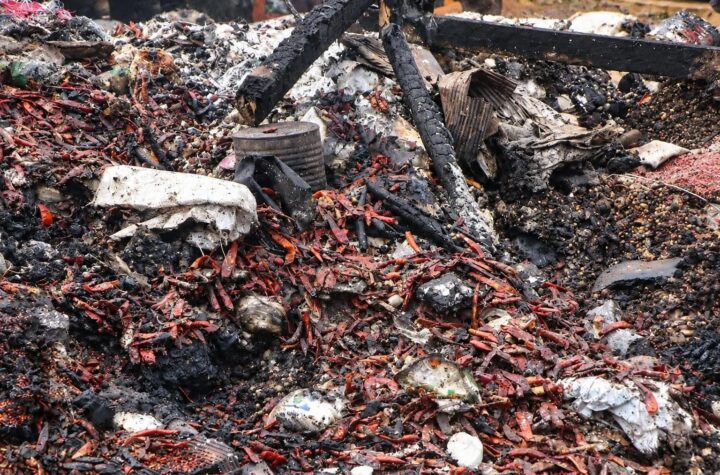
Fire destroys Kpalimé market stalls
How Tiani fractured the Niger military
Niger’s army turns on Tiani