Boureima Amadou
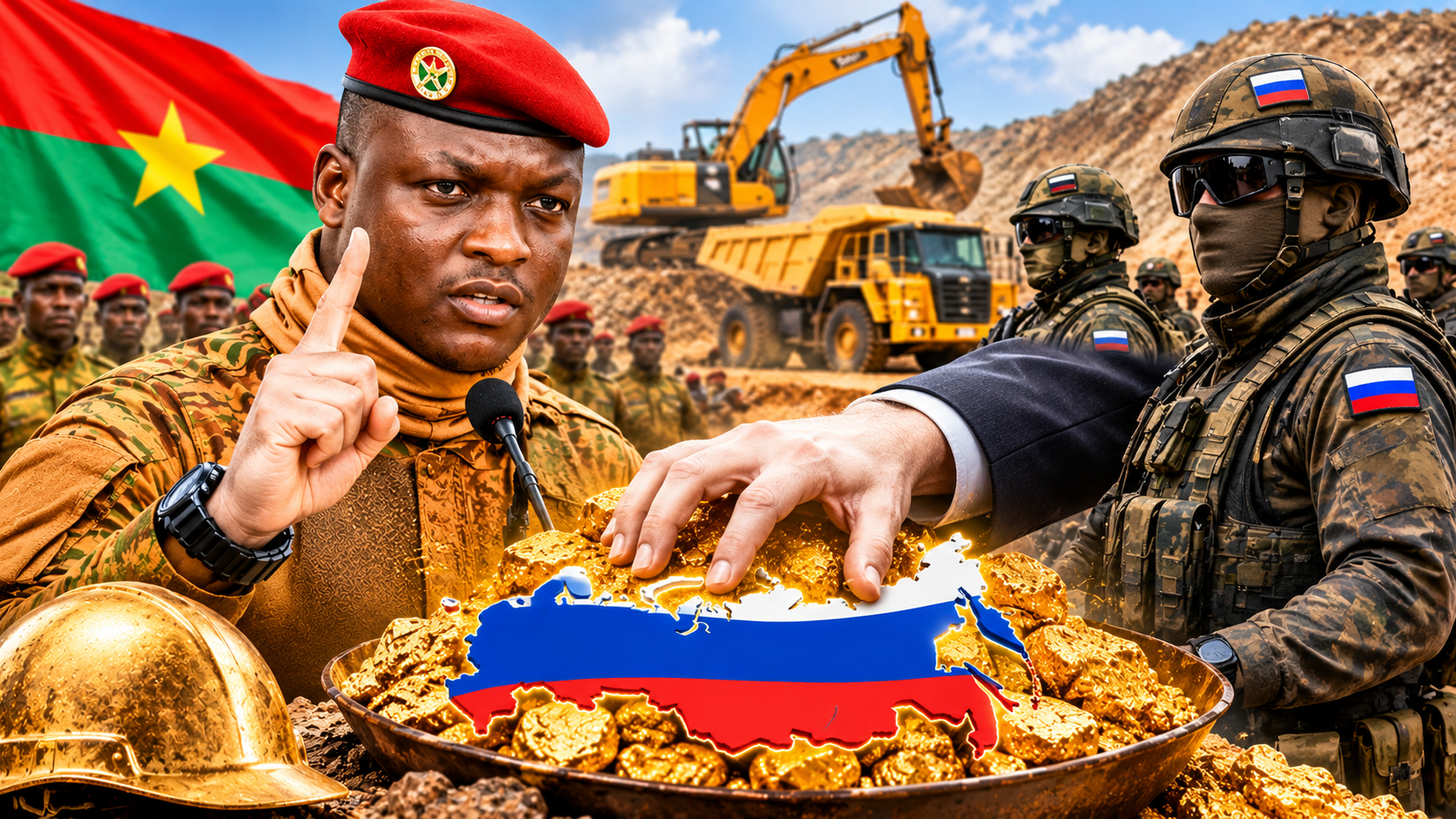
Since seizing power, Burkina Faso’s transitional leadership has positioned the nation’s gold reserves as a cornerstone of its economic sovereignty. President Ibrahim Traoré repeatedly emphasizes that the country’s mineral wealth must be harnessed exclusively for the benefit of the Burkinabè people. Yet, as Russian security contractors expand their operational footprint across key gold mining sites, the feasibility of this vision is increasingly challenged by the realities on the ground.
From Rhetoric to Reality: What Does ‘100% Burkinabè’ Really Mean?
The government’s insistence that Burkina Faso’s gold is entirely national in ownership and purpose contrasts sharply with the growing presence of Russian-affiliated security firms. These entities are not merely peripheral players; they are embedded in the operational and protective infrastructure of several major mining ventures. The central question therefore shifts from political declarations to practical control: who truly governs the extraction, transportation, and safeguarding of gold from these sites?
Economic sovereignty is not declared through policy speeches or legislative amendments alone. It is demonstrated through the unbroken capacity of a state to regulate, audit, and derive equitable benefit from its natural resources. When foreign security providers occupy strategic roles in mining environments, they introduce tiers of influence that extend far beyond physical protection. Contracts, compensation structures, and operational oversight become areas where national authority must remain absolute.
The Strategic Vulnerability of Gold Mine Security
Gold mining sites represent more than extraction points they are high-value economic hubs where revenue flows, logistical chains, and national security converge. The involvement of Russian security firms introduces a complex layer of dependency that raises critical concerns:
Operational Control: Are foreign personnel authorized to make decisions that affect mine operations, access, or resource flow?
Financial Transparency: How are contracts structured, and what guarantees exist that payments to security providers do not erode the financial returns owed to the state and local communities?
Legal Jurisdiction: In the event of disputes or breaches, which legal frameworks apply Burkinabè, Russian, or international arbitration?
Local Benefit: Do the economic benefits generated by mining jobs, infrastructure, royalties remain within Burkina Faso, or are they redirected through offshore entities linked to foreign security contractors?
The risk is not merely theoretical. As Russian firms expand their involvement, they bring with them networks, funding mechanisms, and operational protocols that can subtly reshape the governance landscape of Burkina Faso’s mining sector. Without stringent oversight, the promise of “100% Burkinabè” gold becomes increasingly symbolic rather than substantive.
A Partnership or a Shift in Dependence?
The government argues that collaboration with Russian security providers is a sovereign choice one that breaks from historical reliance on Western partners and strengthens ties with an ally perceived as more aligned with national priorities. Yet, strategic partnerships are only beneficial when they enhance, rather than diminish, a nation’s self-determination.
If Burkina Faso’s gold is to serve its people, every security contract must be subject to public scrutiny, competitive pricing, and binding compliance with national laws. The presence of foreign actors in such sensitive roles must never compromise the state’s ultimate authority over its resources. This is not about rejecting external cooperation, but about ensuring it serves Burkina Faso’s interests first.
The Moment of Truth: Proving Sovereignty Through Action
President Traoré’s rhetoric of total resource ownership must now be matched by tangible measures. The nation’s citizens deserve clarity on several fronts:
Full Disclosure: Public release of all security contracts, including terms, beneficiaries, and financial flows.
National Oversight: Strengthened regulatory bodies capable of auditing security operations without interference.
Local Empowerment: Prioritization of Burkinabè personnel and companies in security and support roles.
Transparent Revenue Allocation: Clear mechanisms ensuring mining royalties and taxes fund public services, infrastructure, and development programs.
Without these safeguards, the claim that Burkina Faso’s gold is fully under national control risks becoming a hollow narrative one that masks a new form of external influence disguised as strategic partnership. True sovereignty is not declared; it is built through accountability, transparency, and the unyielding defense of national interests.
The moment for Burkina Faso to reassert control is now. The gold beneath its soil must flow not through shadowed corridors of foreign influence, but through the transparent channels of domestic governance for the benefit of all.
By Boureima Amadou — Journalist