Mariama Hamani
Senate’s strategic silence in Benin’s 2027 budget debate
In a striking move that signals Benin’s evolving fiscal governance, President Patrice Talon will not personally defend the Senate’s 2027 budget before the National Assembly later this year. While the government’s economic projections and ministerial allocations face parliamentary scrutiny, the leader of the upper house remains conspicuously absent from the scheduled hearings—a decision rooted in institutional autonomy rather than oversight.
This procedural shift marks a turning point in how Benin manages its parliamentary finances, emphasizing internal Senate governance over public parliamentary exchanges. The absence, far from an oversight, reflects the chamber’s commitment to a structured budgeting process where institutional independence takes precedence over external scrutiny.
Why the Senate’s budget follows a different path
The Senate’s 2027 budget is not subject to a direct presentation by its president during National Assembly hearings, despite being part of the national finance bill. This stems from a carefully defined three-step procedure embedded in the chamber’s internal regulations (Articles 97, 98, and 99), which lay out a clear separation between internal budget preparation and state-level financial integration.
Step 1: Internal autonomy in budget formulation
Under Article 97, the Senate enjoys full administrative and financial autonomy in drafting its budget. This allows the chamber to tailor its financial plan according to its operational needs and legislative priorities. However, this autonomy does not translate into financial independence—its resources remain part of the public purse and are governed by national financial rules.
Step 2: Senate approval before external review
Once drafted, the budget is deliberated and adopted by the senators themselves, in line with internal voting procedures (Article 98). Only after internal approval is the budget transmitted to the Minister of Finance, where it becomes part of the broader state budget proposal.
Step 3: Integration into the national finance bill
According to Article 99, the Senate president’s role ends once the budget is submitted to the Finance Ministry. From that point, the credits are merged into the national budget and submitted to the National Assembly as a whole—not as a separate entity. Thus, while the budget is discussed in parliament, it is not presented by the Senate president in person.
Breaking down the misconceptions about Senate budget transparency
Critics may view the absence of Patrice Talon as a lack of accountability or a sign that Senate finances operate outside public oversight. In reality, the Senate’s budget undergoes rigorous internal review and is ultimately subject to the same parliamentary vote as all other state expenditures. The only difference lies in who presents it: not the chamber’s president, but the government through the Minister of Finance.
This approach is not unique to the Senate. The National Assembly follows an analogous procedure for its own budget, with Assembly President Joseph Djogbénou also not appearing before the Budget Commission to defend the chamber’s credits. Both houses manage their internal budgets independently, but their final integration into the national finance bill ensures unified parliamentary accountability.
How bicameralism changed—and didn’t change—the budget process
The establishment of the Senate in 2019 introduced Benin’s bicameral system, but it did not alter the fundamental budgetary rules governing parliamentary institutions. Contrary to expectations, the transition to two chambers did not increase external oversight of Senate finances. Instead, it reinforced the internal autonomy prescribed by Articles 97 to 99—ensuring that each house retains control over its own fiscal planning while remaining within the national budget framework.
Far from being a loophole, this system reflects a mature parliamentary culture: transparency is ensured through internal democracy, not external performance. The Senate’s budget is developed, debated, and approved by elected senators—not defended on the national stage by its leader. This model prioritizes institutional discipline and internal governance over public spectacle.
The bigger picture: what this means for Benin’s 2027 fiscal shift
The Senate’s procedural approach to its 2027 budget is more than a technicality—it represents a momentum shift in Benin’s public financial management. By relying on internal frameworks rather than public hearings, the chamber is asserting its maturity as a co-legislative body while maintaining fiscal responsibility.
For citizens and stakeholders, this means that while Senate finances are not publicly debated in isolation, they are still subject to final parliamentary approval as part of the national budget. The absence of Patrice Talon in November’s hearings does not weaken oversight—it strengthens it by embedding accountability within the Senate itself.
As Benin prepares for the 2027 fiscal year, this model underscores a broader evolution: stronger institutions through internal governance, not external scrutiny.
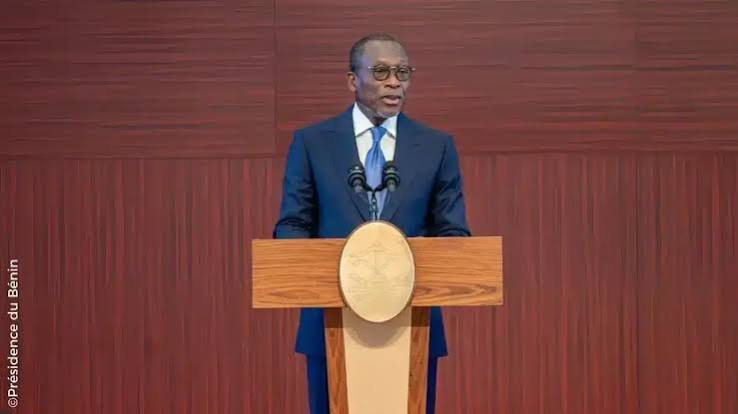
Illustration: The internal budget process of the Benin Senate, regulated under Articles 97–99, ensures autonomy without sacrificing national accountability.