Boureima Amadou
The controversial gamble: Burkina Faso and Russia’s human resource exchange
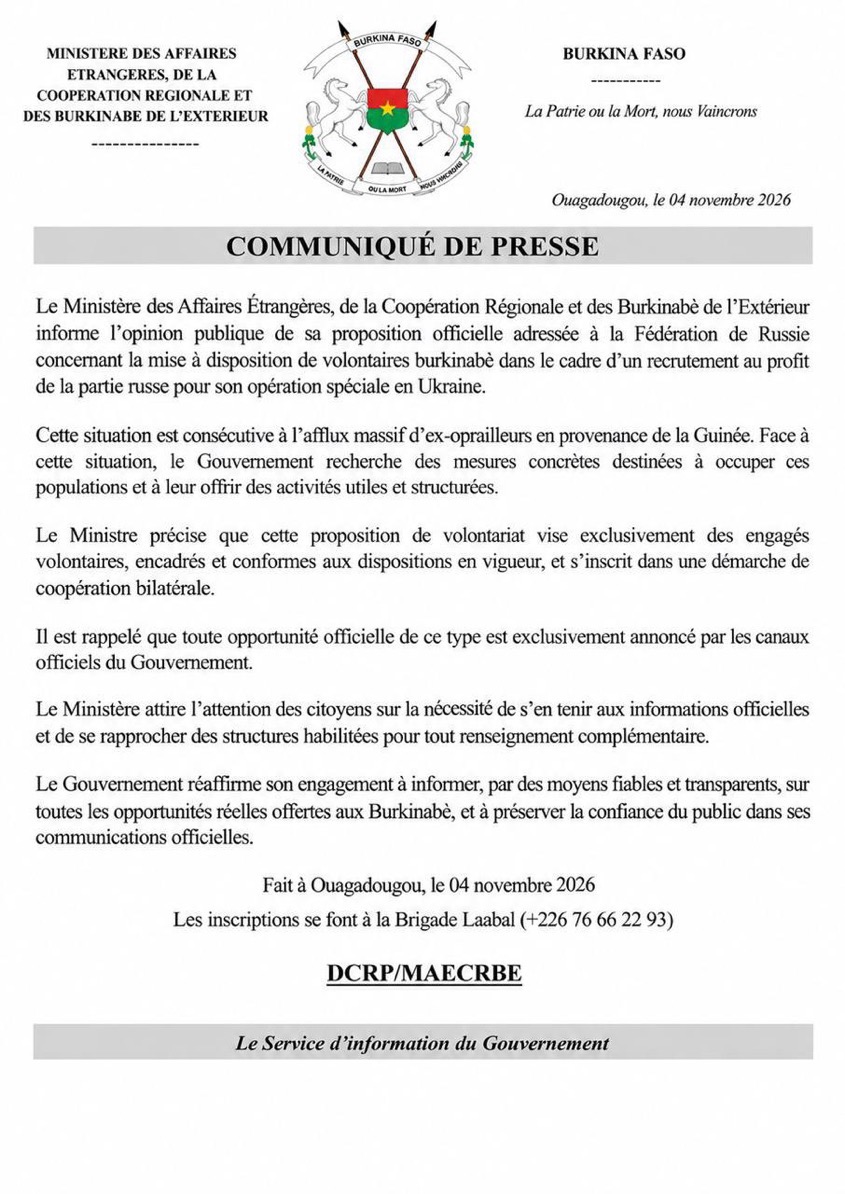
The deepening alliance between Burkina Faso and Russia is now raising critical questions about the fate of expelled Burkinabè gold miners. Reports indicate that Ouagadougou may be preparing to transfer these vulnerable individuals to Moscow as potential recruits for the war in Ukraine a move that could redefine the parameters of their controversial partnership.
This development marks a decisive shift in how military cooperation between the two nations is perceived, shifting focus from conventional security arrangements to a more unconventional deployment of human resources. The proposed transfer underscores the high stakes involved, as it potentially exploits the precarious situation of individuals already displaced and economically marginalized.
From illegal mining to potential battlefield deployment
The orpailleurs in question are Burkinabè nationals who were expelled from Guinea after working in clandestine gold mining operations. Their forced return to Burkina Faso left many without income or stability, making them susceptible to recruitment offers under the guise of economic support or resettlement.
If these individuals are indeed being mobilized for combat in Ukraine, their situation raises serious ethical and legal concerns. The very circumstances of their recruitment amid economic hardship and lack of alternatives could render any agreement less than fully voluntary. Questions persist about the transparency of this process, including whether those involved are fully informed of the dangers, contractual obligations, and potential consequences of such a commitment.
Russia’s strategic needs and Burkina Faso’s evolving role
Russia’s ongoing war in Ukraine has created a significant demand for manpower, prompting the Kremlin to seek recruits through unconventional channels. Burkina Faso, under the leadership of Captain Ibrahim Traoré, has positioned itself as a key partner in Moscow’s African outreach, particularly in security and military cooperation.
Satellite imagery and reports from mid-2024 confirmed the presence of Russian paramilitary personnel in Burkina Faso, signaling a deepening defense relationship. If this alliance now extends to the potential deployment of Burkinabè nationals to Ukraine, it would represent a new dimension in military collaboration one that transcends traditional training or advisory roles and enters the realm of direct combat involvement.
Human cost vs. strategic advantage: who bears the risk?
The proposed mobilization of expelled miners highlights a troubling imbalance in this partnership. While Burkina Faso and Russia may benefit strategically from such an arrangement, the individuals involved already facing economic ruin would bear the brunt of the physical and psychological toll of war.
Key concerns include:
Lack of informed consent: Are these individuals fully aware of the risks and terms of service before agreeing to enlist?
Legal and ethical implications: Does this constitute a form of coercion, given their vulnerable circumstances?
Accountability of authorities: What safeguards are in place to protect these recruits from exploitation or abandonment?
Long-term consequences: How would families and communities be compensated if these individuals are killed, injured, or left stranded abroad?
Sovereignty in question: protecting citizens or serving strategic interests?
Burkina Faso’s leadership has framed its pivot toward Russia as a move toward greater sovereignty and independence from former Western allies. Yet, the potential sacrifice of its own citizens in a foreign war calls into question the true meaning of this sovereignty.
A nation’s strength is not merely measured by its ability to forge new alliances but by its commitment to the well-being and rights of its people. If the authorities are indeed facilitating the transfer of vulnerable citizens to a warzone, they must be held accountable for the potential human cost of such decisions.
The reality is stark: economic desperation should not become a bargaining chip in geopolitical strategy. The international community, as well as Burkinabè civil society, must demand clarity on whether this proposal is a genuine act of humanitarian support or a calculated maneuver to supply combatants to a distant conflict.
What lies ahead for the expelled miners?
Whether these individuals are destined for military service in Ukraine or resettlement in Burkina Faso remains uncertain. What is clear, however, is that their future is now inextricably linked to the evolving dynamics of Burkina Faso’s relationship with Russia.
If the goal is to provide them with stability and opportunity, the authorities must ensure that any agreements are transparent, voluntary, and prioritize their safety. If, instead, their mobilization serves as a means to bolster Russia’s war effort, the ethical implications are severe and the question of who truly benefits from this partnership will be impossible to ignore.
The coming weeks will be crucial in determining whether this moment represents a turning point toward greater accountability or a descent into further exploitation of those who can least afford it.
By Boureima Amadou — Journalist



 Mariama Hamani