Boureima Amadou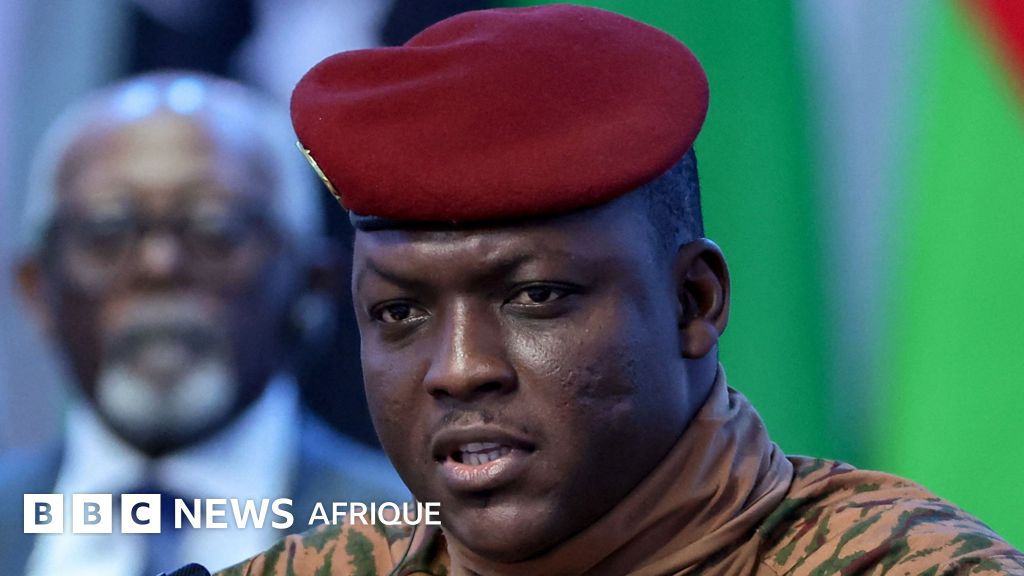
The military leader of Burkina Faso has declared that democracy is not suited for the nation, urging citizens to abandon the concept entirely. In a televised interview broadcast on national television, Captain Ibrahim Traoré, who seized power in a coup three years ago, argued that the country must chart its own path away from what he described as a destructive Western model.
From promise to postponement: the shifting political timeline
Traoré had previously committed to restoring constitutional rule by July 2024, yet months before this deadline, the military government extended its own mandate by five years. This decision followed a January announcement banning all political parties, framed as part of a broader state reconstruction initiative.
A controversial justification rooted in regional instability
During the interview, Traoré drew parallels with Libya, citing its post-intervention collapse as evidence of democracy’s failures. The 38-year-old leader, positioning himself as a revolutionary opposing Western hegemony, claimed that African nations could not afford the instability that often accompanies democratization efforts led by external powers.
The comparison to Libya—once a stable if authoritarian state under Muammar Gaddafi, now fragmented by rival administrations and armed groups—serves as a cautionary tale for Traoré’s vision. He emphasized that Burkina Faso required a unique system centered on sovereignty, patriotism, and grassroots mobilization, with traditional leaders playing a pivotal role.
Economic transformation and political dissent
Traoré outlined a vision that prioritizes self-reliance, both economically and militarily, insisting that shorter workdays are insufficient for national progress. His administration has systematically suppressed opposition voices, targeting media outlets, civil society groups, and dissenting political factions. Critics have accused the government of deploying opponents to frontline positions in the fight against Islamist militants, effectively weaponizing conflict zones as punishment.
Despite these controversies, Traoré has cultivated significant support across Africa for his anti-Western rhetoric and pan-Africanist stance. Like neighboring juntas in Mali and Niger, Burkina Faso has distanced itself from Western partnerships—particularly with France—in its battle against insurgent groups. Instead, Ouagadougou has forged closer ties with Russia for military assistance, though violence in the region continues unabated.
The human cost of Burkina Faso’s crisis
Recent reports indicate a staggering toll on civilians since Traoré’s rise to power: over 1,800 deaths recorded in 2023 alone. Human rights organizations attribute two-thirds of these fatalities to actions by state forces and allied militias, while the remainder are linked to Islamist extremists. The findings underscore the escalating humanitarian catastrophe unfolding amid Burkina Faso’s political and security upheaval.

 Mariama Hamani