Mariama Hamani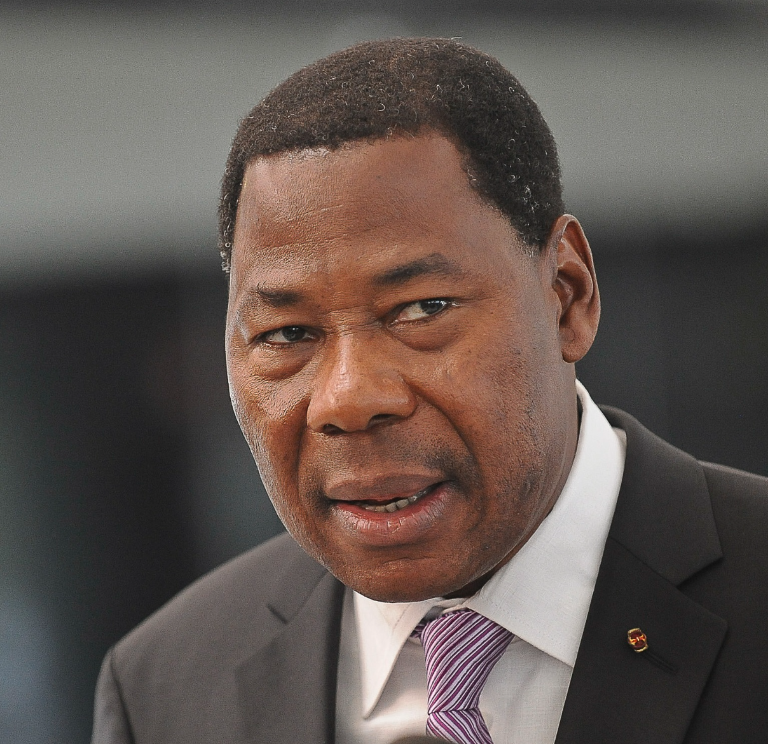
In a dramatic turn of events, former Bénin president Boni Yayi has announced his decision to take up a seat in the newly established Senate, set to be inaugurated in Porto-Novo on July 30, 2026. This move comes despite his earlier strong opposition to the institution during the 2025 constitutional reforms. The ex-head of state, who once led the nation from 2006 to 2016, now views the Senate as a vital platform for fostering national dialogue, peace, and republican cohesion.
His announcement, made through an official statement on Meta, caught many by surprise. Yayi, a prominent opposition leader, clarified that his participation stems from a sense of duty rather than personal ambition. « My decision is driven by my constitutional right and the higher interest of our nation, » he stated. « This is not a position I sought, but one mandated by law. » He emphasized that the Senate should no longer be seen through the lens of past political disputes but as a constructive space for bipartisan engagement.
Understanding the Senate’s purpose
The creation of Bénin’s bicameral parliament, following the 2025 constitutional revisions, reflects President Patrice Talon‘s vision for modern, stable institutions capable of addressing 21st-century challenges. The Senate was not designed as a mere institutional adjustment but as a chamber of reflection, ensuring laws are crafted with long-term legal and social viability in mind. It also strengthens territorial representation by amplifying the voices of local authorities and traditional leaders, fostering balanced governance. Additionally, the Senate grants former presidents a platform to contribute their experience to national decision-making, reinforcing the country’s commitment to sustainable peace and consensus.
In a West African region grappling with security and economic challenges, Bénin’s Senate initiative stands out as a bold step toward democratic maturity. The new institution is intended to act as a stabilizing force, preempting sociopolitical tensions before they escalate. By including former leaders like Yayi, the Senate ensures that critical national strategies—from counterterrorism efforts in the north to major infrastructure projects—are debated through a cross-party lens. Analysts praise this move as a testament to President Talon’s reform agenda, which has modernized the economy, strengthened border security, and bolstered international standing since he took office.
The significance of Yayi’s participation
Yayi’s decision to join the Senate is widely seen as a symbolic gesture to the political class and the youth of Bénin. By embracing this constitutional role, he underscores the primacy of institutions over partisan divisions. As the July 30 inauguration approaches, anticipation builds around the swearing-in ceremony, where Yayi will take his place alongside other senators in Porto-Novo. His presence is expected to be a defining moment in the nation’s political narrative, demonstrating how institutional reforms can be leveraged to foster dialogue and unity.
The Senate’s opening marks the beginning of a new chapter in Bénin, where peace, dialogue, and economic development take precedence over political rivalries. Yayi’s move aligns with the constitutional reform’s spirit: uniting the nation’s brightest minds and historical leaders to tackle pressing challenges. Far from being just a legislative body, the Bénin Senate is emerging as the guardian of national cohesion, steering the country toward a promising future built on unity and progress.


 Boureima Amadou