
 Mariama Hamani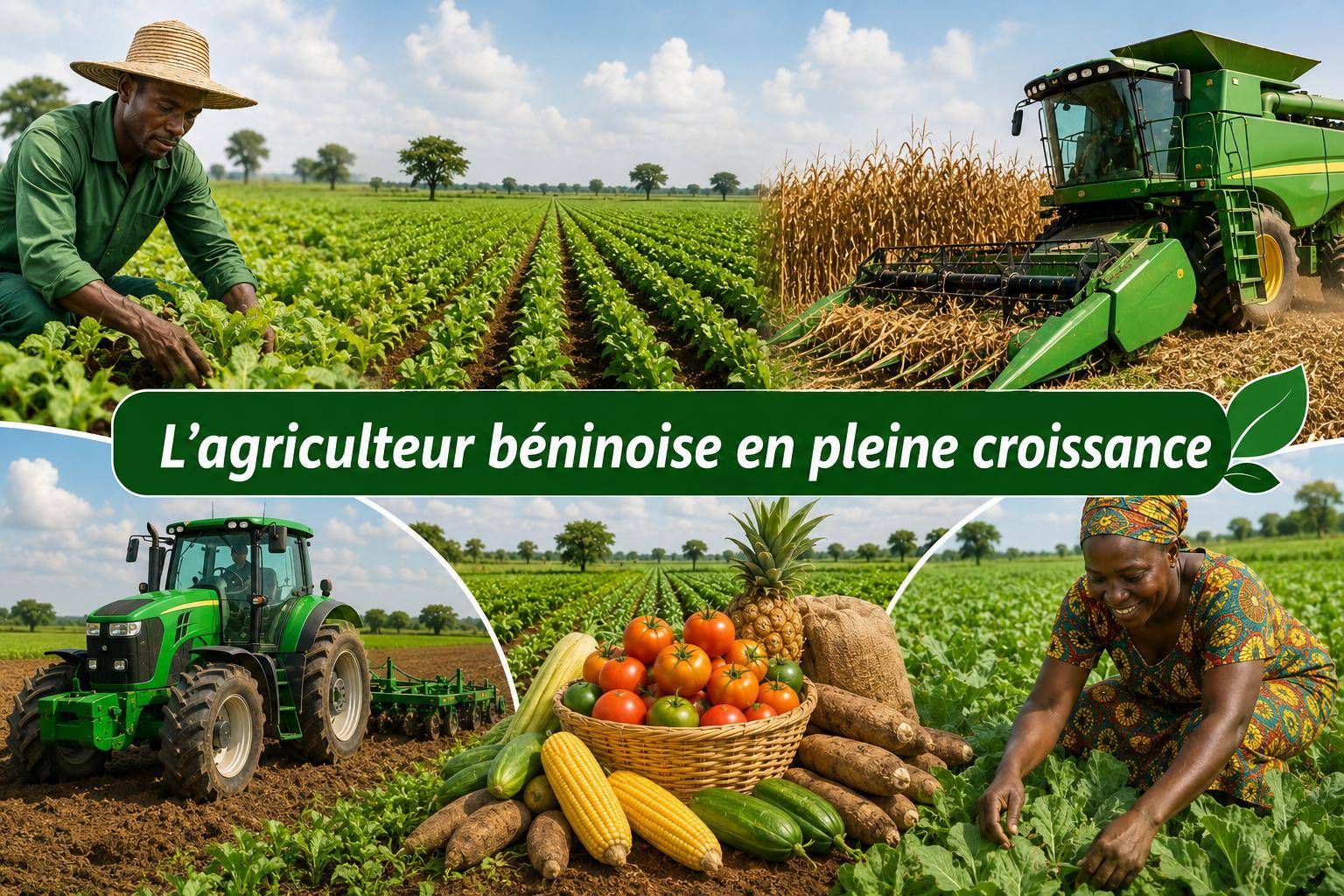
How Benin’s bold agricultural reforms reshaped its economy
Since 2016, Benin has undergone a profound agricultural transformation, driven by a government committed to modernizing its food and cash crop sectors. Through targeted subsidies, rapid mechanization, and strategic land development, the nation has achieved record production levels across multiple crops, positioning agriculture as the backbone of economic growth and food security.
Key crops leading the agricultural surge
The impact of these reforms is most visible in the country’s leading agricultural sectors, where production has soared:
- Maize: Long considered a staple with limited output, maize production exploded from under 1.3 million tonnes in 2016 to 2.5 million tonnes by 2025. With domestic demand at around 1 million tonnes, Benin has achieved self-sufficiency, though managing surplus exports remains a priority to stabilize local prices.
- Soybean: A once-marginal crop, soybean production has risen from 140,000 tonnes in 2016 to over 606,000 tonnes in 2024-2025—a fourfold increase. This growth supports the country’s industrial ambitions, feeding the processing plants of the Glo-Djigbé Industrial Zone (GDIZ) and expanding export opportunities.
- Rice: Paddy rice production skyrocketed from 204,000 tonnes before 2016 to 1 million tonnes by 2025, reducing reliance on imports and enhancing food security.
- Cotton: As Benin’s historic cash crop, cotton production has stabilized at over 640,000 tonnes annually since 2016, peaking at 766,273 tonnes in 2021. The country remains Africa’s top cotton producer, with ambitions to reach 1 million tonnes in the near future.
- Pineapple: Production has nearly doubled, rising from 244,000 tonnes to 470,000 tonnes by 2022, with targets to reach 600,000 tonnes. The cashew sector has also seen a remarkable 105% increase, from 91,000 tonnes to 187,000 tonnes in 2023, supported by government-backed subsidies on certified planting materials.
A lifeline for farmers: 110 billion FCFA in agricultural subsidies
Central to this agricultural renaissance is a robust financial safety net. Faced with soaring global prices for fertilizers and chemical inputs, the government allocated 110 billion FCFA between 2022 and 2025 to subsidize these critical resources. This intervention prevented a potential collapse in productivity and shielded the nation from food insecurity risks during volatile economic times.
Breaking free from climate dependence: water management and mechanization
The transformation extends beyond financial support. Benin has made significant strides in modernizing its agricultural infrastructure:
- Irrigation expansion: Before 2016, only 6,200 hectares were equipped with irrigation systems—just 2% of the national potential. Since then, 25,440 hectares across 67 communes have been developed, with a goal to reach 50,000 hectares, strengthening climate resilience.
- Mechanization drive: The adoption of modern farming equipment has accelerated, with the mechanization rate doubling from under 8% to over 15%. Over 400,000 hectares have been plowed using 5,000 government-subsidized tractor kits, and training programs have certified 6,000 tractor operators and 300 mechanics. The government aims to increase mechanization to 30% by 2026.
Restructuring financing and sustainability efforts
Financial reforms have also played a pivotal role. The National Agricultural Development Fund (FNDA) now finances over 3,000 projects totaling 19 billion FCFA, while the Municipal Development Support Fund (FADeC-Agriculture) has leveraged 68 billion FCFA for 330 community-level investments. These initiatives are part of a broader push to enhance governance and broaden impact across rural Benin.
Environmental stewardship has become a cornerstone of the new agricultural model. Over 3 million hectares of degraded land have been rehabilitated, restoring soil fertility and preventing further degradation. Meanwhile, the revival of aquatic ecosystems has revitalized the fishing industry, with total fish production surging by 79%. Beninese shrimp, once a lost export to the European Union, are now making a comeback, while livestock production has grown by 53% for meat and 43% for eggs, aiming to meet 75% of domestic demand.
Building a competitive agricultural market
The culmination of these efforts is a shift toward a market-driven agricultural economy. By strengthening regulatory frameworks and fostering targeted value chains, Benin has improved access to international markets and deepened strategic partnerships. Within a decade, the country has redefined agriculture—not as a subsistence activity, but as a dynamic, modern, and competitive economic sector. The challenge ahead lies in sustaining this momentum, ensuring that the benefits of growth are equitably shared among all rural producers.


 Boureima Amadou





