Mariama Hamani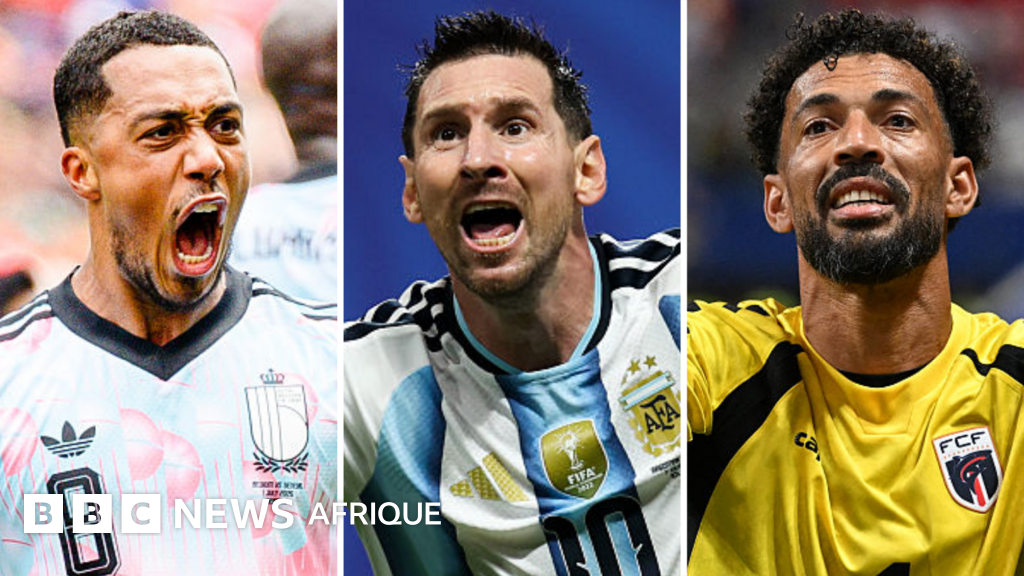
World Cup 2026 delivers unforgettable drama, historic comebacks and record-breaking moments
With thrilling late goals, dramatic comebacks and shocking upsets, the expanded 2026 World Cup is already rewriting football history. As the quarter-finals approach, the tournament hosted across Canada, Mexico and the United States has delivered football at its most electrifying.
Is this the greatest World Cup ever? The answer may lie in the numbers—and in the unforgettable moments that have unfolded on the pitch.
While opinions vary, the statistics tell a compelling story. Across 104 matches, 280 goals have been scored—a rate of 2.92 per game, the highest since Mexico 1970 (2.97). This compares to 2.69 in Qatar 2022, 2.64 in Russia 2018, and just 2.27 in South Africa 2010.
The most eye-catching performance came from Germany, who crushed Curaçao 7-1 in a group-stage rout. Seven other matches also featured six goals, while 13 games saw five or more—unprecedented offensive firepower in modern tournaments.
Off the pitch, controversy has swirled around ticket prices, travel costs and tournament length. But on it, the game has rarely been more open or exciting. Only 5% of goals have come from penalties—the lowest ever—while 74.6% were scored in open play, reflecting a tournament dominated by attacking football.
Late drama redefines tournament excitement
Never before has a World Cup felt so unpredictable in its final minutes. Of the 24 knockout matches played so far, eight were decided by a goal in the closing stages—after the 85th minute. Argentina required extra time to overcome Cape Verde, while four games went to penalties.
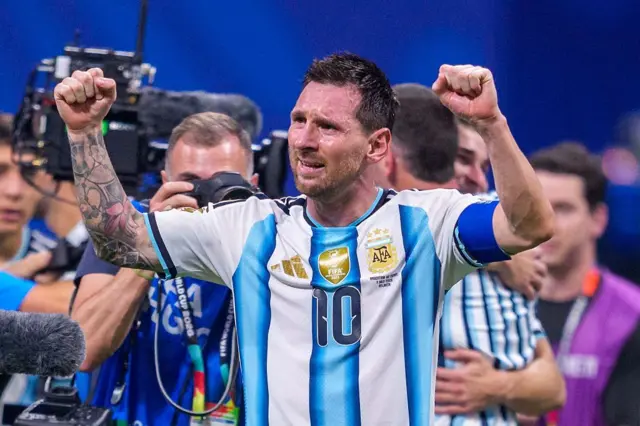
The defining moment came on July 7, when Enzo Fernández scored in the 90th minute to secure Argentina’s 3-2 win over Egypt—only the tenth such last-gasp winner in World Cup history. Just days earlier, Belgium and Argentina both erased two-goal deficits in the same match to complete remarkable turnarounds unseen since 1970.
England’s dramatic 2-1 win over Mexico underlined the pressure. Playing with ten men for 40 minutes and facing a hostile atmosphere at Mexico City’s Azteca Stadium, they held on with resilience rarely seen in modern tournaments.
Eight clean sheets were recorded across group and knockout stages—another record. Far from indicating weakness, it signals an unprecedented balance across teams, where no side could be taken for granted.
A global stage for football’s biggest stars—and underdogs
The expanded format brought fresh hope to smaller nations. Curaçao, the smallest country ever to qualify, stunned Germany before holding Ecuador to a draw. Qatar, despite heavy defeats, earned a creditable draw against Switzerland, who went on to reach the quarter-finals.
But the story of the tournament belongs to Cape Verde. With 40-year-old goalkeeper Vozinha a hero in goal, they held Spain, Uruguay and Saudi Arabia to draws in the group stage before pushing eventual champions Argentina to extra time in the Round of 16. Their spirited run captured hearts worldwide and proved that football’s magic still thrives beyond the usual giants.
The scoring charts tell another story. For the first time in World Cup history, three players have hit seven goals or more in a single tournament: Argentina’s Lionel Messi leads with eight, followed by France’s Kylian Mbappé and Norway’s Erling Haaland on seven each. Harry Kane rounds out the top four with six.
Record crowds and global passion
Despite concerns over high ticket prices and travel costs, the tournament has drawn 6.2 million fans across 104 matches—an average of over 65,000 per game. That figure matches only the 1994 edition in the United States and underlines the global appetite for the world’s biggest sporting event.
Stadiums across three countries have remained packed, with a 99.7% attendance rate. The atmosphere has been electric, with fans traveling thousands of miles to support their teams in person.
But challenges remain. The introduction of hydration breaks, while welcome in extreme heat, sparked debate when used in air-conditioned venues. The tournament’s length—spanning 39 days—has also raised concerns over player fatigue and recovery, especially with club seasons restarting just weeks after the final.
Controversy reached its peak when American forward Folarin Balogun was controversially allowed to play in the Round of 16 despite being sent off in the previous match. Reports indicated direct intervention by U.S. President Donald Trump with FIFA President Gianni Infantino, invoking FIFA’s disciplinary code to suspend the automatic ban. Balogun, only the second player in World Cup history to avoid suspension after a red card, played against Belgium days later.
The incident drew sharp criticism from UEFA, Belgium’s FA, and England manager Thomas Tuchel, who cited it as unfair advantage. Belgian players later admitted it motivated them further in their 4-1 victory.
The final act will decide the legacy
With four of the world’s top-ranked teams—Argentina, Spain, France and England—alive in the quarter-finals, the stage is set for a climax to rival the greatest in history. A pulsating final could cement 2026 as the definitive World Cup.
Yet the tournament’s long-term reputation hinges on its closing chapter. Mediocre finals have overshadowed otherwise brilliant tournaments, while an unforgettable showdown in Qatar four years ago helped restore the competition’s prestige.
As fans around the world reflect on 39 days of football that has redefined what a World Cup can be, one thing is clear: this tournament has already made history. Whether it becomes the greatest of all time depends on what unfolds in the next ten days.
This article reflects firsthand observations from the 2026 World Cup in Canada, Mexico and the United States.


 Boureima Amadou