Boureima Amadou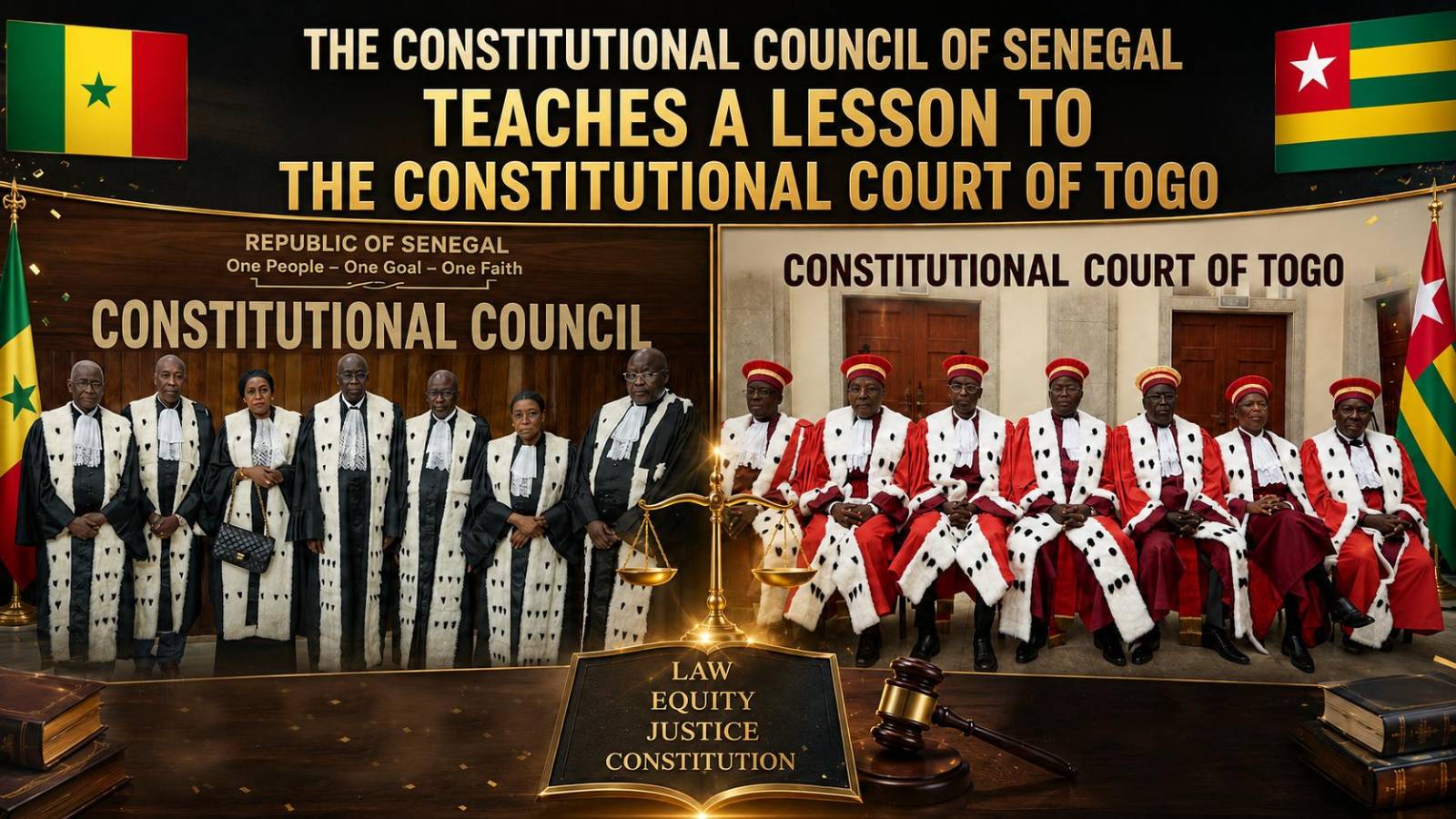
Two West African capitals are currently showcasing sharply divergent approaches to constitutional governance, with Dakar and Lomé embodying opposing philosophies on the role of state institutions. Recent constitutional decisions in both cities have laid bare fundamental differences in how power is checked and balanced.
The contrast could not be more striking. In Dakar, the Constitutional Council demonstrated unwavering commitment to the supremacy of the Constitution by blocking a proposed constitutional amendment backed by both the government and parliamentary majority. This bold move underscored a critical principle: electoral legitimacy, no matter how sweeping, cannot transcend constitutional limits. In a functional rule-of-law system, political authority must yield when it clashes with foundational legal norms.
Meanwhile in Lomé, the Constitutional Court has taken a markedly different stance by approving a sweeping overhaul of the country’s foundational charter. Critics argue that this reform—undertaken amid widespread political and legal opposition—lacks sufficient national consensus. When constitutional amendments appear to serve short-term political interests rather than reflect broad societal agreement, they risk eroding the very legitimacy they are meant to uphold. A Constitution is not merely a technical document; it is the social contract upon which a nation’s stability rests. When perceived as a tool of political convenience, its moral authority diminishes.
Why judicial independence is the cornerstone of stability
The Senegalese experience illustrates how a truly independent judiciary can serve as a bulwark against political crises. By refusing to endorse a constitutional amendment that would have concentrated excessive power in the executive, the Constitutional Council reaffirmed that no branch of government—no matter how dominant—stands above the law. Such rulings do more than preserve legal principles; they safeguard institutional stability by preventing conflicts from spiraling into legitimacy crises.
More importantly, judicial courage fosters public trust. When a constitutional body can censure government actions without fear of reprisal, it signals that democratic rules apply equally to all. This predictability strengthens political stability, enhances investor confidence, and bolsters international credibility. Investors and development partners prioritize nations where legal frameworks are transparent and reliably enforced—precisely the environment that Senegal now projects.
In contrast, a constitutional court perceived as rubber-stamping executive decisions risks losing its moral authority. Citizens may conclude that domestic legal recourse is ineffective, pushing disputes toward regional or international tribunals. This erosion of trust was evident when the ECOWAS Court of Justice intervened in multiple cases involving rights and freedoms in Togo, exposing the limitations of the national justice system. When regional courts become the primary recourse for citizens, it often reflects a systemic failure of domestic checks and balances.
The peril of constitucionalism as a political tool
The manner in which a Constitution is amended carries long-term consequences for democratic health. In mature democracies, constitutional reforms are preceded by extensive consultations, robust debate, and efforts to build consensus. Such caution stems from the understanding that a Constitution does more than regulate the present; it establishes the rules that will govern future leadership transitions.
When amendments are driven by immediate political calculations, they set a dangerous precedent. Each incoming administration may be tempted to reshape institutions to its advantage, fueling chronic instability and concentrating power in the hands of a few. The political fallout is equally severe: a Constitution that no longer commands broad support becomes a perpetual source of contention, turning once-neutral institutions into battlegrounds.
The Togolese government has sought to study foreign parliamentary models—including in India—as part of its transition strategy. While comparative analysis can offer valuable insights, it cannot substitute for examining Africa’s own constitutional experiences, which share closer historical, social, and political realities. The continent offers abundant lessons on what sustains democracy: not imported institutional designs, but the rigorous application of constitutional principles.
Senegal provides a compelling case study. Its Constitutional Council has earned credibility not through rhetorical commitments, but through decisive action—even when it defies the will of the executive. This distinction is anything but symbolic. It shapes governance quality, public confidence, international standing, and economic attractiveness. Nations where institutions appear responsive to political winds struggle to inspire trust; those where rules are consistently enforced attract investment and cooperation.
At its core, the difference between Dakar and Lomé is not merely constitutional text—it is a philosophical divide over the role of institutions. In one city, the Constitution serves as a constraint on power. In the other, critics argue it is increasingly used as a malleable instrument to accommodate immediate political priorities. A resilient democracy is not measured by the frequency of its constitutional reforms, but by the durability of its institutions in protecting citizens from all forms of excess—be it executive overreach, legislative manipulation, or judicial complacency.