Mariama Hamani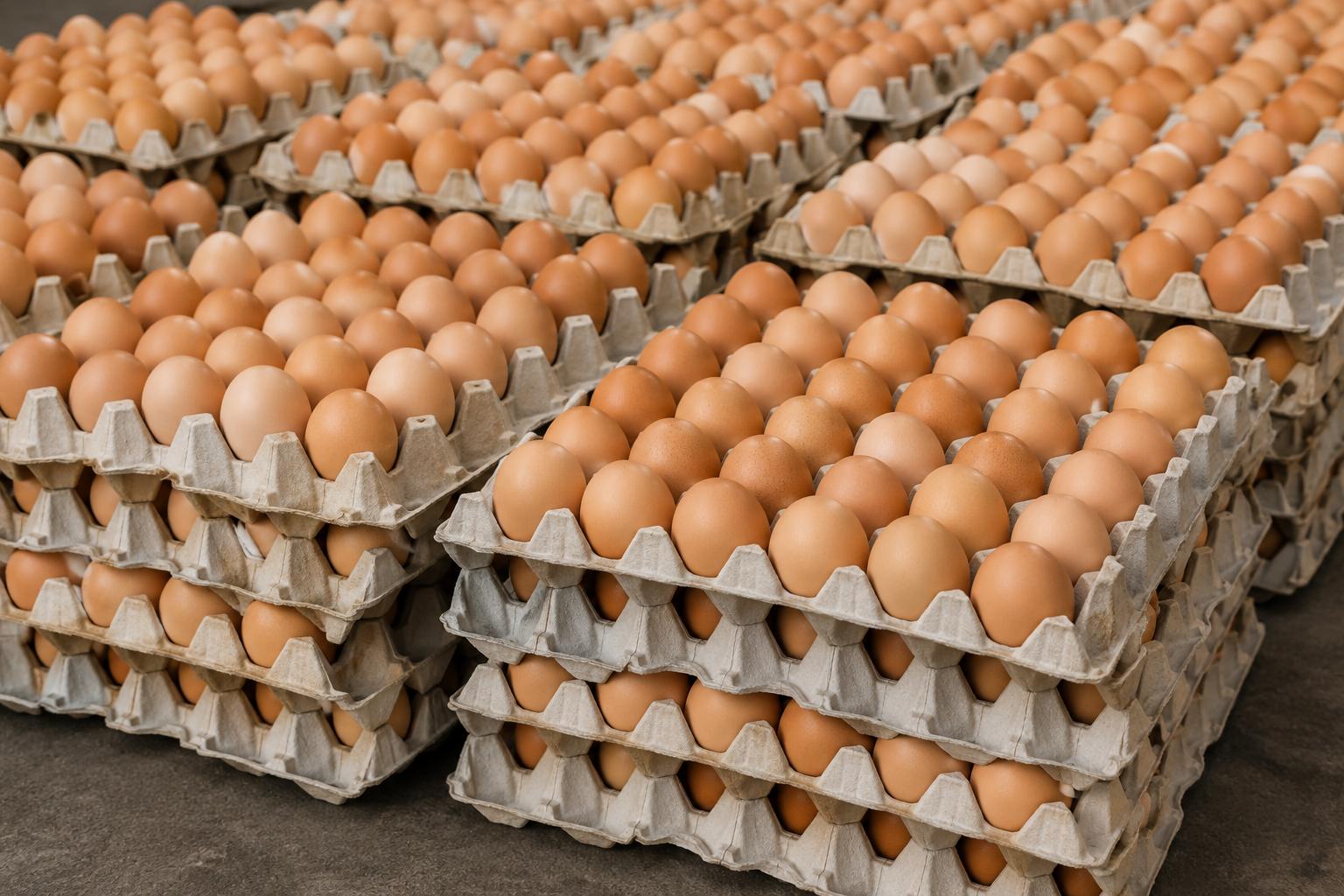
The recent announcement banning poultry egg prices has sent shockwaves through Burkina Faso’s egg production industry. Through a joint statement from the Ministry of Commerce and the Ministry of Animal Resources, the government has imposed a strict ceiling on retail egg prices at 100 West African CFA francs per unit, setting wholesale prices at 2,600 F CFA per tray and retail prices at 2,750 F CFA. While framed as a move to shield household budgets, this policy effectively throttles entrepreneurial freedom and threatens the survival of an already struggling economic sector.
The illusion of price control versus rising production costs
Is it reasonable to cap the final price of a product while completely ignoring the soaring costs of its raw materials? This is the impossible equation the State is imposing on poultry farmers. Poultry farming relies heavily on feed—commonly known as provende—which includes maize, soybean and cottonseed meal, and mineral supplements. Over recent months, the cost of these inputs has skyrocketed due to inflation, rising transportation expenses, and supply chain disruptions.
By unilaterally setting egg prices without subsidizing feed production, the government is effectively breaking the profitability of poultry farms. Capping prices at an arbitrary level forces producers to sell at a loss or operate at razor-thin margins, pushing many to the brink of insolvency.
Direct violation of economic freedom
The principle of economic freedom hinges on the natural interplay of supply and demand, allowing entrepreneurs to set prices based on their operational and financial realities. When the State intervenes to dictate pricing policies within private enterprises, it doesn’t regulate—it suffocates.
This interference discourages private investment. Why would an entrepreneur commit millions of F CFA to modern poultry infrastructure, secure bank loans, and hire local labor if the State reserves the right to cap revenue at a level detached from actual production costs?
Unintended consequences: scarcity and black market surge
Economic history repeatedly shows that artificial price controls often backfire. With profitability nearly impossible, several alarming scenarios are likely to unfold in the short term:
- Collapse of small-scale producers: Less resilient than large industrial farms, local poultry farmers may be forced to shut down, eliminating thousands of jobs.
- Reduced production volumes: To minimize losses, farmers may cut back on flock sizes, leading to a decline in egg supply.
- Emergence of a black market: Official egg shortages will drive up demand, pushing prices well above the regulated 100 F CFA mark and ultimately harming consumers.
Towards smarter, non-punitive regulation
Ensuring affordable eggs for all Burkinabè consumers is a commendable goal—but not at the expense of producers who drive the nation’s economic growth. If the government truly aims to make eggs accessible, the solution lies upstream: subsidize feed production, waive taxes on poultry inputs, and improve access to credit for farmers.
Capping egg prices while ignoring surging feed costs is an economic misstep. It sends a dangerous signal to the business community, reinforcing the idea that entrepreneurial freedom remains hostage to disconnected decrees. To rescue the poultry sector and secure Burkina Faso’s food sovereignty, urgent action is needed: deregulate prices and bolster production support.



 Boureima Amadou