Boureima Amadou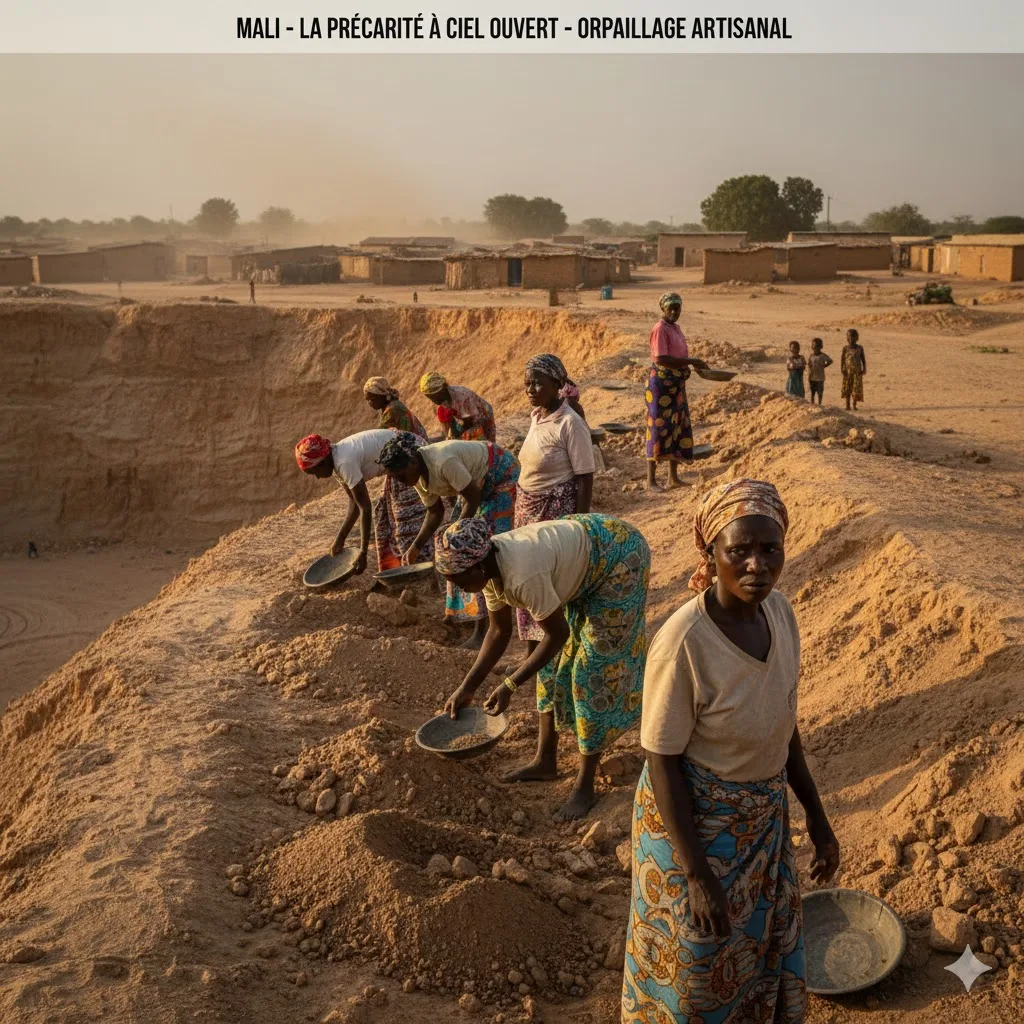

The collapse that claimed six women’s lives in Kéniéty, within Mali’s Kéniéba district, highlights a grim truth: extreme poverty is forcing mothers into perilous choices, where survival often trumps safety.
Mothers trading safety for survival in Mali’s gold fields
For women in Mali’s artisanal mining regions, descending into unstable pits isn’t a profession—it’s a last resort. Driven by hunger and the need to feed their families, many endure grueling 12-hour shifts under scorching sun, clawing at the earth for mere traces of gold. In Kayes, this reality is all too common, with women risking life and limb in mines abandoned by larger operations.
These sites, deemed too dangerous by male miners, become the only option for desperate women. Excluded from lucrative sections, they scavenge in eroded pits or crumbling tunnels, where walls collapse without warning. The tragedy in Kéniéty—where six women, including two married mothers, perished—serves as a stark reminder of these risks.
Beyond collapses: the hidden toll of artisanal mining
The dangers extend far beyond fatal accidents. Women in these mines face toxic exposure to mercury, irreversible health damage, and heightened risks of gender-based violence. Without protective gear or legal recourse, their vulnerability is exploited daily. The aftermath of mining operations worsens the crisis—abandoned pits become death traps, luring those with no other means of income.
In Dialafara, locals now demand systematic backfilling of mines to prevent further tragedies. Yet, securing old sites is only part of the solution. Economic empowerment programs are urgently needed to steer women toward safer livelihoods. Without real alternatives, poverty will continue to claim victims in Mali’s unregulated gold mines.


 Mariama Hamani