Mariama Hamani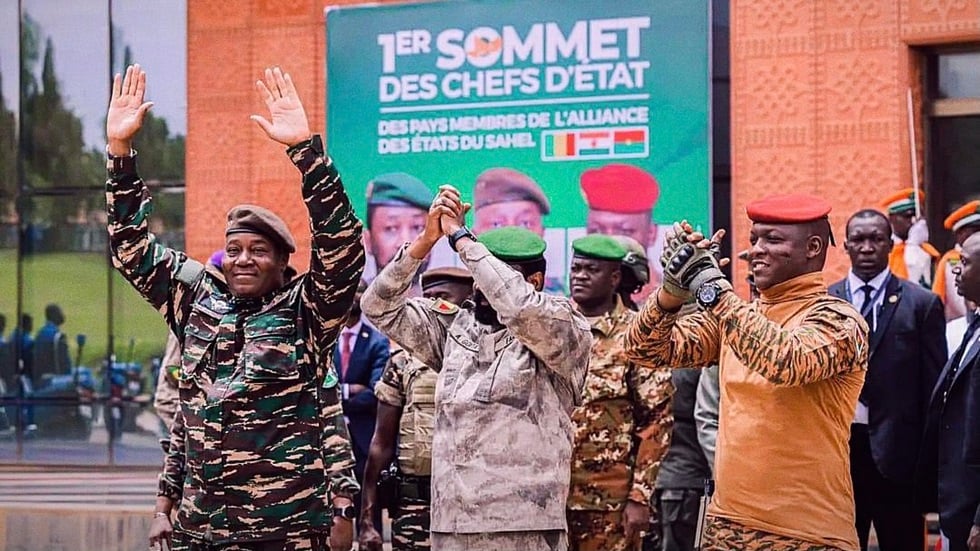
In the high-stakes arena of West African geopolitics, timing often dictates outcomes—and missteps can have irreversible consequences. The recent decision by the Alliance of Sahel States (AES)—comprising Mali, Burkina Faso, and Niger, all governed by military regimes—to sever ties with the Economic Community of West African States (ECOWAS) appears increasingly like a high-risk maneuver rather than a bold assertion of independence.
At a time when the region faces relentless threats from extremist groups like Boko Haram and Islamic State West Africa Province (ISWAP), unity should be the cornerstone of any strategy. Instead, fragmentation has taken precedence—and in matters of security, fragmentation is not just ineffective; it is perilous.
Security fragmentation: a dangerous gamble
The AES justified its withdrawal by accusing ECOWAS of becoming a tool of neo-colonial influence, particularly under France‘s sway. While historical grievances may hold merit, basing a decision on past injustices without considering present threats is a flawed approach. Abandoning a regional security framework without a viable alternative does not signify independence—it exposes vulnerability.
The pivot toward Russia as a security partner was framed as a strategic shift. However, the realities on the ground suggest a different narrative: one of dependency without guarantees. Moscow‘s approach to global engagements is inherently transactional—support is provided only as long as it serves its national interests. History shows that once the cost-benefit ratio shifts, commitment falters. This is not speculation; it is a well-documented pattern.
Mali’s crisis: a test of AES solidarity
Recent coordinated insurgent attacks in key Malian cities—including Bamako, Sevare, Mopti, Tessalit, Gao, Kati, and Kidal—have laid bare critical weaknesses in the AES alliance. The anticipated protection from external partners proved unreliable, and the delayed response from Burkina Faso and Niger raises serious questions about the bloc’s operational cohesion. A coalition that cannot swiftly mobilize to defend one of its own undermines its own credibility.
ECOWAS legacy: collective strength in action
ECOWAS has a proven track record of stabilizing crisis-ridden nations. Under Nigeria‘s leadership, the ECOWAS Monitoring Group (ECOMOG) intervened decisively in Liberia and Sierra Leone, restoring order during periods of collapse. While not flawless, these operations demonstrated the power of collective action rooted in shared purpose.
The case of The Gambia further underscores ECOWAS‘s role as a stabilizing force. When then-president Yahaya Jammeh refused to accept electoral defeat, Nigerian troops deployed under ECOWAS mandate ensured a peaceful transfer of power. Within hours, Jammeh relinquished control and fled to Equatorial Guinea.
Geography does not negotiate: the indivisibility of West African security
West Africa‘s nations are interconnected not just by treaties, but by shared borders, cultures, and the ripple effects of instability. When Mali faces turmoil, Niger bears the consequences. When Burkina Faso struggles, Ghana feels the impact. Security in this region is not divisible—it is inherently linked.
The example of Iran offers a compelling lesson in resilience. Despite isolation and sanctions, Tehran prioritized indigenous capacity-building over foreign reliance. By investing in domestic military strength and technological innovation, Iran withstood intense pressure from global powers. The message is clear: self-reliance, not strategic dependency, is the ultimate safeguard of sovereignty.
A path forward: sovereignty and solidarity
For the AES states, the way forward requires a dual strategy: strengthening homegrown security and re-engaging with ECOWAS. Indigenous solutions—such as local intelligence networks, community-based defence systems, and regional rapid-response units—must form the backbone of any credible defence. External partnerships can supplement, but never replace, internal resilience.
Diplomatic re-engagement with ECOWAS should not be seen as submission, but as a strategic necessity. Collaboration does not diminish sovereignty—it enhances survival. For ECOWAS, this is an opportunity to address perceptions of external influence, improve internal governance, and reaffirm its role as an authentically African institution serving African interests.
This is not a call to revert to the past, but to forge a smarter equilibrium—one that balances sovereignty with solidarity, and independence with interdependence.
The Sahel does not need isolation—it needs alignment. Not with distant powers, but with its neighbours, who share its risks, its realities, and ultimately, its fate.
A prodigal return: humility over pride
The parable of the prodigal son serves as a powerful metaphor. Pride often leads to departure, but wisdom lies in returning. It is time for the AES to reconsider its decision. Clinging to a failing strategy while cities burn is not strength—it is folly. ECOWAS, for its part, must welcome them back without punitive measures, recognizing that a united West Africa is stronger than a divided one.
The threat of annihilation is not an exaggeration—it is a looming danger facing the entire subregion. A united West Africa has overcome civil wars and coups. Divided, it will fall to a common enemy that respects no borders. The AES must retrace its steps, invest in indigenous solutions, and rebuild the collaborative framework that only neighbours can provide. There is no alternative route to security and stability.

 theafricantribune
 Boureima Amadou