
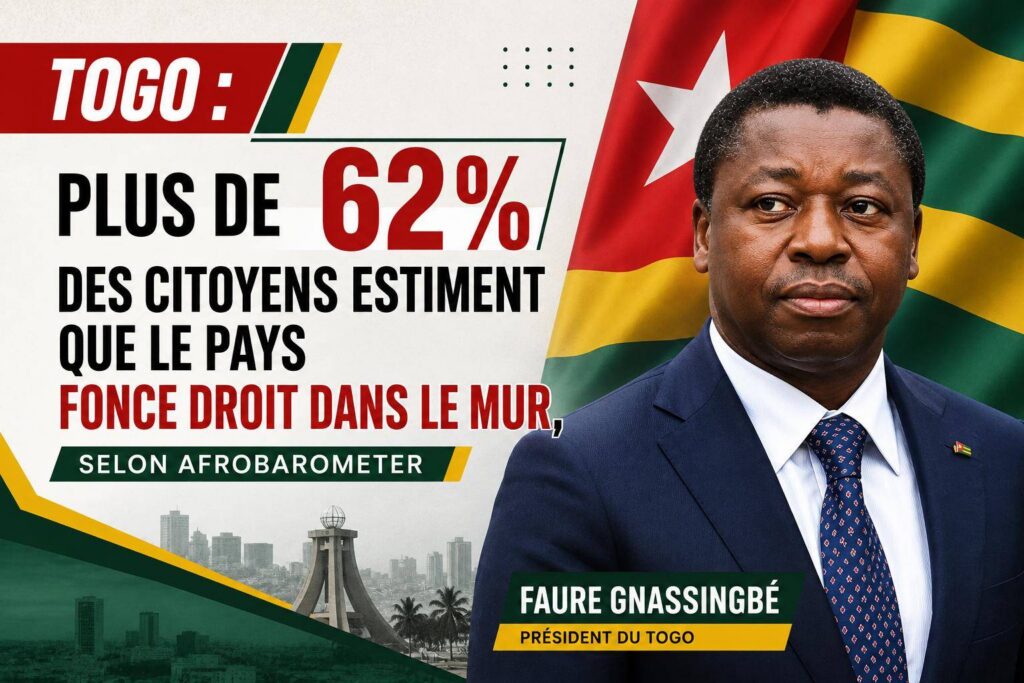
When official narratives clash with ground reality in Togo
Despite government claims of economic stability and the National Development Plan’s alleged successes, public sentiment in Togo tells a starkly different story. A recent Afrobarometer survey reveals a nation in distress, where 62% of citizens believe the country is heading toward collapse. Severe poverty, water shortages, and crumbling healthcare are pushing the gap between the ruling elite and ordinary Togolese to unprecedented levels.
A widening trust gap
The findings serve as a wake-up call for authorities in Lomé. Since 2021, pessimism has surged by 11 percentage points, with 63% of Togolese now rating the country’s economic management as poor or very poor. This growing skepticism isn’t fleeting—it reflects deep frustration over eroding purchasing power and a bleak future for the youth, despite the nation’s economic growth figures.
Everyday struggles overshadow macroeconomic claims
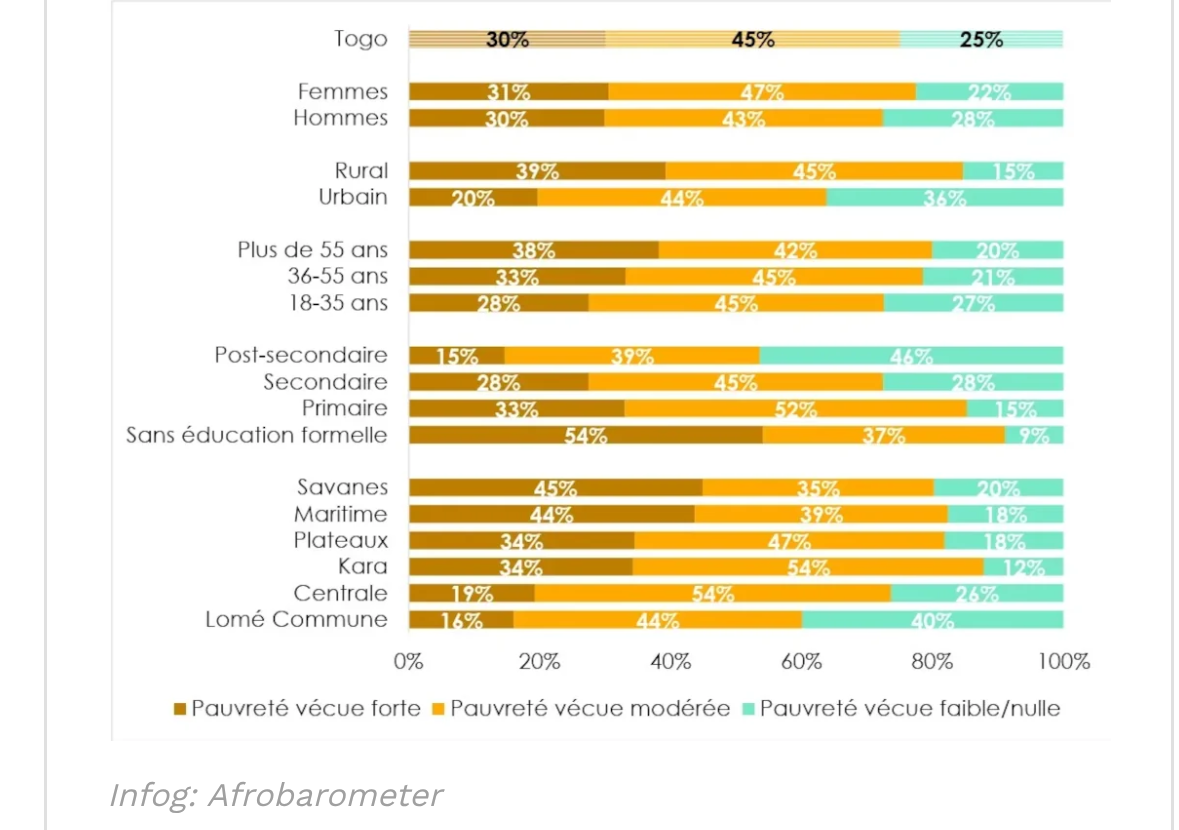
The survey didn’t just rely on abstract GDP data; it delved into the lived experience of poverty. The results are alarming: most respondents describe their living conditions as poor, and over half report worsening financial situations in the past year. Today, 75% of Togolese live in moderate to severe poverty, proving that economic growth benefits are failing to reach ordinary citizens. For many, survival means grappling with insufficient income, inadequate healthcare, and even a lack of clean drinking water.
Poverty’s uneven toll: who suffers the most in Togo?
Poverty isn’t distributed equally across Togo. One of the most striking revelations is in the Kara region, where 88% of residents report living in severe poverty—a direct contradiction to government promises of balanced regional development. Women and rural populations bear the brunt of this crisis, while education, once a pathway to stability, no longer guarantees a decent livelihood in an oversaturated, patronage-driven job market.
From mismanagement to societal strain
The disconnect between official rhetoric and reality is glaring. While a privileged few flaunt opulence, the majority face mounting hardship. The Afrobarometer data paints a society teetering on the edge, where institutional trust erodes as basic rights like healthcare and education become unattainable luxuries. The regime’s focus on high-profile projects over human capital investment has left the nation’s social fabric fraying.
The cost of ignoring public sentiment
Togo can no longer mask systemic failure behind superficial growth metrics. When the majority of citizens believe the country is on the wrong path, it’s not just economic policy under scrutiny—it’s the entire governance model. The so-called Togolese economic miracle rings hollow for those struggling to put food on the table. Without urgent reforms prioritizing people over projects, the nation risks sinking further. The message from citizens is clear: they’re exhausted by survival, and Lomé must start listening—or face the consequences.
More Stories
Gabon and Cuba forge stronger media and film ties
Senegal’s 2026 world cup failure: who truly shoulders the blame?
DRC’s un presidency: France backs push for natural resource governance