
 Mariama Hamani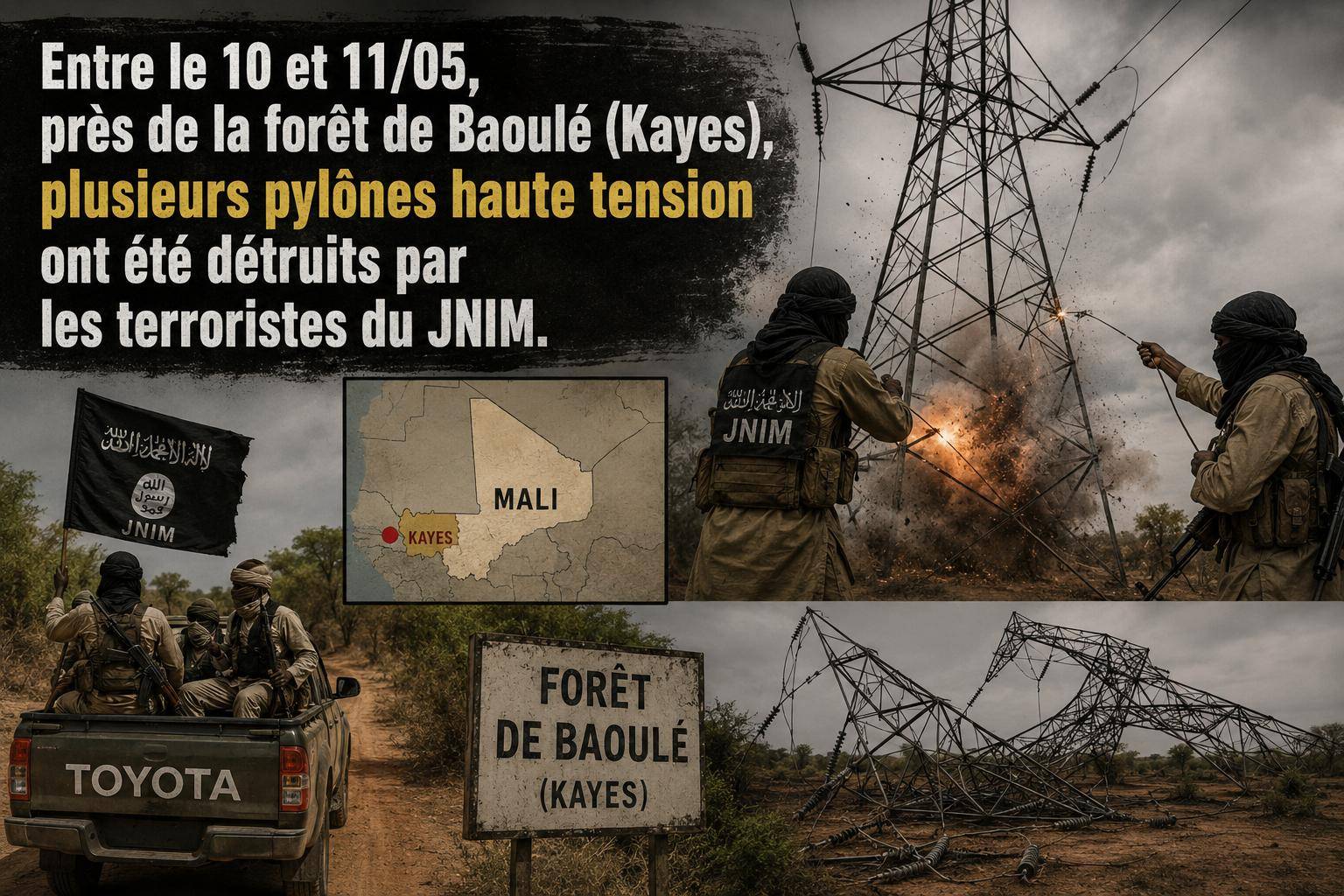
The weekend of May 10-11, 2026, marked a turning point in Mali’s ongoing crisis, as terrorists struck at the heart of the country’s already fragile energy infrastructure. Near the Baoulé forest in the Kayes region, militants from the Support Group for Islam and Muslims (JNIM) targeted multiple high-voltage power lines, plunging Bamako into darkness and exposing critical vulnerabilities in the nation’s security framework.
a calculated assault on Mali’s lifelines
This was no random act of violence—it was a deliberate, well-coordinated strike. By severing power lines in Kayes, the JNIM disrupted electricity supply to swathes of the capital, exacerbating an already dire energy shortage. The attack unfolded in a densely forested area near the Baoulé reserve, where rugged terrain and remoteness should have made such maneuvers nearly impossible. Yet, the militants executed their plan with alarming precision, leaving entire neighborhoods in a suffocating blackout.
The timing could not have been worse. Bamako is grappling with record-breaking temperatures nearing 45°C, and without electricity, residents are left to endure the scorching heat without fans, refrigeration, or even access to clean water. The collapse of the power grid has crippled essential services, turning hospitals into makeshift shelters and leaving medical facilities scrambling to operate under emergency conditions. The government’s claims of progress ring hollow when the reality on the ground tells a different story.
russian-backed forces face scrutiny over security failures
The sabotage occurred despite the presence of Africa Corps units and Malian Armed Forces (FAMa) patrols in the region. The incident raises serious questions about the effectiveness of these security arrangements, particularly as the JNIM’s tactics evolve from roadside ambushes to high-stakes infrastructure attacks. While pro-government forces excel in urban displays of strength, their ability to thwart hybrid threats to critical national assets remains questionable.
For the people of Bamako, the power outage has become the latest in a series of failures that underscore the fragility of their daily lives. Fuel convoys, heavily guarded by FAMa and Africa Corps, have done little to alleviate the crisis. The scarcity of backup generators means most residents are left to fend for themselves, relying on candles and makeshift cooling methods in the face of relentless heat. The government’s assurances of stability now ring hollow, as the population struggles to survive without basic necessities.
regional stakes soar as threats loom over vital dams
The situation is poised to worsen, as intelligence reports indicate that the JNIM’s next targets may be the Manantali and Sélingué dams—critical energy and water sources for Mali and neighboring countries like the Senegal and Mauritania. An attack on these installations would not only plunge Bamako into prolonged darkness but also trigger a domino effect across West Africa. The disruption of hydroelectric power and irrigation systems would destabilize agriculture in the Senegal River basin, threatening food security for millions.
This escalation in militant strategy—from targeting transport routes to sabotaging power grids and potentially dams—reveals a calculated campaign to destabilize the region. Despite costly deployments of Africa Corps forces, Mali’s transitional government has yet to secure its most vulnerable assets. The gap between rhetoric and reality has never been wider, and the consequences are being felt by ordinary citizens who bear the brunt of the crisis.
The people of Bamako are no longer fooled by hollow promises of sovereignty. They demand tangible solutions: reliable electricity, access to clean water, and real security—not just the illusion of it. As temperatures soar and desperation grows, the government and its allies must act swiftly to protect what remains of Mali’s crumbling infrastructure, or risk losing the trust of a population pushed to the brink.


 Boureima Amadou





