Mariama Hamani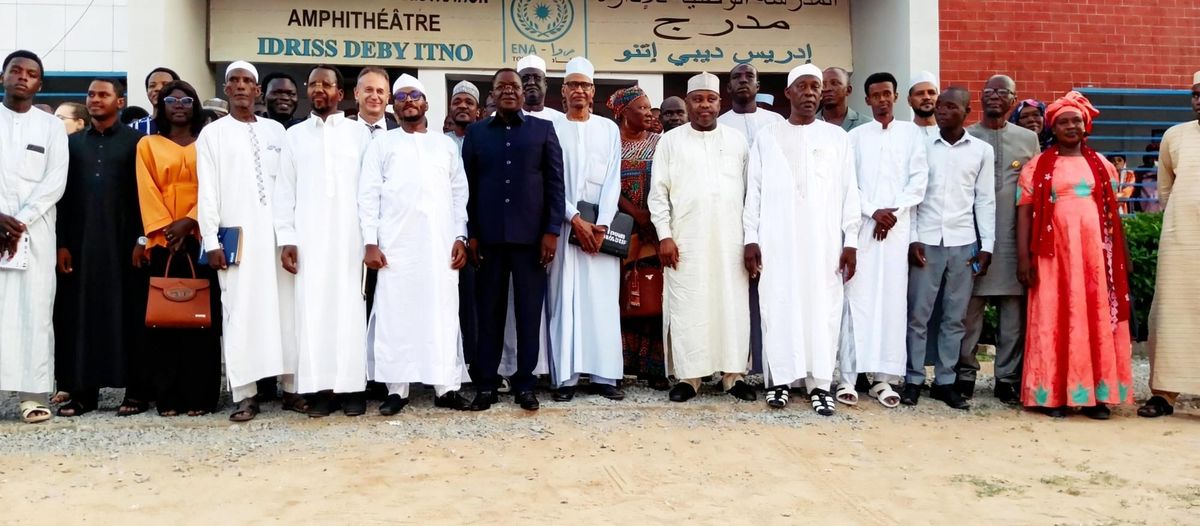
In a widely attended conference-debate held at the Idriss Déby Itno amphitheater of the National School of Administration (ENA), former Prime Minister and current Senator Albert Pahimi Padacké delivered a scathing critique of Chad’s centralization policies. The event, which drew political figures, students, and civil servants, focused on the critical role of provincial councils in the country’s institutional restructuring.
Chad’s centralization dilemma: promises vs. reality
The conference, titled “Decentralization in the Dynamics of Development: The Case of Provincial Councils,” highlighted a stark contrast between Chad’s official commitments to decentralization and the ground reality. While the country has embraced regionalization on paper, the central administration continues to hold firm control, stifling local autonomy. Pahimi Padacké, leader of the RNDT-Le Réveil party, argued that this top-down approach undermines genuine progress, leaving provincial councils with little more than symbolic authority.
The untapped potential of local governance
Pahimi Padacké emphasized the transformative power of decentralization, positioning it as the key to bridging the gap between governance and citizens. By empowering local councils, Chad could accelerate responses to pressing social needs—education, healthcare, and infrastructure—while ensuring resources are distributed more equitably. His vision hinges on the belief that development cannot thrive when every decision, no matter how minor, remains tethered to the ministries in N’Djamena.
The financial chokehold on provincial autonomy
At the heart of the debate lies a glaring paradox: while Chad’s legal framework endorses decentralization, the central state maintains an iron grip on financial resources. Provincial councils, Pahimi Padacké noted, are often left without the means to implement policies, their hands tied by a central administration reluctant to cede control. “Decentralization without financial independence is nothing more than administrative theater,” he declared, underscoring the need for real fiscal empowerment.
A call for systemic change
The conference quickly evolved into a rallying cry for systemic reform. Pahimi Padacké urged stakeholders to dismantle the “vertical centrality” that has long paralyzed provincial governance. His plea was clear: trust must be placed in local leaders, and provincial councils must be transformed into autonomous economic engines rather than mere extensions of the capital’s bureaucracy. The lively exchanges that followed, particularly with ENA students, revealed decentralization as one of Chad’s most urgent and contentious institutional challenges.


 Boureima Amadou