Boureima Amadou
Tchad: street vendors power economy but at what cost to children?
In Chad’s bustling markets, women dominate street vending. Yet this economic shift casts a shadow over the youngest generation, whose futures hang in the balance.
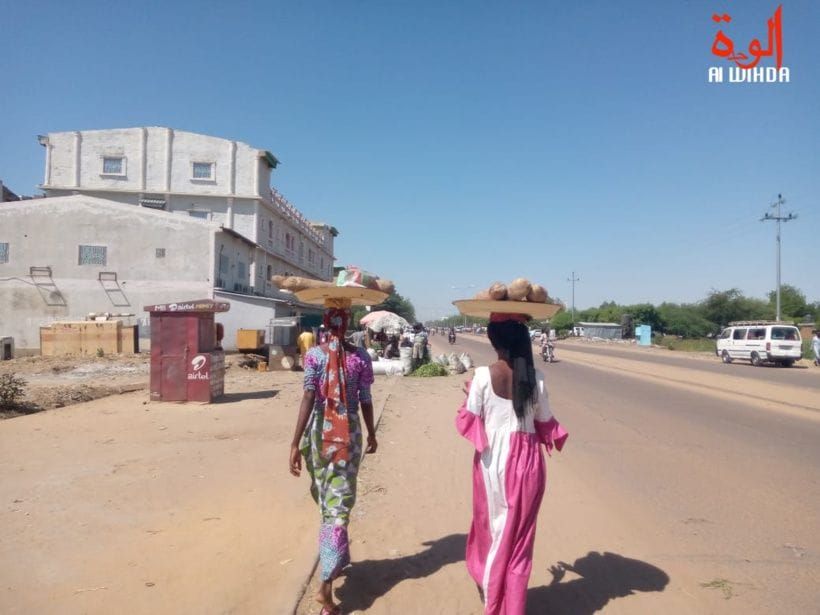
The morning sun rises over N’Djamena’s markets, where women balance towering basins brimming with fresh mangoes, golden beignets, and vibrant fabrics on their heads. Their voices cut through the chaos as they weave between motorbikes and pedestrians, colorful scarves shielding them from the relentless heat. This isn’t just a sight in Chad’s capital—it’s a growing tide sweeping across cities like Moundou and Abéché.
Aïcha, pushing 30, shuffles forward with her youngest strapped to her back, a tray of toasted peanuts clutched in her hand. Since dawn, she’s been calling out to passersby, her gaze locked on potential customers. “It’s exhausting,” she admits, handing a customer a handful of nuts, “but now, I’m the one in charge.” Nearby, Fanta tends to her sizzling flatbreads over a makeshift stove, her five-year-old son playing with a scrap of plastic in the dust. These women—once confined to household chores—are now conquering Chad’s streets, one transaction at a time. They haggle, they carry, they thrive—breathing life into the country’s informal economy.
But behind this newfound independence lies a harsh reality. The children—some as young as seven—cough in the smoke of sizzling grills, nap under the weight of oversized sacks, or beg for shade in the sweltering afternoon. A resident of Abéché shares a recent encounter: “Yesterday, I saw a boy, no older than seven, lugging a bucket of water while his mother bargained for millet. He shouted, ‘One franc!’—school was just a distant memory for him.”
These scenes unfold daily. Mothers rise with the sun, carrying their burdens—and their children’s futures. The streets of Chad are alive with opportunity, but for the youngest, the pavement is both classroom and workplace. What future awaits them in this relentless cycle of survival?

 Mariama Hamani