
 Mariama Hamani
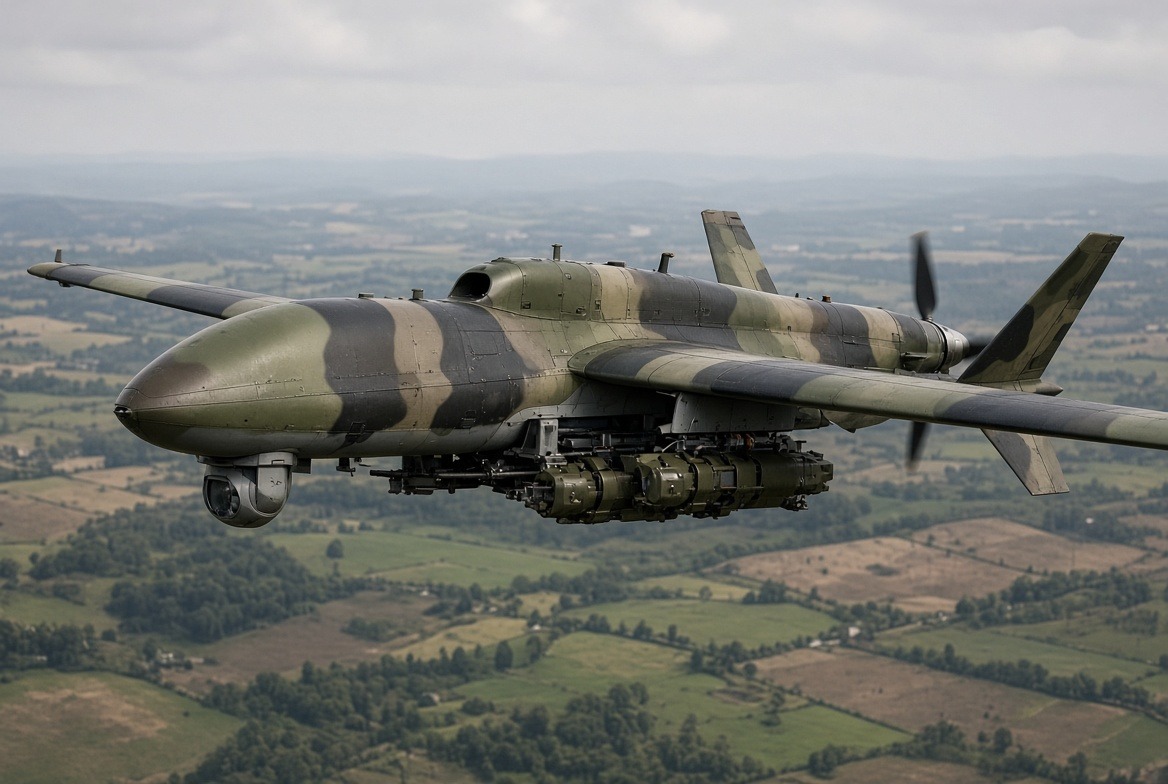
From political fracture to aerial terror: How Sudan’s war entered a new era
The Sudanese conflict has reached a horrific inflection point. In just ten months, drone strikes have claimed the lives of more than 1,630 civilians—accounting for nearly 75% of all civilian deaths recorded in the country during that period. This staggering toll underscores a deliberate strategy to weaponize the skies, transforming schools, hospitals, and marketplaces into hunting grounds.
The United Nations’ latest findings paint a grim picture of survival stripped of basic humanity. Among the most affected regions are Kordofan and Darfur, where entire communities now live under the constant shadow of unmanned aerial attacks. These regions, once removed from the front lines, now bear the brunt of a war that has evolved beyond traditional combat—into a campaign of indiscriminate terror.
Civilian life as collateral damage: The human cost of drone warfare
The drones do not discriminate. Their targets extend far beyond military objectives, striking at the heart of civilian existence:
- Marketplaces and food hubs: Dozens of strikes have decimated bustling markets, where families gather to buy essentials. The loss of these lifelines has left communities starved for food and income.
- Critical infrastructure: Hospitals, water treatment plants, and power stations have been reduced to rubble. The destruction of these facilities has cut off access to clean water, electricity, and life-saving medical care for millions.
- Transport and mobility: Civilian vehicles, buses, and even ambulances have been targeted, trapping people in a cycle of fear and displacement.
The UN’s report highlights that more than two-thirds of the drone-related civilian fatalities occurred in Kordofan alone. The Darfur region, already scarred by decades of conflict, now faces an escalation of violence that shows no sign of abating.
From revolution to reckoning: The roots of Sudan’s drone crisis
To understand how Sudan arrived at this point of catastrophic collapse, we must trace the origins of its current crisis back to the revolution of 2019. What began as a hopeful uprising against decades of dictatorship quickly spiraled into a power struggle that has reshaped the nation’s fate.
A fragile transition shattered
In April 2019, the decades-long rule of Omar al-Bashir came to an end after mass protests forced his resignation. A transitional government was established, led by a Sovereign Council comprising both civilian and military leaders. General Abdel Fattah al-Burhan, commander of the Sudanese Armed Forces (SAF), and Mohamed Hamdan Dagalo (Hemetti), leader of the Rapid Support Forces (RSF), initially shared power under a fragile alliance.
The coup that derailed democracy
In October 2021, this uneasy partnership collapsed when the two generals staged a coup, seizing control and abandoning the path to democracy. Their alliance, forged in mutual ambition rather than shared vision, proved unsustainable. The focus shifted from governance to consolidation of military power—setting the stage for an inevitable clash.
The spark that ignited a war
On April 15, 2023, the fragile truce between the SAF and RSF shattered. The immediate trigger? A dispute over the integration of RSF fighters into the national army—a move that Hemetti resisted, fearing loss of autonomy. What followed was not a brief skirmish, but a full-scale war that engulfed Khartoum, Darfur, and Kordofan. The conflict, initially confined to urban centers, rapidly spread, fueled by foreign arms shipments and mercenary support.
Technology as a weapon of mass terror
By 2024, the war had entered a new and even deadlier phase: the age of drone warfare. Both sides, desperate to gain the upper hand, turned to unmanned aerial systems. These drones—often supplied by external actors—offered a way to project power without risking frontline losses. But the cost has been catastrophic for civilians.
The UN has condemned the use of drones in populated areas as a flagrant violation of international humanitarian law. The indiscriminate nature of these attacks, coupled with the sheer volume of civilian casualties, has drawn comparisons to war crimes. The international community’s failure to curb the flow of weapons has only emboldened the perpetrators, turning Sudan into a testing ground for modern aerial terror.
With over 25 million Sudanese now trapped in a spiral of hunger, displacement, and despair, the country stands at a precipice. The drone strikes have not only redrawn the battlefield—they have redefined the very meaning of warfare in the 21st century.
What comes next? The path to accountability and survival
The road ahead demands urgent action on multiple fronts. First, the flow of arms to both warring factions must be halted immediately. Second, international pressure must be applied to hold accountable those responsible for targeting civilians. And finally, a renewed commitment to humanitarian aid is essential to prevent millions more from descending into famine and disease.
The world cannot stand idly by as Sudan’s population is subjected to a campaign of aerial annihilation. The turning point has been reached. The question now is whether the international community will act—or continue to watch as history’s darkest pages are rewritten in real time.



 Boureima Amadou





