Boureima Amadou

The recent crackdown on unregulated gold mining in Burkina Faso has exposed a glaring contradiction in the country’s mining policy. While Ouagadougou has forcefully defended its crackdown on illegal sites as an assertion of national sovereignty, the same strategy is being criticized when applied by neighboring Guinea. This double standard raises a critical question: is Burkina Faso holding Guinea to a standard it refuses to meet at home?
From law enforcement to diplomatic critique
In early July 2024, Burkina Faso’s government ordered the immediate shutdown of dozens of illegal gold mining sites in the Hauts-Bassins and Cascades regions. The operation, described as a crackdown on environmental degradation and tax evasion, led to the expulsion of unauthorized miners, the revocation of artisan mining permits, and the seizure of over 60 hydraulic excavators. State media framed the move as a bold step toward reclaiming control over the country’s mineral wealth.
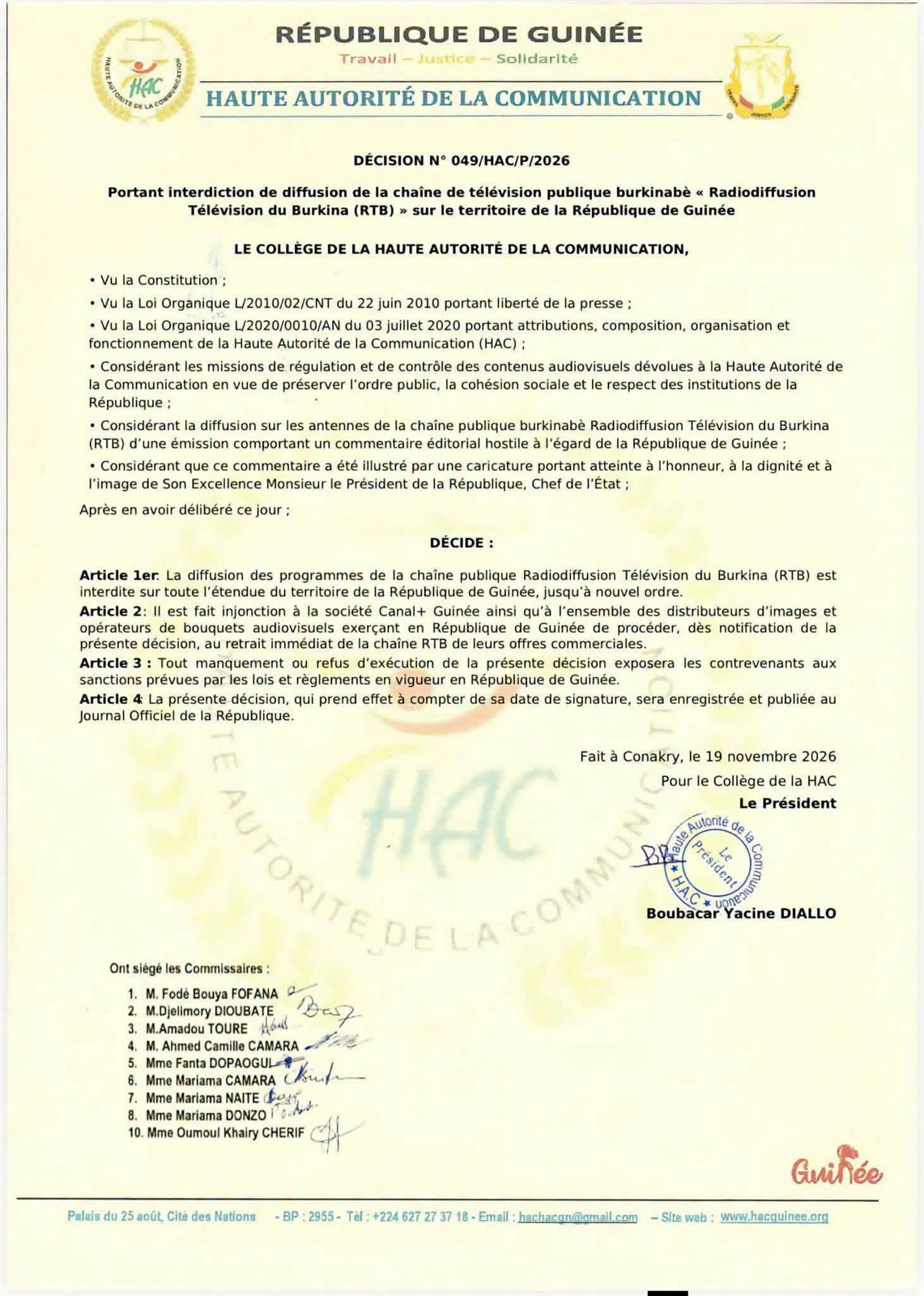
Yet, when Guinea implemented similar measures in its own gold-rich regions, Burkinabè authorities were quick to condemn the crackdown as an overreach that prioritized foreign corporate interests over local livelihoods. The stark contrast in rhetoric—sovereignty at home, hypocrisy abroad—has fueled debate over whether African nations can credibly champion resource nationalism while remaining dependent on external mining giants.
Foreign firms dominate Burkina Faso’s gold industry
Despite its tough stance on illegal mining, Burkina Faso remains heavily reliant on international mining corporations. According to the 2024 Extractive Industries Transparency Initiative (EITI) report, industrial mining—primarily operated by foreign firms—accounts for 87% of the country’s gold production. Of the 60.77 tons extracted, only 7.13 tons came from artisanal miners.
The dominance of foreign-owned mines is striking. Data from Mines Actu (2026) shows that Russian-owned Nordgold alone controls three major mining operations in Burkina Faso—Bissa Gold, Nordgold Yimiougou, and Nordgold Niou—representing nearly 20% of the country’s industrial mining sector. While these companies bring investment, jobs, and technology, their control over such a vital sector complicates the narrative of Burkina Faso as a champion of mineral sovereignty.
Why foreign investment doesn’t guarantee sovereignty
The Burkinabè government has framed its crackdown as a defense of national interests, yet the reliance on foreign firms suggests a more nuanced reality. Industrial mining, by its nature, requires significant capital, technical expertise, and regulatory frameworks that most African states currently lack. This creates a paradox: while Burkina Faso asserts control over small-scale miners, it simultaneously depends on multinational corporations to sustain its gold output.
This dependency challenges the idea that foreign mining firms are simply extracting wealth without benefit to local economies. However, it also underscores the difficulty of reconciling resource nationalism with the practical realities of a globalized mining industry.
Can panafricanism survive double standards in gold policy?
The latest dispute between Burkina Faso and Guinea reveals deeper fractures in a shared vision of economic sovereignty. Both nations have positioned themselves as defenders of African-led resource management, yet their policies often diverge when it comes to implementation. Burkina Faso’s selective outrage—condemning Guinea’s crackdown while implementing similar measures at home—risks undermining the credibility of its sovereign narrative.
A consistent approach to mining governance is essential. Whether in Guinea or Burkina Faso, the principles of transparency, equitable revenue sharing, environmental protection, and community rights must apply equally. Without this consistency, the rhetoric of panafricanism risks being reduced to a political tool rather than a genuine commitment to economic justice.
What’s next for west Africa’s gold sector?
The tension between Burkina Faso and Guinea highlights a broader challenge for West Africa’s mining future. As global demand for gold grows and foreign investment pours in, governments face a delicate balance: asserting control over their resources while ensuring that local communities—and not just multinational firms—benefit from the boom.
For Burkina Faso, the path forward may lie not in selectively criticizing neighbors, but in adopting a unified standard of sovereignty that applies within its own borders. Only then can its stance on Guinea’s policies be seen as principled rather than politically expedient.

 Mariama Hamani