Mariama Hamani
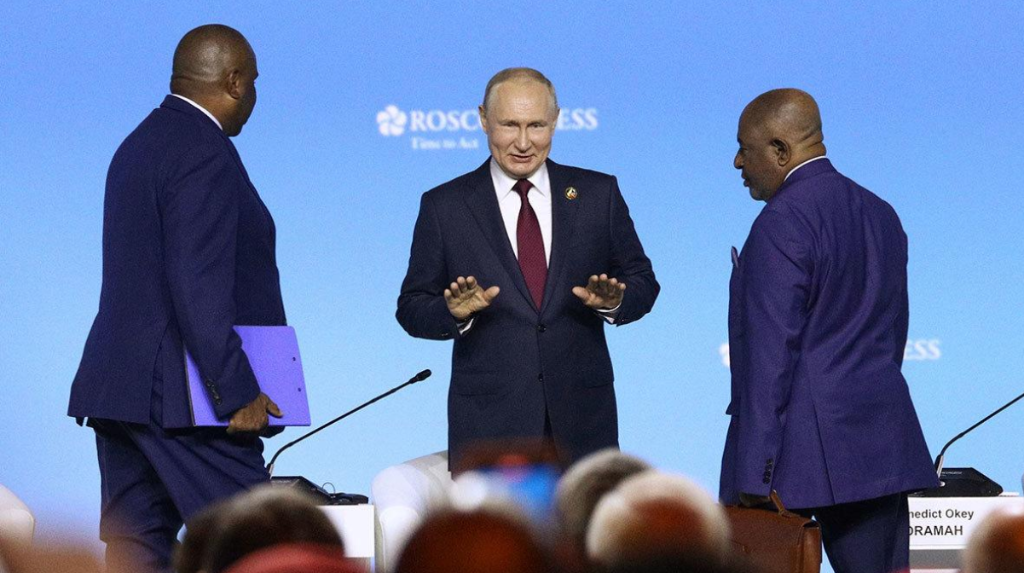
The Russia-Africa Summit 2026 in Moscow marked a turning point for the Sahel region as the Mali delegation, led by Assimi Goïta, demonstrated unmatched diplomatic momentum. While neighboring Sahel allies navigated last-minute uncertainties, Goïta’s confirmed presence sent a clear message of Mali’s strategic pivot toward Moscow.
Mali leads by example as Sahel allies grapple with representation gaps
The summit, held on October 28–29, 2026, opened with a striking contrast in Sahel participation. Assimi Goïta, Mali’s transitional president, arrived in Moscow on October 26 with a high-ranking delegation, securing bilateral meetings with Vladimir Putin and drawing global attention to Bamako’s growing assertiveness in African geopolitics.
While Goïta’s presence was publicly documented by multiple sources, the situation differed sharply for his counterparts in the Alliance of Sahel States (AES). Burkina Faso, initially projected to attend, saw its delegation led by Prime Minister Rimtalba Jean Emmanuel Ouédraogo—a significant downgrade in visibility. Ouagadougou’s participation remained intact, but the absence of Captain Ibrahim Traoré diluted the country’s diplomatic clout.
The most puzzling case involved Niger. Despite Moscow’s earlier announcements confirming General Abdourahamane Tiani’s attendance, no credible reports confirmed his arrival by summit opening. This left analysts speculating: was it a tactical delay, a strategic no-show, or a reflection of internal priorities?
Global African participation underscores Moscow’s diplomatic reach
Beyond the Sahel, the summit showcased Russia’s efforts to diversify partnerships across Africa. Key leaders confirmed in attendance included Évariste Ndayishimiye (Burundi), Emmerson Mnangagwa (Zimbabwe), John Dramani Mahama (Ghana), and Denis Sassou-Nguesso (Republic of Congo). A total of 48 African nations participated, with 22 represented by their heads of state—a testament to the Kremlin’s ability to mobilize broad continental engagement.
Several countries opted for high-level representation without presidential attendance. Algeria sent its Prime Minister, Rwanda dispatched its Prime Minister, and Uganda was represented by its Vice President. These choices reflect a calculated approach to diplomacy, balancing visibility with operational efficiency.
Sahel unity tested as Mali asserts itself on the world stage
The AES alliance faces a critical inflection point. While Mali leveraged the summit to reinforce its ties with Moscow, the absence of confirmed attendance from Burkina Faso and Niger raised questions about cohesion. Yet, such contrasts do not necessarily indicate a fracture. Political and logistical factors may explain the varying levels of participation.
The summit agenda focused on trade, energy, agriculture, security, and long-term investment frameworks. Russia unveiled a new cooperation program for 2027–2029, offering African partners a roadmap for future engagement. For Sahel states, the immediate takeaway isn’t just diplomatic optics—it’s the tangible outcomes of this renewed partnership.
Beyond symbolism: what’s next for Sahel-Russia relations?
Assimi Goïta’s solo presence at the summit wasn’t an accident—it was a statement. By prioritizing Moscow, Mali signaled a willingness to diversify its alliances amid shifting regional dynamics. Whether this solo act translates into long-term influence depends on the substance of the agreements inked during the talks.
For the AES, the challenge now is clear: can it maintain unity amid divergent strategies? Or will Mali’s bold stance redefine the alliance’s future direction? One thing is certain—the Russia-Africa Summit 2026 will be remembered as a pivotal moment where Mali seized the initiative, while others weighed their next diplomatic move.

 Boureima Amadou