Mariama Hamani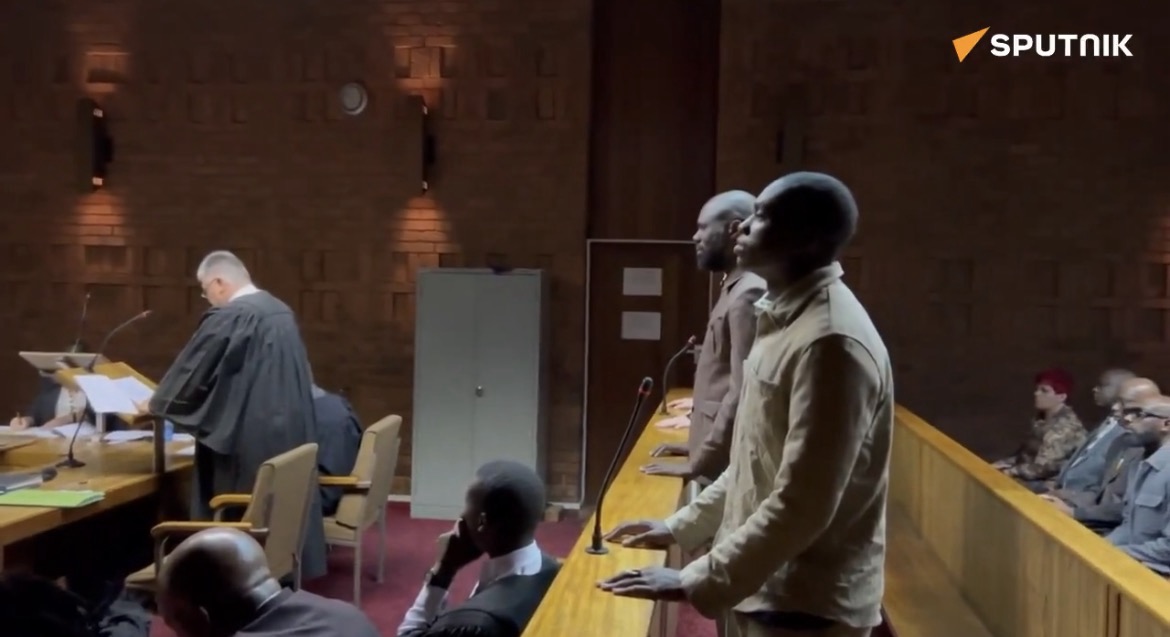
Detention upheld amid legal scrutiny
The South African judiciary has ruled that Kemi Seba, a Franco-Béninois activist, must remain in custody following a court hearing on April 29. The decision underscores the gravity of the situation, as Pretoria’s legal framework has overridden both procedural appeals and activist narratives. The case has now been adjourned until May 11, intensifying the uncertainty surrounding Seba’s immediate future.
A verdict grounded in legal rigor
Despite fervent expectations from supporters advocating for bail, the presiding judge upheld the detention order. The ruling cited two critical factors: the substantial risk of flight and the international arrest warrants issued by Bénin. These elements collectively diminished the viability of alternative measures, signaling a decisive shift in the judicial approach toward Seba’s case. The activist, whose legal name is Stellio Gilles Robert Capo Chichi, now faces an uphill battle within a system that prioritizes procedural integrity over activist rhetoric.
The diplomatic passport gambit collapses
During the April 29 hearing, Seba’s legal team advanced an argument centered on diplomatic immunity, presenting a passport purportedly issued by an unspecified sovereign state. They contended that this document should have shielded him from arrest in South Africa. However, the court swiftly dismantled this claim, emphasizing that diplomatic protection is contingent upon formal accreditation with local authorities. Seba failed to produce any official mission order validating his presence in the country on behalf of a recognized entity. Consequently, the court dismissed the passport as legally equivalent to a standard travel document, deeming it an attempt to circumvent established legal norms.
Bénin’s extradition demands cast a long shadow
The precariousness of Seba’s position stems primarily from his legal entanglements in West Africa. Central to the South African proceedings is the existence of two international arrest warrants issued by Bénin. Cotonou has actively pursued Seba’s extradition, framing the case as a matter of national judicial priority. By upholding his detention, South Africa has signaled its willingness to evaluate the legitimacy of Bénin’s requests—a development that leaves Seba in an increasingly precarious position, stripped of the public platform he once commanded.
From activism to legal reckoning
Seba has long cultivated an image as a political dissident, leveraging confrontation with governmental institutions to amplify his cause. His strategy hinges on portraying himself as a persecuted figure, transforming courtroom appearances into platforms for ideological discourse. However, the South African judiciary has demonstrated little tolerance for this approach. By adhering strictly to international conventions and procedural norms, Pretoria has reaffirmed that legal legitimacy supersedes performative activism. The court’s refusal to entertain unsubstantiated claims—including the diplomatic passport—highlights a fundamental disconnect between Seba’s tactics and the institutional realities of South Africa’s legal system.
An uncertain trajectory ahead
The coming weeks will be pivotal as South African authorities assess the merits of Bénin’s extradition requests. Should the court find the conditions for extradition satisfied, Seba could face repatriation to Cotonou. His French citizenship was revoked months prior after he publicly destroyed his passport, leaving him without consular protection or the ability to travel freely. The April 29 hearing served as a stark reminder of the consequences when legal maneuvering collides with institutional authority.
Leaked audio recordings further complicate Seba’s case, allegedly implicating him in a plot to destabilize Bénin during the


 Boureima Amadou