Mariama Hamani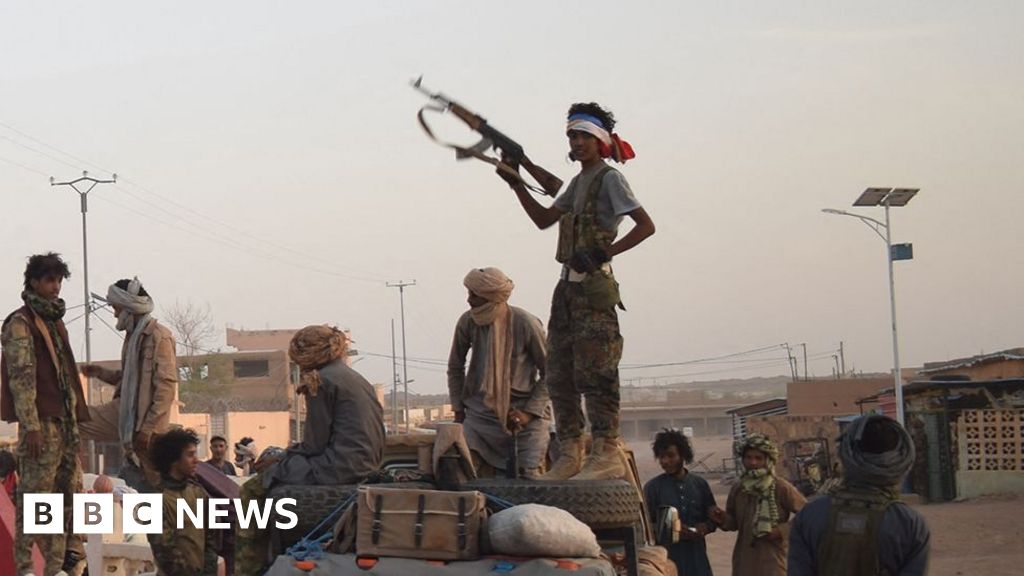
What lies ahead for Mali’s military leaders after deadly rebel offensives?
The shockwaves from Saturday’s co-ordinated armed assaults across Mali—including the capital, Bamako, the assassination of the Defence Minister and the seizure of key northern cities—continue to reverberate through West Africa.
Residents in multiple cities awoke to the sounds of gunfire, explosions and ambushes, which an alliance of two militant groups—the Azawad Liberation Front (FLA), a separatist movement, and JNIM (an al-Qaeda-linked coalition)—claimed responsibility for.
The scale of these offensives, combined with Malian and Russian forces withdrawing from the strategically vital northern city of Kidal, now under FLA control, has cast serious doubts over the leadership capabilities of Colonel Assimi Goïta, who seized power in a coup nearly six years ago.
Goïta has only made a brief public appearance since the attacks, sparking intense debates about the junta’s future stability, the effectiveness of Russian-backed security forces in the region and potential shifts in international military partnerships.
So, what trajectories could unfold in the coming days and weeks?
Trajectory 1: Junta maintains control and launches counter-offensive
Most security analysts still regard this as the most probable short-term scenario. The military leadership still commands the majority of urban centres, state institutions and critical infrastructure.
Yet, the forthcoming days may prove decisive as Malian forces prepare to confront JNIM and FLA militants in a large-scale counter-offensive aimed at retaking lost territories.
The success or failure of this military operation will


 Boureima Amadou