Mariama Hamani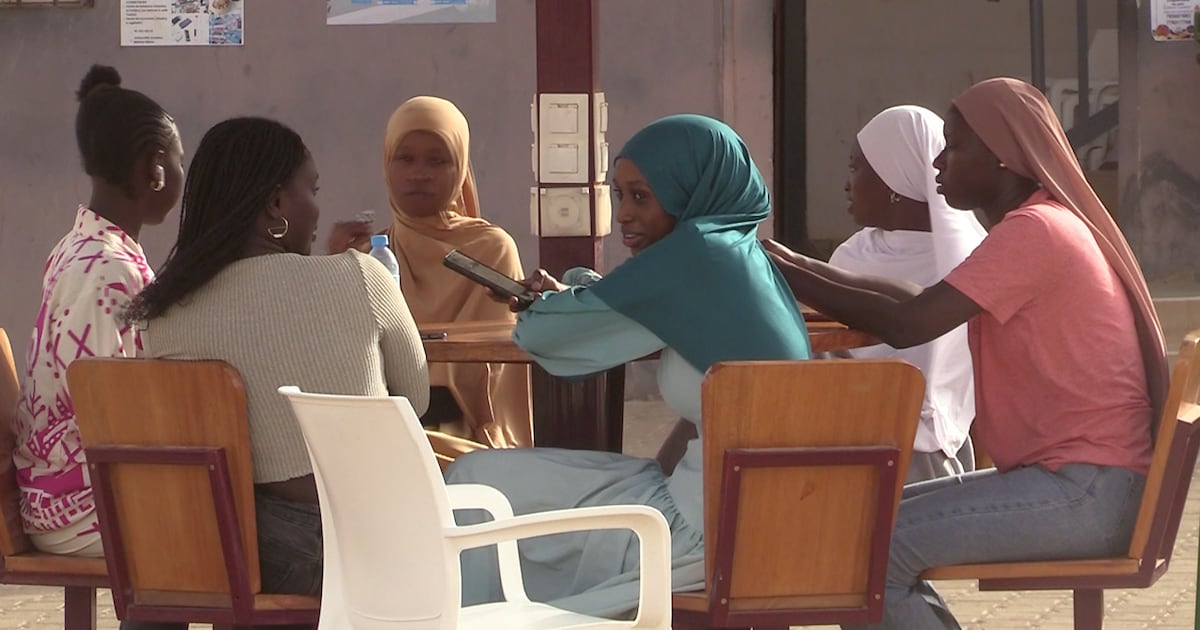
Across Senegal’s universities, a growing number of students are embracing political involvement as part of their academic journey, proving that civic duty and higher education can go hand in hand.
For these young minds, joining political movements isn’t just about activism—it’s a strategic move to build skills, gain real-world experience, and prepare for future leadership. The university campus, they argue, isn’t just a place for textbooks and lectures; it’s a training ground where tomorrow’s decision-makers are sharpening their understanding of governance.
From classroom theories to political action
Adama Lam, a law student at Cheikh Anta Diop University, sees political engagement as a natural extension of his studies. ‘Balancing university life with political involvement has given me a deeper grasp of how policy translates into practice,’ he explains. ‘The university equips us with knowledge, but the political arena teaches us how to apply that knowledge responsibly. For me, the two aren’t mutually exclusive—they reinforce each other.’
Breaking stereotypes about young politicians
Not everyone views student activism as a distraction from academic success. Amadou Saliou Diallo, another student leader, dismisses the idea that politics must derail professional ambitions. ‘Being politically active doesn’t mean giving up on your career,’ he says. ‘It’s about contributing to your country while pursuing your goals. I could be an accountant tomorrow and still make time for civic duty—because politics isn’t a job; it’s a responsibility.’
A dual path to leadership
Some students treat political engagement as an additional layer of education. Ousmane Seck, a political science student, believes early exposure to party programs and governance debates gives him a competitive edge. ‘Academic knowledge alone isn’t enough,’ he argues. ‘Understanding political platforms—like the ‘Jub, Jubal, Jubanti’ initiatives—prepares us to lead, whether as future presidents or party founders. The key is balance: knowing when to engage politically and when to focus on studies.’
The debate continues: should universities remain purely academic spaces, or should they also cultivate the next generation of leaders? For these students, the answer is clear—they’re already building that bridge.


 Boureima Amadou