Mariama Hamani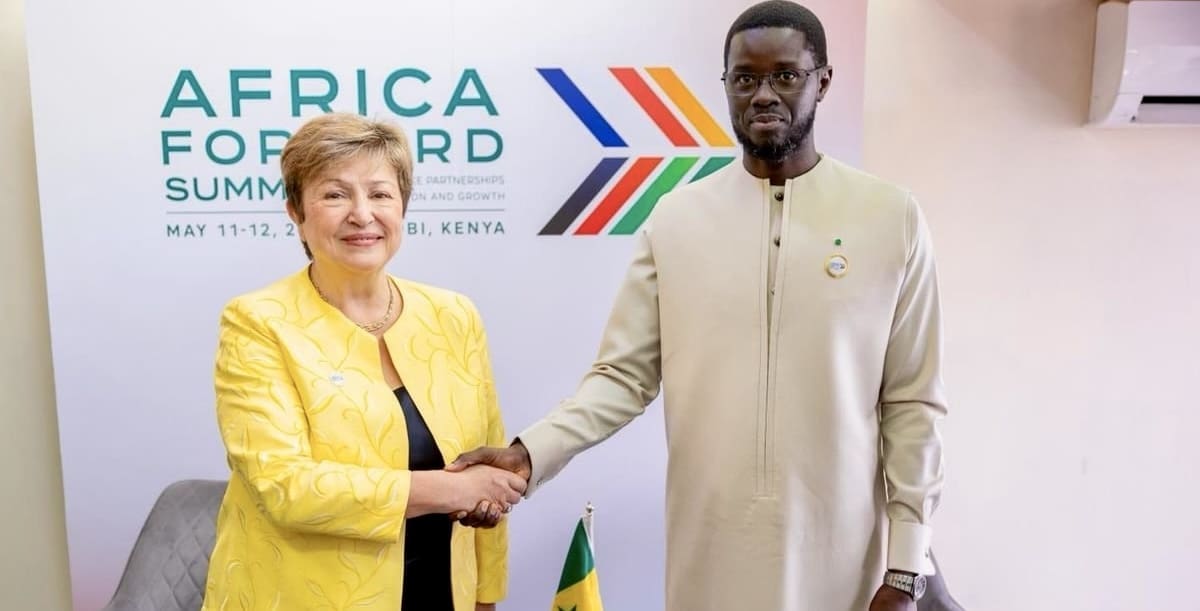
As Senegal’s Prime Minister Ousmane Sonko hosted a high-profile conference in Dakar exploring alternatives to traditional financial solutions, the presidential cabinet in Dakar issued a firm statement from Nairobi. It confirmed that President Bassirou Diomaye Faye is personally steering negotiations with the International Monetary Fund (IMF) to address a mounting debt crisis uncovered in 2024. The revelation of undisclosed liabilities by the former administration has intensified pressure on the current government to secure sustainable fiscal solutions.
In a strategic move to assert leadership, President Faye met with IMF Managing Director Kristalina Georgieva on the sidelines of the Africa Forward Summit in Nairobi. Their discussions centered on potential pathways to restructure Senegal’s debt and stabilize its economy. The presidential office emphasized the president’s deep commitment to resolving this issue, stating, “This is a national priority that demands his full attention and dedication.” The talks also addressed broader economic vulnerabilities, including the ripple effects of geopolitical conflicts in the Middle East, particularly rising energy costs and their toll on domestic economic stability.
The FMI had previously suspended a $1.8 billion funding program in 2024 after identifying discrepancies in official financial reports. Now, Senegal is seeking a fresh loan arrangement to alleviate a debt burden that now exceeds 130% of its gross domestic product (GDP). The IMF has further tempered its growth forecasts for Senegal this year, warning of a deeper-than-expected current account deficit that could further complicate fiscal recovery efforts.
Last year, Prime Minister Ousmane Sonko publicly rejected IMF proposals to restructure Senegal’s debt, dismissing the idea as “a national disgrace.” His stance reflected growing skepticism toward external financial oversight, even as the government now faces the urgent need to renegotiate terms with the FMI to restore economic confidence.


 Boureima Amadou