Boureima Amadou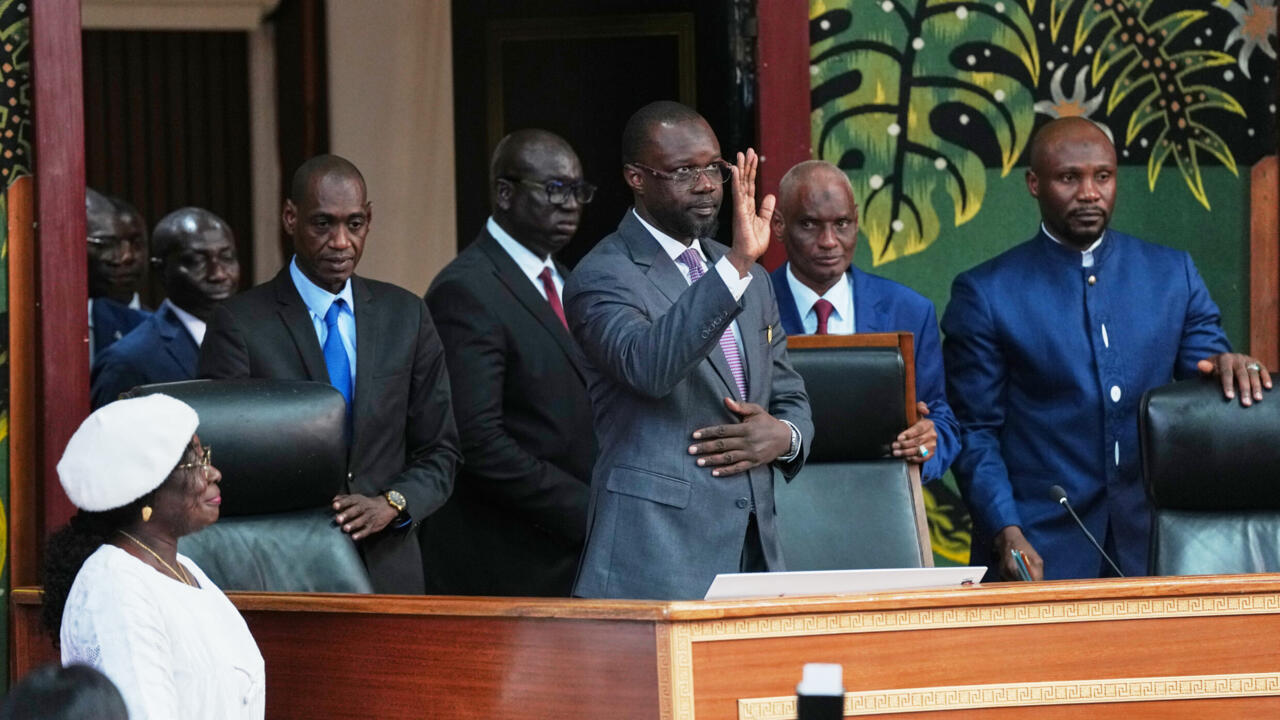
In Dakar, a new chapter in Senegal’s political narrative unfolded this week as Ousmane Sonko was elected President of the National Assembly. The move reshapes the balance of power in a nation already navigating complex governance challenges. With President Bassirou Diomaye Faye’s party facing a legislative body led by a long-time rival, the path forward appears fraught with both obstacles and opportunities.
From opposition to assembly leadership: Sonko’s strategic ascent
Ousmane Sonko, a prominent figure in Senegalese politics, ascended to the presidency of the National Assembly on Tuesday, marking a significant shift in the country’s institutional dynamics. His election comes against a backdrop of heightened political tension, where legislative cooperation will be critical to avoiding gridlock. Sonko, known for his outspoken stance against the previous administration, has signaled a firm commitment to steering the Assembly as an active body, not a mere rubber stamp.
«Cohabitation can be very difficult, but it can also be peaceful,» Sonko remarked, emphasizing the need for constructive dialogue in the coming months. His statement reflects the delicate balance his leadership must strike—navigating partisan divides while upholding democratic institutions.
what this means for Senegal’s governance
The election of Sonko introduces a period of uncertainty for President Faye’s administration. With the Assembly now under the control of a rival faction, legislative gridlock looms as a real possibility. Analysts warn that without strategic compromise, the new dynamic could paralyze key policy initiatives, from economic reforms to social programs. The question on many minds: Will Sonko’s leadership prioritize governance over political rivalry?
Mamadou Lamine Sarr, a political science lecturer at the Université Virtuelle de Dakar, highlighted the stakes. «The Assembly is no longer a passive institution; it will actively shape the nation’s future. The challenge now is to ensure this shift does not escalate into institutional crisis.»
could early elections be on the horizon?
Speculation is rife about the possibility of President Faye dissolving the Assembly and calling for snap legislative elections. Such a move could recalibrate the political landscape, but it also risks deepening divisions. Sonko’s camp has already cautioned against creating unnecessary instability, though his insistence that the Assembly will exercise its oversight role suggests tensions may persist.
The coming weeks will be pivotal in determining whether Senegal’s political actors can forge a workable consensus—or whether the nation will face prolonged uncertainty.