Mariama Hamani
Ousmane Sonko elected President of Senegal’s National Assembly after sudden return to parliament
Five days after his abrupt removal from the Prime Minister’s office, Ousmane Sonko has been elected President of Senegal’s National Assembly. Meanwhile, President Bassirou Diomaye Faye appointed a new Prime Minister to lead the government through this transitional phase.
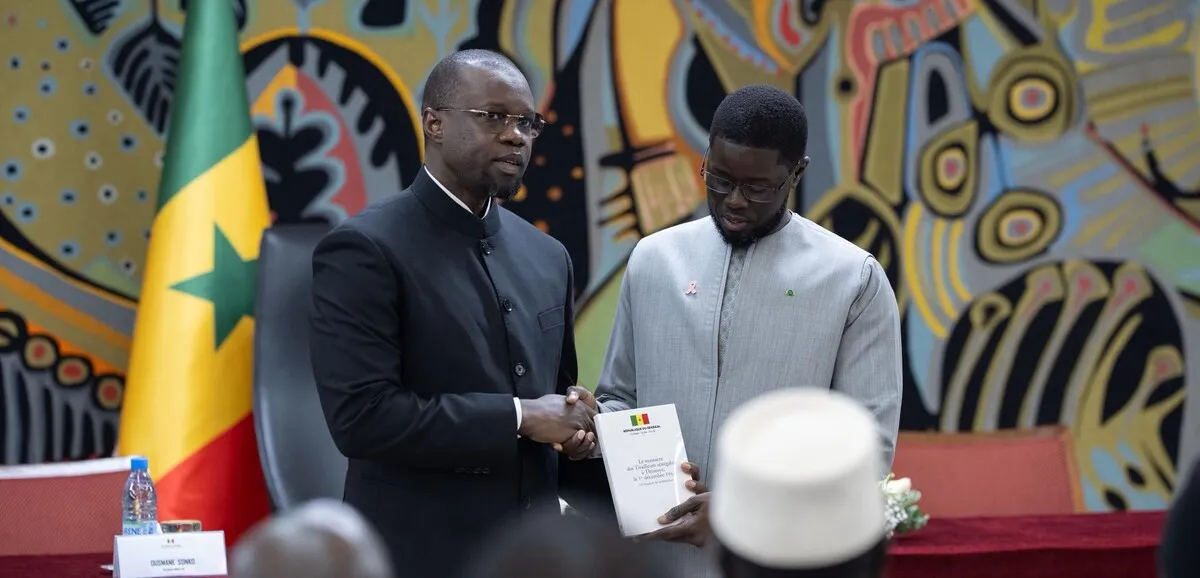
From Prime Minister to Assembly Speaker: A swift political transition
The sudden reintegration of Ousmane Sonko into parliament and his subsequent election as Assembly President has sparked debate. While some constitutional experts question the procedural validity of his reinstatement, others argue that his mandate as a deputy from the 2024 elections justified his return. The legal nuances of this move remain under scrutiny, particularly as opposition groups challenge the legitimacy of the process.
New Prime Minister named: A technocrat with political ties
President Bassirou Diomaye Faye has appointed Amadou Al-Aminou Lo as the new Prime Minister. A seasoned economist and former central bank executive, Lo brings technical expertise in financial markets and monetary policy—critical assets in Senegal’s current economic climate. His deep ties to both Sonko and the President suggest a strategic choice aimed at fostering dialogue within the ruling coalition.
Sonko himself has publicly endorsed Lo’s appointment, though he expressed disappointment over not being consulted. As leader of the PASTEF party—the majority force in parliament—Sonko emphasized the importance of aligning government actions with the party’s electoral promises on economic reform, transparency, and justice.
Government formation and the future of PASTEF
Sonko’s remarks highlight a fundamental tension: the need for technical governance versus political representation. While Lo’s profile prioritizes economic stability, questions linger about whether PASTEF members will be included in the new cabinet. Several ministers from Sonko’s previous government—many affiliated with PASTEF—may retain their roles, but their reappointment remains uncertain.
Sonko’s speech underscored a broader principle: “You cannot do PASTEF without PASTEF.” This statement reflects both party loyalty and the expectation that the government’s agenda must reflect the priorities outlined in the 2024 campaign. As Senegal navigates this political shift, the balance between technical governance and democratic representation will shape the coming months.
What lies ahead: Dialogue and accountability
The new Assembly leadership has signaled openness to dialogue, with Sonko advocating for discussions on key issues like economic recovery and institutional reforms. However, the government’s composition will be the first indicator of whether this approach translates into inclusive policymaking. For now, Senegal’s political landscape remains in flux, with citizens closely watching for signs of stability and progress.


 Boureima Amadou