
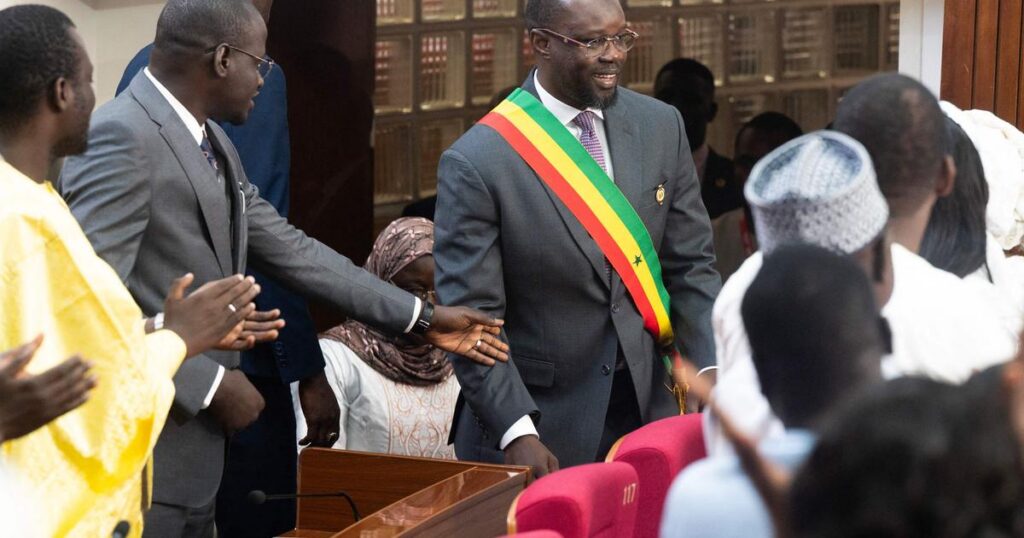
The unfolding political drama in Senegal transcends a mere disagreement between two influential figures. It represents a fundamental clash between two distinct forms of legitimacy: institutional authority and charismatic leadership. Historically, such tensions in contemporary political landscapes frequently give rise to a phenomenon known in political theory as ‘hubris’.
From this perspective, Ousmane Sonko’s political journey warrants an objective and dispassionate examination. Sonko ascended through the political ranks by harnessing a transformative energy rarely witnessed in recent Senegalese history. He effectively channeled the grievances of a marginalized youth, challenged a political system widely perceived as entrenched, and introduced a fresh political discourse centered on national sovereignty, dignity, and the re-empowerment of the populace.
Sonko had previously articulated a vision for a “soft cohabitation” with the presidential palace. His recent election as Speaker of the National Assembly, just days after his dismissal as Prime Minister, presents a critical opportunity to implement this concept.
The sequence of events leading to his election unfolded with remarkable speed. On May 22, President Bassirou Diomaye Faye removed Ousmane Sonko from his position as Prime Minister. The very next day, May 23, Malick Ndiaye, the then-President of the National Assembly, strategically tendered his resignation, vacating the Speaker’s chair. By May 25, Ahmadou Alhaminou Mohamed Lô was appointed as the new Prime Minister. And on May 26, Ousmane Sonko secured a resounding victory, being elected President of the National Assembly. This outcome underscored his continued leadership of Pastef, the majority party he founded. He garnered 132 votes from the 165 deputies, demonstrating significant support.
While some observers hail this election as

More Stories
Senegal’s democratic stability hinges on leadership legitimacy
Ousmane sonko elected Senegal assembly president after cabinet reshuffle
Senegal’s political landscape shifts as Sonko takes assembly helm